
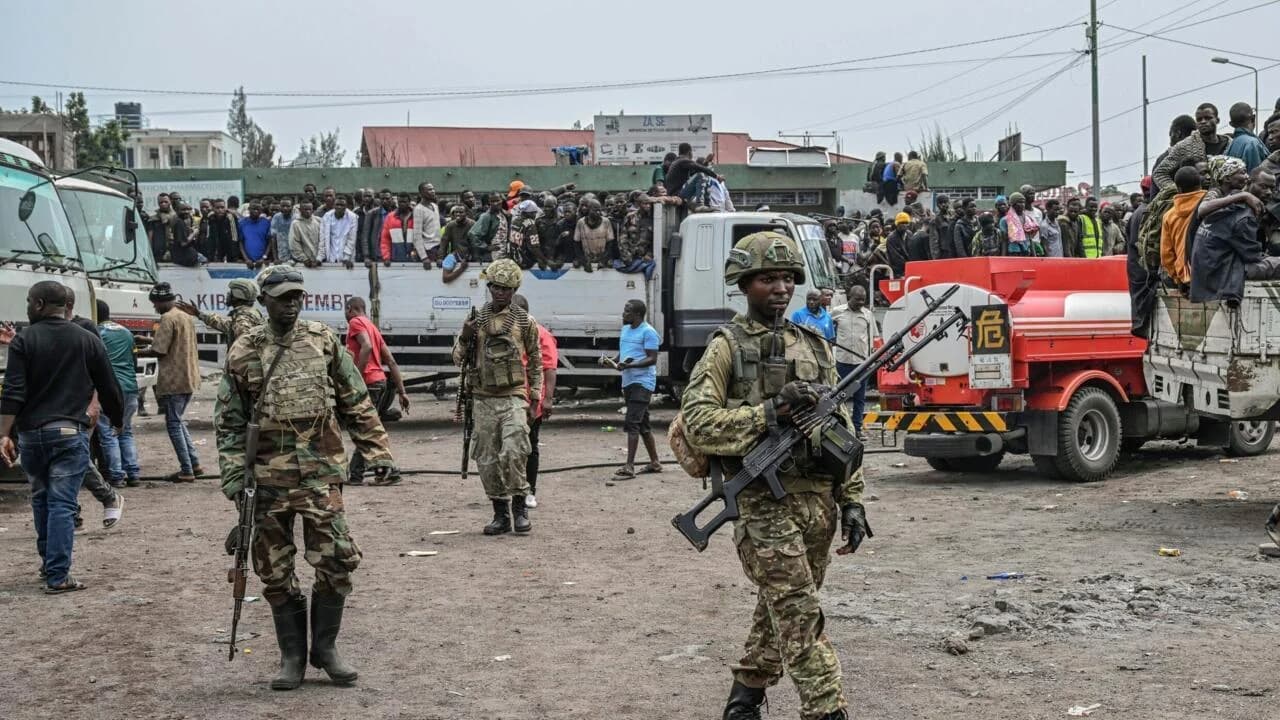
The security situation in the eastern Democratic Republic of Congo (DRC) continues to worsen despite renewed regional and international diplomatic efforts. While the M23/AFC movement has repeatedly said it is open to dialogue, the government in Kinshasa continues to rely on a military strategy, designating the group as a terrorist organisation and insisting it can only be defeated through force. At the same time, an emerging reality has drawn attention: in areas now under M23/AFC control, many civilians report experiencing greater order and security than in some zones held by government forc
The security situation in the eastern Democratic Republic of Congo (DRC) continues to worsen despite renewed regional and international diplomatic efforts. While the M23/AFC movement has repeatedly said it is open to dialogue, the government in Kinshasa continues to rely on a military strategy, designating the group as a terrorist organisation and insisting it can only be defeated through force. At the same time, an emerging reality has drawn attention: in areas now under M23/AFC control, many civilians report experiencing greater order and security than in some zones held by government forces. For several years, M23/AFC has requested direct talks to address concerns including discrimination and insecurity affecting Congolese Tutsi and Kinyarwanda-speaking communities. Kinshasa has rejected negotiations and expanded its military operations, working with foreign contractors, Burundian troops, local armed groups such as Wazalendo, and elements of the FDLR, a group linked to the perpetrators of the 1994 Genocide against the Tutsi. The Congolese government regularly accuses Rwanda of supporting M23, an allegation Kigali denies. Rwanda maintains that the conflict is driven by the continued presence of the FDLR in eastern Congo and by abuses targeting Congolese Tutsi communities. Reports from the United Nations and independent organisations show a rise in hate speech, threats, and targeted violence against Tutsi and Kinyarwanda-speaking populations. In South Kivu, Banyamulenge communities have faced killings, displacement, hunger, and limits on humanitarian access. Some attacks have involved public torture and killings carried out with impunity. Despite the severity of these incidents, they have drawn limited international attention. Throughout 2025, M23/AFC increased its territorial control, taking strategic areas including parts of Goma, Bukavu, Uvira, and nearby districts. The group also neutralised or captured several FDLR fighters. In these territories, many civilians describe daily life as more stable compared to neighbouring conflict zones. Residents and displaced people say markets and roads remain open, public transport continues without illegal fees, schools and health centres function, civilians move freely without fear of armed groups, minority communities feel safer, and cases of looting, forced taxation, and arbitrary arrests have declined. As a result, many families fleeing violence have moved into M23-held areas in search of safety. On 1 December 2025, Burundian troops, FARDC, FDLR fighters, Wazalendo militias, and foreign mercenaries launched a joint offensive to recapture Bukavu, Uvira, and surrounding areas. The operation sought to reverse earlier losses and weaken M23/AFC. Instead, forces aligned with Kinshasa lost additional territory, including parts of Uvira, and reports indicated low morale and disorganisation within FARDC units. As fighting grew more intense, more civilians sought refuge in zones administered by M23. International initiatives such as the Doha Framework and the Washington commitments were designed to support stability. However, they have not addressed the main issues driving the conflict, including ethnic persecution, the continued presence of the FDLR, the unresolved situation of Congolese refugees, governance challenges in the east, and disputes over citizenship and identity. Without addressing these root causes, peace efforts risk remaining temporary rather than leading to lasting stability.
Comments
No comments yet. Be the first to share a thought.