
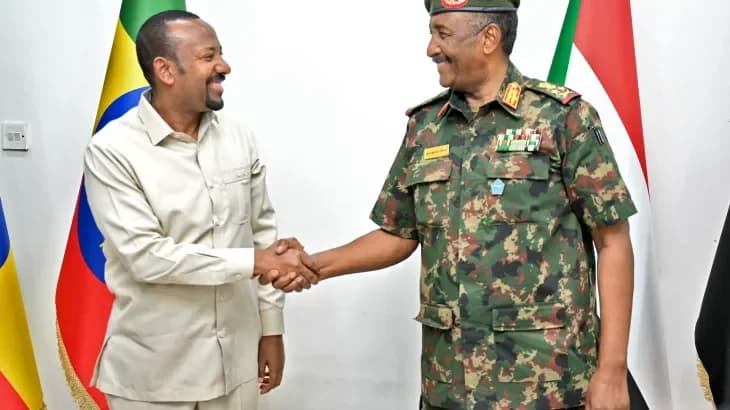
In a significant diplomatic move, Ethiopian Prime Minister Abiy Ahmed has met with Sudan’s armed forces chief General Abdel Fattah al-Burhan. The meeting marks a critical step as regional and world powers strive to broker peace in the war-torn nation of Sudan, where a devastating conflict has persisted for over a year. Background of the Conflict Since April 2023, Sudan has been engulfed in a violent struggle between the military forces led by General al-Burhan and the paramilitary Rapid Support Forces (RSF), commanded by Mohamed Hamdan Dagalo, known widely as Hemedti. The clash between these
In a significant diplomatic move, Ethiopian Prime Minister Abiy Ahmed has met with Sudan’s armed forces chief General Abdel Fattah al-Burhan. The meeting marks a critical step as regional and world powers strive to broker peace in the war-torn nation of Sudan, where a devastating conflict has persisted for over a year. Background of the Conflict Since April 2023, Sudan has been engulfed in a violent struggle between the military forces led by General al-Burhan and the paramilitary Rapid Support Forces (RSF), commanded by Mohamed Hamdan Dagalo, known widely as Hemedti. The clash between these two factions has plunged the country into chaos, resulting in substantial human suffering and displacement. The origins of the conflict lie in a complex web of political and military power struggles. Al-Burhan and Hemedti, once allies, have become bitter adversaries, each vying for control over Sudan's future. The power struggle intensified when the transitional government, formed after the ousting of long-time dictator Omar al-Bashir in 2019, began to fracture. This fragmentation culminated in open warfare between al-Burhan's forces and the RSF. Diplomatic Efforts Prime Minister Abiy Ahmed’s engagement with General al-Burhan is part of a broader regional and international initiative to mediate a resolution to the conflict. Ethiopia, sharing a long and often tumultuous border with Sudan, has vested interests in ensuring stability in its neighbor. The ongoing conflict in Sudan poses significant risks, including the potential for spillover effects and increased refugee flows into Ethiopia. Abiy Ahmed, a Nobel Peace Prize laureate recognized for his efforts in resolving the long-standing conflict between Ethiopia and Eritrea, brings a wealth of diplomatic experience to the table. His involvement signals a renewed push for dialogue and negotiation between the warring factions in Sudan. Regional and International Reactions The international community has expressed cautious optimism regarding this high-level meeting. Regional bodies such as the African Union (AU) and the Intergovernmental Authority on Development (IGAD) have been actively involved in seeking a peaceful resolution. The United Nations and other global powers have also called for an immediate cessation of hostilities and a return to dialogue. However, the road to peace remains fraught with challenges. Both al-Burhan and Hemedti have substantial military support and entrenched positions, making compromise difficult. Furthermore, the humanitarian situation in Sudan continues to deteriorate, with millions of civilians caught in the crossfire and suffering from a lack of basic necessities. The Path Forward For any diplomatic effort to succeed, it will require sustained engagement and support from both regional and international actors. Trust-building measures, inclusive dialogue, and a commitment to addressing the root causes of the conflict are essential components of a lasting peace process. Prime Minister Abiy Ahmed’s meeting with General al-Burhan is a promising development, but it is only the beginning of what will undoubtedly be a long and arduous journey toward peace. The international community must remain vigilant and proactive in supporting Sudan through this critical juncture, ensuring that the voices of all Sudanese people are heard and respected in the quest for a stable and prosperous future
Comments
No comments yet. Be the first to share a thought.