
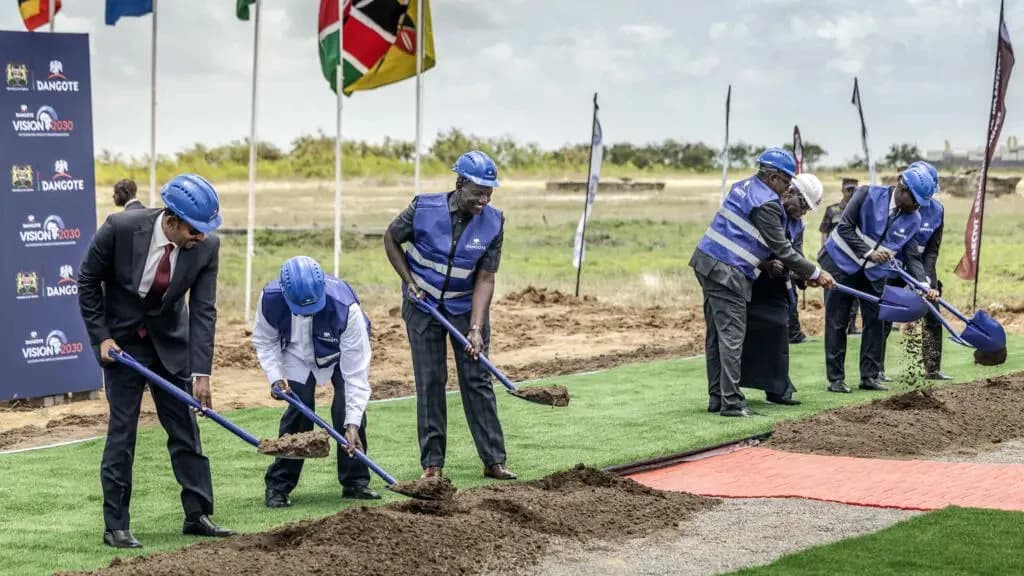
Kenya has begun construction of a $16 billion oil refinery at the Port of Lamu, marking a major step in East Africa’s push for greater energy security while raising concerns about environmental protection and community rights. Nigerian billionaire Aliko Dangote joined Kenyan President William Ruto and other African leaders at the September 30 ground-breaking ceremony for the Dangote East Africa Petroleum Refinery. The facility is expected to process up to 700,000 barrels of crude oil per day, producing petrol, diesel and jet fuel for Kenya and markets across East Africa. Dangote presented t
Kenya has begun construction of a $16 billion oil refinery at the Port of Lamu, marking a major step in East Africa’s push for greater energy security while raising concerns about environmental protection and community rights. Nigerian billionaire Aliko Dangote joined Kenyan President William Ruto and other African leaders at the September 30 ground-breaking ceremony for the Dangote East Africa Petroleum Refinery. The facility is expected to process up to 700,000 barrels of crude oil per day, producing petrol, diesel and jet fuel for Kenya and markets across East Africa. Dangote presented the project as part of Africa’s broader effort to process more of its own natural resources instead of exporting crude and importing refined petroleum products. “Africa cannot build lasting prosperity by exporting what it has and importing what it needs,” Dangote said. The refinery is also expected to include a 1,000-megawatt power plant, with excess electricity potentially supplied to Kenya’s national grid. However, Kenya currently does not produce enough crude oil to supply a refinery of this scale. The facility is therefore expected to initially import crude through Lamu’s deep-water port from international markets, including the Middle East and the United States. The project also highlights growing competition within East Africa’s energy sector. Uganda is pursuing its own refinery in Hoima, while the country’s crude is planned to be transported through the East African Crude Oil Pipeline to Tanzania’s port of Tanga. Environmental and community concerns remain significant in Lamu. The area includes mangrove ecosystems, fishing communities and Lamu Old Town, a UNESCO World Heritage site. Residents and environmental groups have raised concerns over potential oil spills, marine pollution, damage to fisheries and impacts on tourism. Land rights have also become a legal issue, with residents seeking recognition of ancestral land claims. As construction begins, the Lamu refinery is set to test whether East Africa can pursue energy independence and industrial growth while protecting vulnerable coastal communities and ecosystems.

Comments
No comments yet. Be the first to share a thought.