
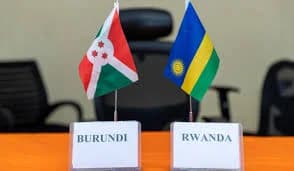
Rwanda’s Minister of Foreign Affairs and International Cooperation, Amb. Olivier Nduhungirehe, has stated that Rwanda and Burundi are making progress toward de-escalation and mutual understanding, following ongoing engagements between the authorities of both countries. “In the meantime, Rwanda and Burundi are on a good path to deescalation and common understanding, following ongoing engagements between the authorities of the two countries,” he wrote on his X account. Relations between Rwanda and Burundi deteriorated in late 2023 when Burundian President Évariste Ndayishimiye accused Rwanda o
Rwanda’s Minister of Foreign Affairs and International Cooperation, Amb. Olivier Nduhungirehe, has stated that Rwanda and Burundi are making progress toward de-escalation and mutual understanding, following ongoing engagements between the authorities of both countries. “In the meantime, Rwanda and Burundi are on a good path to deescalation and common understanding, following ongoing engagements between the authorities of the two countries,” he wrote on his X account. Relations between Rwanda and Burundi deteriorated in late 2023 when Burundian President Évariste Ndayishimiye accused Rwanda of supporting the RED Tabara, a Burundian armed rebel group based in eastern DR Congo, which had launched an attack on Gatumba Zone near Bujumbura. Rwanda strongly denied these allegations, stating it had never collaborated with any group opposing the Bujumbura government. However, Burundi rejected these explanations and, in January 2024, closed all land borders with Rwanda. Tensions further escalated when Burundian soldiers joined a coalition comprising the Congolese armed forces, European mercenaries, the FDLR, a UN-sanctioned militia linked to the 1994 Genocide against the Tutsi in Rwanda, and local armed groups known as Wazalendo. The Rwandan government expressed concerns that this coalition was planning to attack Rwanda, as evidenced by documents found in Goma after the M23 captured the city. Writing on X, Minister Nduhungirehe noted that March 2025 appears to present a new opportunity for sustainable peace in eastern DRC. He referenced a joint EAC-SADC ministerial meeting (Foreign and Defense Ministers) scheduled for Monday, March 17, 2025, in Harare, Zimbabwe. The meeting will review the report of the Chiefs of Defense Forces/Staff on the cessation of hostilities and humanitarian access and will outline a roadmap for political dialogue. Additionally, he highlighted the long-awaited direct negotiations between the DRC government and the M23, which were announced by the President of Angola, as well as the termination of the SAMIDRC mandate, confirmed by the SADC Summit on Thursday. This decision will be followed by a gradual withdrawal of forces from eastern DRC.


Comments
No comments yet. Be the first to share a thought.