

On Monday, February 10, the Cabinet approved several tax policy measures aimed at enhancing Rwanda’s ability to mobilize financial resources through a broader tax base. These measures are designed to support economic growth and improve the livelihoods of all citizens, as outlined in the Second National Strategy for Transformation (NST2). Over the past 30 years, Rwanda has made significant development progress, funded through a combination of domestic and external resources. The country’s continued ability to mobilize financial resources, particularly through an expanded tax base, will be cruc
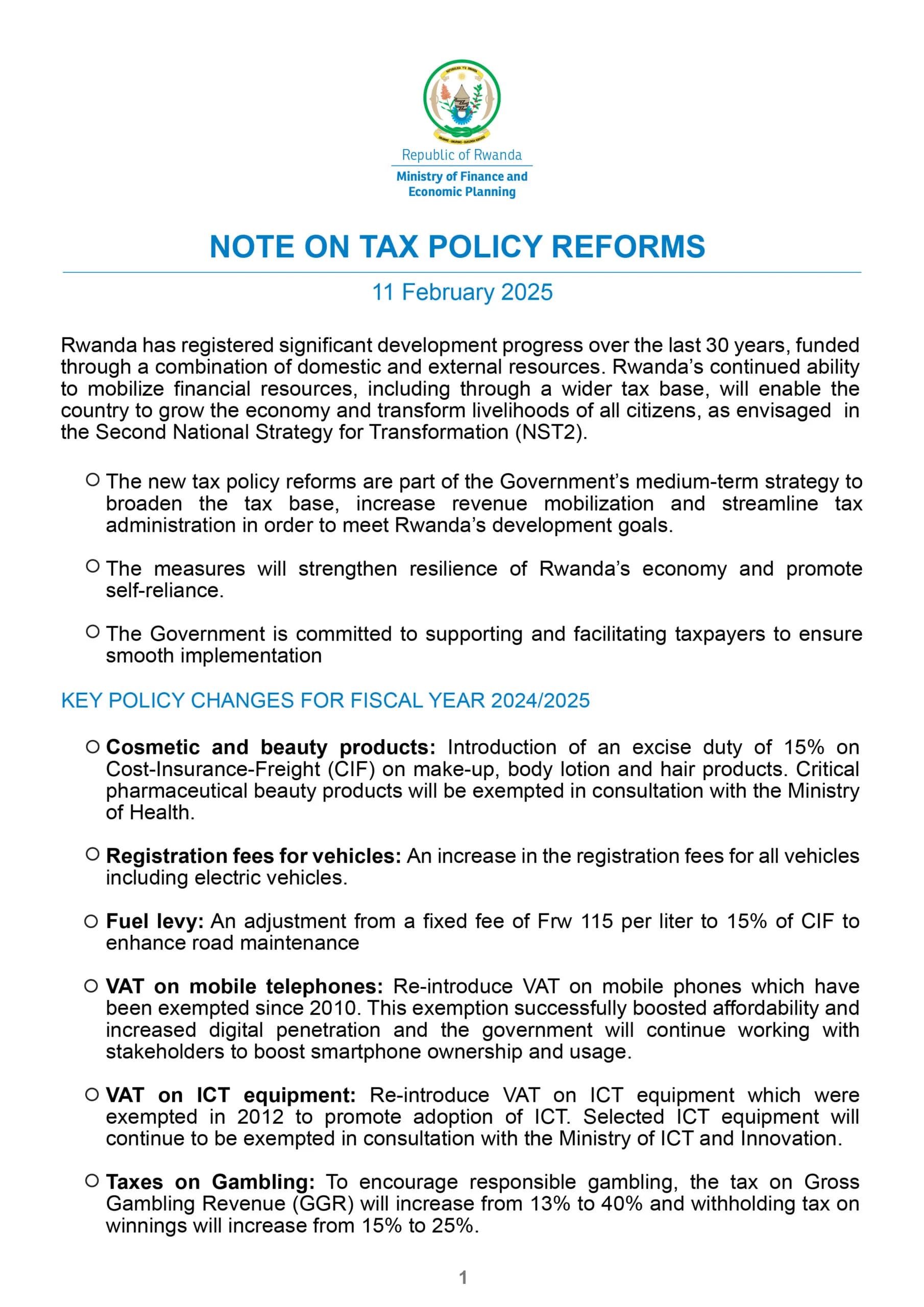
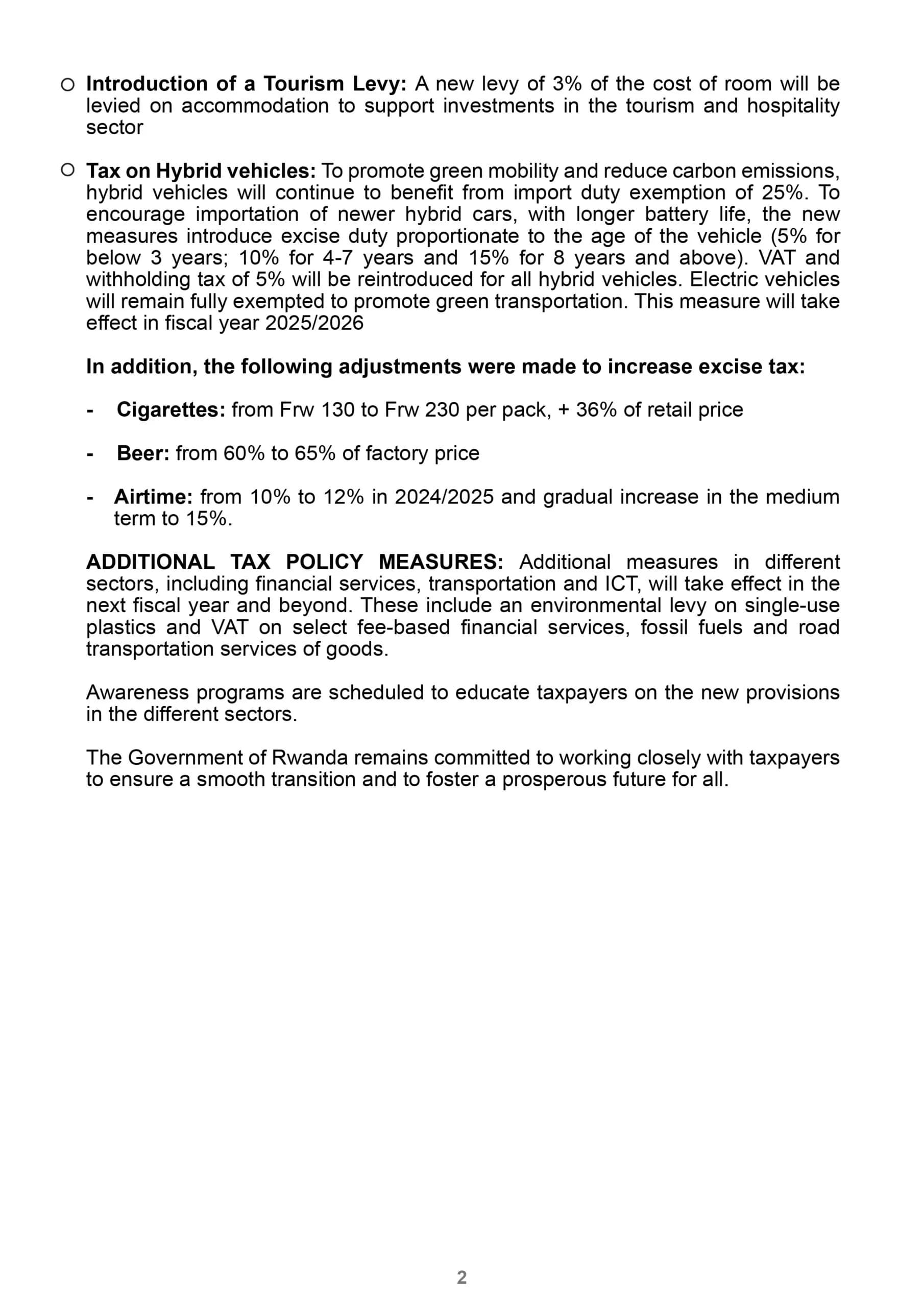
On Monday, February 10, the Cabinet approved several tax policy measures aimed at enhancing Rwanda’s ability to mobilize financial resources through a broader tax base. These measures are designed to support economic growth and improve the livelihoods of all citizens, as outlined in the Second National Strategy for Transformation (NST2). Over the past 30 years, Rwanda has made significant development progress, funded through a combination of domestic and external resources. The country’s continued ability to mobilize financial resources, particularly through an expanded tax base, will be crucial in sustaining economic growth and achieving national development goals. The newly introduced tax policy reforms are part of the Government’s medium-term strategy to broaden the tax base, increase revenue mobilization, and streamline tax administration. According to a note on tax policy reforms issued by the Ministry of Finance and Economic Planning, these measures will strengthen Rwanda's economic resilience and promote self-reliance. Key Policy Changes for Fiscal Year 2024/2025 Cosmetic and Beauty Products: A 15% excise duty on Cost-Insurance-Freight (CIF) value will be applied to make-up, body lotion, and hair products. Critical pharmaceutical beauty products will be exempted in consultation with the Ministry of Health. Vehicle Registration Fees: Registration fees for all vehicles, including electric vehicles, will be increased. Fuel Levy: The levy will be adjusted from a fixed fee of Frw 115 per liter to 15% of CIF to enhance road maintenance funding. VAT on Mobile Phones: VAT will be reintroduced on mobile phones, which had been exempted since 2010 to improve affordability and digital penetration. The government will continue working with stakeholders to promote smartphone ownership and usage. VAT on ICT Equipment: VAT will be reinstated on ICT equipment, which was exempted in 2012 to encourage ICT adoption. Selected ICT equipment will remain exempt in consultation with the Ministry of ICT and Innovation. Taxes on Gambling: To promote responsible gambling, the tax on Gross Gambling Revenue (GGR) will increase from 13% to 40%, while withholding tax on winnings will rise from 15% to 25%. Tourism Levy: A 3% levy on accommodation costs will be introduced to support investments in the tourism and hospitality sector. Tax on Hybrid vehicles: To promote green mobility and reduce carbon emissions, hybrid vehicles will continue to benefit from import duty exemption of 25%. To encourage importation of newer hybrid cars, with longer battery life, the new measures introduce excise duty proportionate to the age of the vehicle (5% for below 3 years; 10% for 4-7 years and 15% for 8 years and above). VAT and withholding tax of 5% will be reintroduced for all hybrid vehicles. Electric vehicles will remain fully exempted to promote green transportation. This measure will take effect in fiscal year 2025/2026. Additional Excise Tax Adjustments Cigarettes: Tax will increase from Frw 130 to Frw 230 per pack, plus 36% of the retail price. Beer: Tax will rise from 60% to 65% of the factory price. Airtime: Excise duty will increase from 10% to 12% in 2024/2025, with a gradual increase to 15% in the medium term. Additional Tax Policy Measures Further measures will be introduced in the next fiscal year and beyond, impacting various sectors, including financial services, transportation, and ICT. These include: An environmental levy on single-use plastics VAT on select fee-based financial services, fossil fuels, and road transportation services for goods. The Ministry of Finance and Economic Planning has reiterated the Government’s commitment to working closely with taxpayers to ensure a smooth transition and foster long-term economic prosperity. Awareness programs will be launched to educate taxpayers on the new provisions across different sectors.



Comments
No comments yet. Be the first to share a thought.