
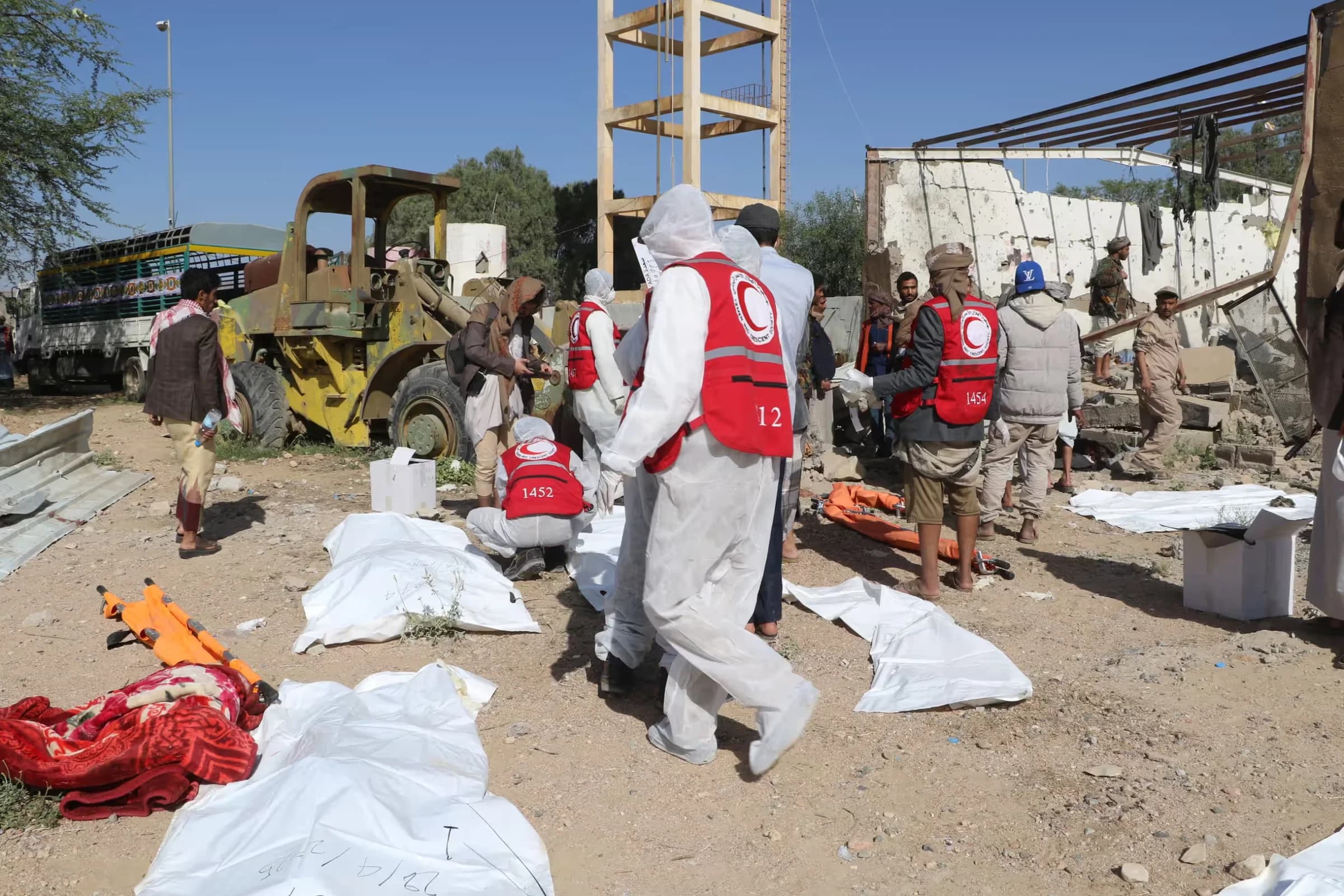
Yemen’s Houthi rebels have claimed that 68 people were killed and 47 others injured after a U.S. airstrike hit a detention center housing African migrants in the city of Saada. The rebel group, which controls much of north-west Yemen, stated that the facility was operating under the oversight of the International Organization for Migration (IOM) and the Red Cross. They condemned the strike, saying it “constitutes a full-fledged war crime.” The U.S. military has yet to issue an official response. Since 15 March, the United States has been carrying out near-daily strikes against the Houthis as
Yemen’s Houthi rebels have claimed that 68 people were killed and 47 others injured after a U.S. airstrike hit a detention center housing African migrants in the city of Saada. The rebel group, which controls much of north-west Yemen, stated that the facility was operating under the oversight of the International Organization for Migration (IOM) and the Red Cross. They condemned the strike, saying it “constitutes a full-fledged war crime.” The U.S. military has yet to issue an official response. Since 15 March, the United States has been carrying out near-daily strikes against the Houthis as part of an operation dubbed "Rough Rider," aimed at neutralizing the threat the group poses to vessels navigating the Red Sea and Gulf of Aden. The Houthis began targeting Israeli and Western ships in October 2023, citing solidarity with Palestinians in Gaza. Over the weekend, the Houthis fired a "Palestine-2" hypersonic ballistic missile at Israel’s Nevatim airbase, but Israeli defenses successfully intercepted it. Footage broadcast by the Houthis’ Al-Masirah satellite channel after the Sunday night strike showed disturbing images of dead and wounded individuals at the detention center. Yemen has long served as a critical transit route for African migrants—primarily from Ethiopia and Somalia—seeking to reach Saudi Arabia and Oman. Estimates suggest more than 300,000 migrants are currently in Yemen, a country ravaged by a decade-long civil war. The Houthis have allegedly profited by smuggling migrants across the border, generating tens of thousands of dollars weekly. This latest strike recalls a 2022 attack by the Saudi-led coalition on the same Saada compound, which collapsed and killed 66 detainees while injuring 113 others, according to a United Nations report. In the aftermath, the Houthis reportedly shot and killed 16 detainees who attempted to flee and wounded 50 others. The Saudi coalition at the time justified the attack by claiming that Houthi forces were manufacturing and launching drones from the site; however, the UN concluded it was widely recognized as a detention center. The U.S. military approach has changed significantly since the Trump administration designated the Houthis a foreign terrorist organization in January. Since mid-March, American forces have intensified their bombardments not only against missile sites but also against the group's political leadership, including Abdelmalek al-Houthi, who has led the movement since 2004. Ahead of news about the latest strike, U.S. Central Command released a statement early Monday, saying: "To preserve operational security, we have intentionally limited disclosing details of our ongoing or future operations. We are very deliberate in our operational approach, but will not reveal specifics about what we’ve done or what we will do." In March, former U.S. President Donald Trump remarked that the Houthis had been “decimated” by American strikes. However, he added: "Stop shooting at US ships, and we will stop shooting at you. Otherwise, we have only just begun, and the real pain is yet to come, for both the Houthis and their sponsors in Iran." The effectiveness of the U.S. campaign remains contested. The Houthis have previously demonstrated resilience under intense bombardment by Saudi Arabian forces, supported by British military advisors. Britain has also played a significant role in the latest U.S.-led operations, more than any other European ally. Most American strikes have been launched from the USS Harry S Truman stationed in the Red Sea, with additional airstrikes carried out by U.S. Air Force B-2 bombers based at Diego Garcia, a British-leased base in the Indian Ocean. Since mid-March, the United States has authorized more than 750 airstrikes under the intensified campaign. Meanwhile, the Houthis claim to have shot down seven U.S. Reaper drones in less than six weeks, estimating the damage to the Pentagon at over $200 million. Despite the targeting of its leadership, doubts persist about whether the death of Abdelmalek al-Houthi would meaningfully disrupt the movement. The Houthis, as followers of the Zaydi branch of Shia Islam, traditionally require leaders to be descendants of the Prophet Muhammad and recognized religious scholars. Maysaa Shuja Al-Deen, a senior researcher at the Sana’a Center for Strategic Studies, recently wrote in the Yemen Review: "Without a respected local Zaidi authority figure capable of mediating or guiding the transition, the dispute would likely remain unresolved without external intervention. In this situation, Iran’s role would be key. Its political and military backing for one of the rival factions could prove decisive in shaping the group’s future direction."



Comments
No comments yet. Be the first to share a thought.