
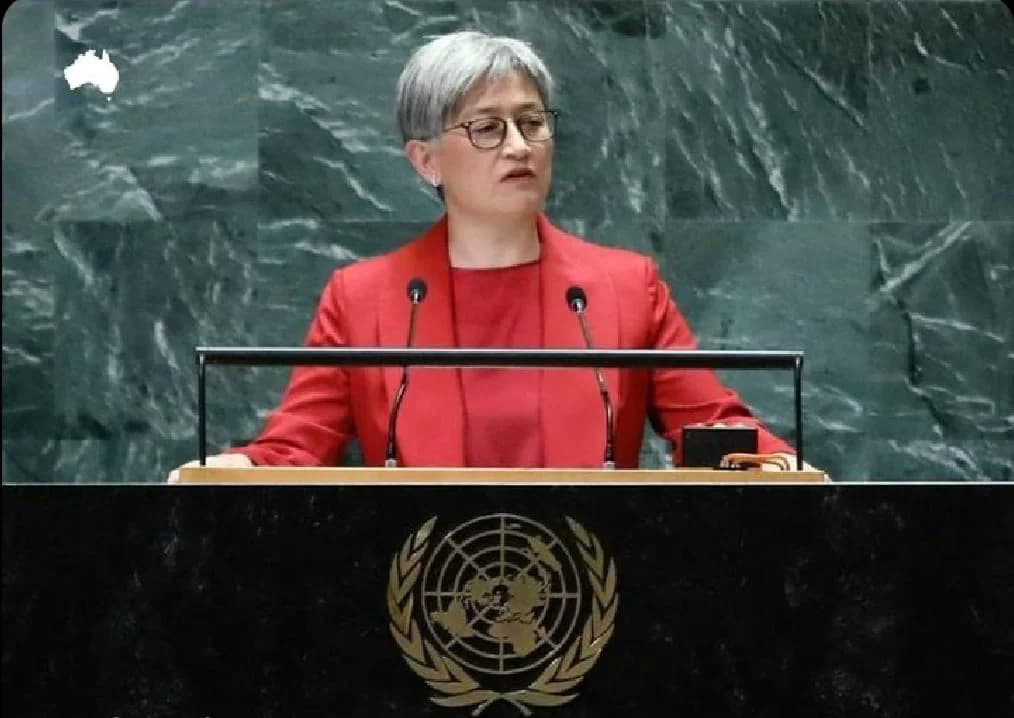
The recent speech delivered by Australia’s Foreign Minister at the United Nations has drawn significant criticism for its stark divergence from reality and its morally questionable stance on Israel. In a time when diplomatic discourse is paramount, her remarks not only failed to reflect the complexities of the Israeli-Palestinian conflict but also raised ethical concerns regarding Israel's treatment in the international arena. At the heart of the criticism is the assertion that the Foreign Minister's speech lacked a grounded understanding of the current geopolitical landscape. Her presentatio
The recent speech delivered by Australia’s Foreign Minister at the United Nations has drawn significant criticism for its stark divergence from reality and its morally questionable stance on Israel. In a time when diplomatic discourse is paramount, her remarks not only failed to reflect the complexities of the Israeli-Palestinian conflict but also raised ethical concerns regarding Israel's treatment in the international arena. At the heart of the criticism is the assertion that the Foreign Minister's speech lacked a grounded understanding of the current geopolitical landscape. Her presentation painted a simplistic and one-dimensional picture of the situation, ignoring the historical context and the myriad factors contributing to the ongoing conflict. By presenting Israel solely as an aggressor without acknowledging the complexities of the region, the speech undermined the nuances necessary for productive dialogue. This disconnect from reality is particularly concerning, as it risks alienating key allies and diminishing Australia’s role as a constructive player on the global stage. A foreign policy built on misconceptions and oversimplifications is not only ineffective but also detrimental to Australia’s international standing. Furthermore, the Foreign Minister’s remarks have been described as morally offensive in their treatment of Israel. By failing to recognize Israel’s right to defend itself against ongoing threats, the speech fostered an environment of hostility toward a nation that has long grappled with security challenges. This approach neglects the legitimate concerns and fears of Israeli citizens, many of whom live under the constant threat of violence. In a time when global tensions are already high, such a morally dubious stance does little to promote peace or foster understanding. It is essential for leaders to advocate for balanced perspectives that prioritize empathy and recognize the humanity on all sides of a conflict. The Foreign Minister’s failure to do so reflects a troubling disregard for moral accountability in international relations. The implications of the Foreign Minister's speech extend beyond the confines of the United Nations. It raises questions about the values Australia stands for on the global stage. A country that prides itself on promoting democratic principles, human rights, and the rule of law must ensure that its foreign policy reflects these ideals. When the speech deviates so markedly from these values, it not only undermines the Foreign Minister’s credibility but also tarnishes Australia’s reputation as a nation committed to ethical diplomacy. In conclusion, the Foreign Minister’s recent UN speech represents a significant departure from the realities of the Israeli-Palestinian conflict and raises moral concerns regarding the treatment of Israel. It is imperative for Australian leaders to engage in discourse that is both factually accurate and ethically grounded. As Australia navigates the complexities of international relations, a commitment to truth and moral integrity must guide its approach, ensuring that its voice on the global stage remains worthy of its people and reflective of its values



Comments
No comments yet. Be the first to share a thought.