
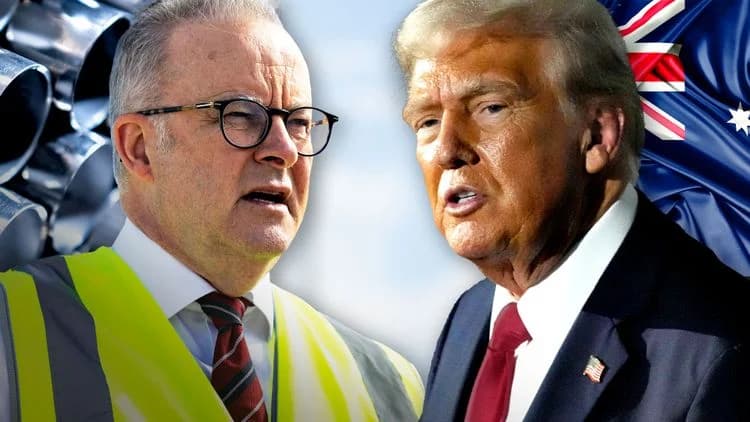
Prime Minister Anthony Albanese is set to engage with US President Donald Trump in a bid to secure Australia’s exemption from newly announced tariffs on steel and aluminium imports. President Trump announced earlier today that his administration would impose a 25% tariff on all steel and aluminium imports into the United States. The move, aimed at protecting American industries, has raised concerns among global trade partners, including Australia. While the full scope of these tariffs remains uncertain, Australian producers face potential disruptions unless an exemption is granted. Addressin
Prime Minister Anthony Albanese is set to engage with US President Donald Trump in a bid to secure Australia’s exemption from newly announced tariffs on steel and aluminium imports. President Trump announced earlier today that his administration would impose a 25% tariff on all steel and aluminium imports into the United States. The move, aimed at protecting American industries, has raised concerns among global trade partners, including Australia. While the full scope of these tariffs remains uncertain, Australian producers face potential disruptions unless an exemption is granted. Addressing the Australian Parliament this afternoon, Prime Minister Albanese reaffirmed his government’s commitment to advocating for the nation’s interests. > “We will continue to make the case for Australia to be given an exemption to any steel and aluminium tariffs,” he stated, emphasizing the deep economic and strategic ties between the two countries. Australia has historically maintained a strong trade relationship with the United States, with steel and aluminium exports playing a crucial role in bilateral commerce. Any imposition of tariffs could significantly impact Australian businesses, disrupt supply chains, and lead to broader economic consequences. The Australian government is expected to utilize diplomatic channels to argue that Australia should not be subject to these tariffs. Officials will likely emphasize Australia’s status as a key security and economic partner of the US, along with the relatively small share of Australia’s steel and aluminium exports in the American market compared to other nations. Industry stakeholders in Australia have voiced concerns about the potential impact of these tariffs. Business leaders and the Australian Workers’ Union have warned that increased costs and reduced competitiveness could harm the domestic metals sector. A representative from the Australian Steel Institute stated that the tariffs could create an uneven playing field, making it harder for Australian businesses to compete internationally. > “We rely on fair and open trade policies to ensure our exports remain competitive,” the spokesperson said. “Any additional costs could have a direct impact on jobs and investment in the sector.” As negotiations progress, Prime Minister Albanese’s discussions with President Trump will be crucial in determining whether Australia secures an exemption. The outcome of these talks will not only affect the Australian metals industry but also influence the broader trade relationship between the two nations. Australian trade officials are expected to highlight past exemptions granted to allies and stress the importance of maintaining strong economic ties between the two countries. Given Australia’s long-standing support for US-led security initiatives and its historically positive trade balance with the United States, the government remains optimistic about securing a favorable outcome. In the coming days, further diplomatic engagement and lobbying efforts will play a key role in shaping the final decision. As discussions unfold, Australian businesses and workers in the metals sector await clarity on how these tariffs will impact their industry.



Comments
No comments yet. Be the first to share a thought.