
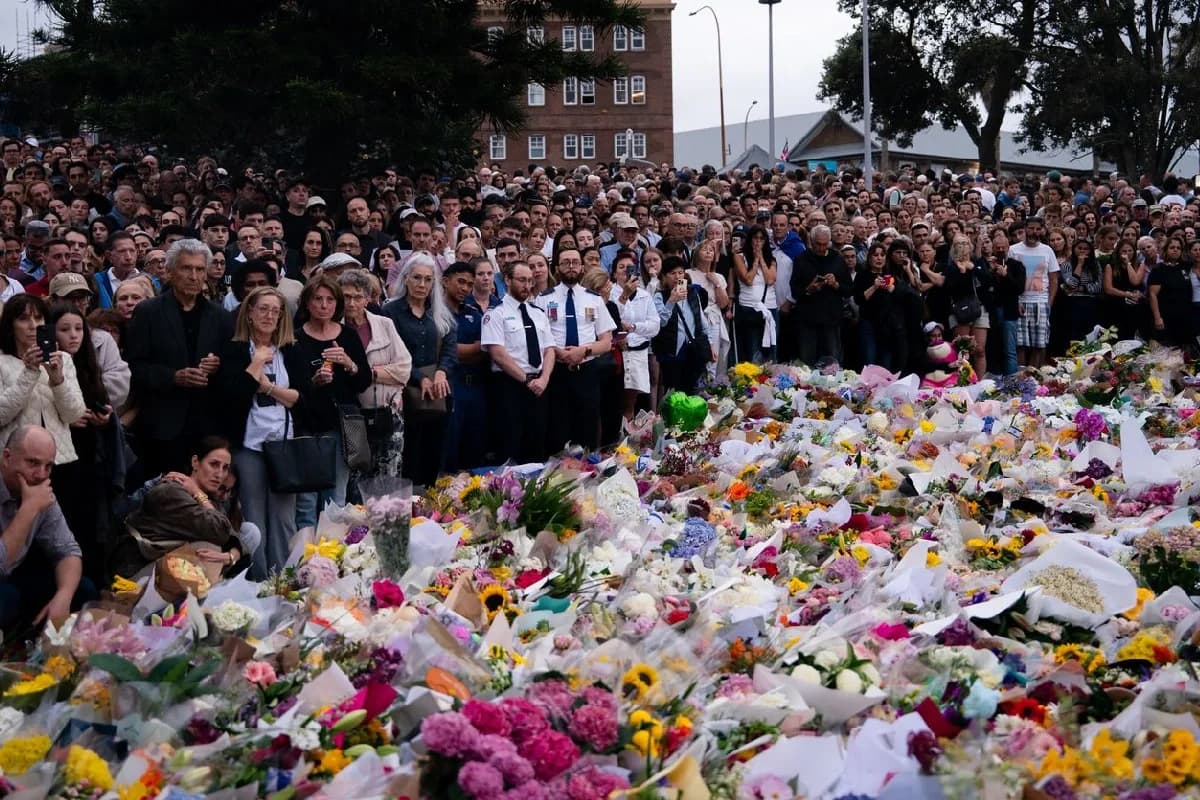
The Australian government has announced a nationwide gun buyback scheme following the deadly terrorist attack at Bondi Beach, the country’s worst mass shooting in decades. The initiative will be the largest firearms buyback since the 1996 Port Arthur massacre, in which 35 people were killed. That tragedy led to Australia introducing some of the world’s strictest gun control laws. On Sunday, 15 people were killed and dozens more injured when two gunmen opened fire at a Jewish festival held at Bondi Beach, one of Australia’s most well-known public locations. Authorities say the attackers were
The Australian government has announced a nationwide gun buyback scheme following the deadly terrorist attack at Bondi Beach, the country’s worst mass shooting in decades. The initiative will be the largest firearms buyback since the 1996 Port Arthur massacre, in which 35 people were killed. That tragedy led to Australia introducing some of the world’s strictest gun control laws. On Sunday, 15 people were killed and dozens more injured when two gunmen opened fire at a Jewish festival held at Bondi Beach, one of Australia’s most well-known public locations. Authorities say the attackers were motivated by Islamic State ideology. Police have classified the incident as a terrorist attack and allege it was carried out by a father and son. Naveed Akram, 24, has been charged with 59 offences, including 15 counts of murder and one count of committing a terrorist act. His father, Sajid Akram, was shot dead during the attack. The day after the shooting, the national cabinet—comprising federal, state and territory leaders—met and agreed to strengthen gun laws across the country. Speaking on Friday, Prime Minister Anthony Albanese said Australia now has more than four million registered firearms, exceeding the number in circulation at the time of the Port Arthur massacre. “We know one of the terrorists held a firearms licence and owned six guns, despite living in suburban Sydney,” Mr Albanese said. “There was no legitimate reason for someone in that situation to have access to so many weapons.” Australian Federal Police Commissioner Krissy Barrett said reducing the overall number of firearms in the community was essential. “A buyback scheme must be part of the solution if we are serious about limiting access to guns,” she said. Under the new plan, the federal government and the states and territories will jointly fund the scheme, sharing costs equally. The program will target surplus firearms, newly banned weapons and illegal guns. The government estimates that hundreds of thousands of firearms will be collected and destroyed. In addition to the buyback, the national cabinet has agreed to cap the number of firearms an individual can own, end open-ended gun licences and further restrict the types of weapons that can be legally held. Australian citizenship will also become a requirement for obtaining a firearms licence. Authorities will fast-track the development of a national firearms register, while regulators will be given improved access to criminal intelligence databases. Meanwhile, New South Wales Police confirmed on Friday that seven men previously detained in Sydney over extremist ideology would be released, as there were no grounds to continue holding them. The men will, however, remain under close monitoring. Tactical police officers detained the group on Thursday in the Sydney suburb of Liverpool after they travelled from Victoria. A knife was seized during the operation, but no firearms or other weapons were found. NSW Police Commissioner Mal Lanyon said there was no confirmed connection between the group and the Bondi Beach attackers, although Bondi was among several locations the men had planned to visit.



Comments
No comments yet. Be the first to share a thought.