
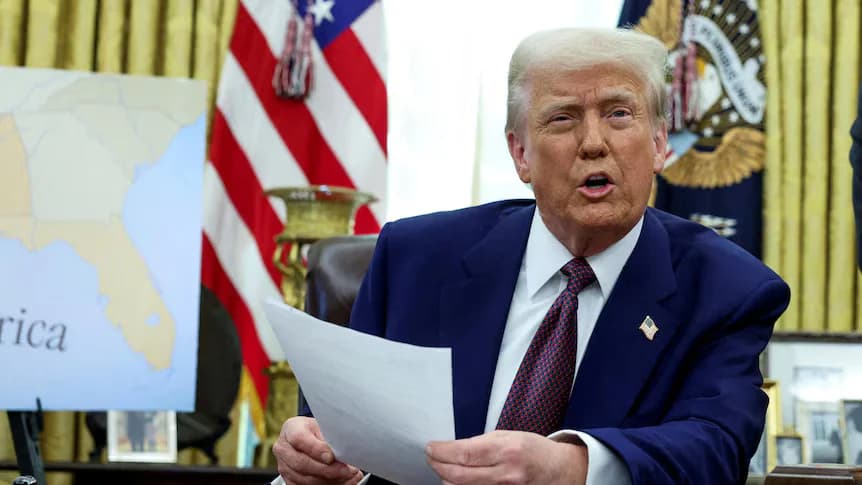
Thousands of Australians living and working in the United States could face difficulties extending their stay after the Trump administration suddenly issued new visa rules over the weekend. ABC reports that expatriate groups in the US have convened emergency sessions with immigration lawyers following reports that Australians have already been denied visa extensions under the tightened policy. “Right now, we are in full-on — I hate to use the word, but — panic mode for a lot of individuals,” American immigration lawyer Jonathan Grode told the ABC . Under the new rules, Australians on worki
Thousands of Australians living and working in the United States could face difficulties extending their stay after the Trump administration suddenly issued new visa rules over the weekend.
ABC
reports that expatriate groups in the US have convened emergency sessions with immigration lawyers following reports that Australians have already been denied visa extensions under the tightened policy. “Right now, we are in full-on — I hate to use the word, but — panic mode for a lot of individuals,” American immigration lawyer Jonathan Grode told the
ABC
. Under the new rules, Australians on working visas may now be required to return to Australia every two years to attend an interview at a US consulate. Previously, many travelled shorter distances to renew visas at consulates in countries such as the United Kingdom or Barbados. A directive issued by the US State Department on Saturday, without prior warning, appears to discourage those options. It states that visa applicants “must be able to demonstrate residence in the country where they are applying.” Josh Pugh, founder of the America Josh website and online community for Australians in the US, said the change has already left some stranded. He reported that several Australians who travelled to London for visa interviews on Monday had their applications refused under the new directive. “We’ve heard directly from about a dozen people already who have said that they got to the interview like they had many times before, they went through the process [and then were] told that their visa had been refused because of this new directive,” Pugh said. “It’s incredibly difficult for them, because now they are without status, or without a visa, to re-enter the States in some cases.”
Australians in Limbo
New York-based advertising executive Lauren Eather, an Australian who has lived in the US for nearly a decade on an E-3 visa, was among those affected. She had scheduled a visa renewal appointment in London but now remains uncertain if it can proceed. Currently in Europe, Eather is unable to return to the US until her visa is renewed. She described the sudden rule change as shocking. “I presume we’ll find a way through it, but if this [appointment] can’t work, I’ll have to go back to Australia and figure out when I can get an appointment [there],” she said. “Who knows when that will be because I think everyone will be swarming to get those appointment spots.” The E-3 visa, introduced in 2005 under the US-Australia Free Trade Agreement, is available exclusively to Australians with a university degree and a related job offer in the US. The visa must be renewed every two years but carries no limit on the number of renewals. It also extends working rights to visa holders’ spouses and allows children under 21 to remain in the US. Amy Meyer, who runs a recruitment firm specializing in E-3 visa guidance and job placements for Australians, said she had scheduled an emergency online session with immigration lawyer Grode for Tuesday night. More than 700 people registered in less than 24 hours. “There’s a lot of stress and concern from the community because what has historically been so easy, so straightforward, so simple is now very up in the air,” Meyer said. Grode, managing partner at Philadelphia law firm Green & Spiegel, said the directive’s vague wording has created confusion even among US consular staff. “In the case of one individual [denied a visa extension] in London, we’ve written to the consulate and we’ve said, ‘Hey, I think there’s a little bit of a misinterpretation of the rule going on here.’ And they responded back and said, ‘We’re seeking additional guidance,’” he explained. “So even they feel that there is a little bit of clarification that needs to be resolved prior to full implementation of this new policy.” Grode said he hoped the new rules would eventually be eased for holders of E-3 and other professional working visas. “This is very much the way the Trump administration has operated, especially during Trump 2.0, where they make a proclamation and sort of allow for the situation to play itself out before they provide further guidance.” The
ABC
has contacted the State Department and the White House for further information. The directive follows a series of Trump administration efforts to tighten visa rules. Proposals currently under consideration would restrict visas for students and media workers, which can currently last for years and be renewed relatively easily. The proposed changes would shorten their maximum duration to 240 days and make extensions more difficult. Press freedom advocates have warned of serious implications. “It sets up a system with high potential for abuse, as the Trump administration systematically punishes journalists and news outlets that criticise its policies,” said Reporters Without Borders USA executive director Clayton Weimers.



Comments
No comments yet. Be the first to share a thought.