
In a significant milestone for commercial spaceflight, Boeing’s Starliner spacecraft successfully docked with the International Space Station (ISS) on Thursday, marking the first time astronauts have arrived at the space station aboard a Boeing Starliner. NASA astronauts Butch Wilmore and Suni Williams were welcomed aboard the ISS after navigating a series of new issues that emerged during their journey. The docking process was completed at 1:34 p.m. ET, as Starliner securely connected with the space station’s docking port. To ensure a stable and secure connection, additional steps were taken
In a significant milestone for commercial spaceflight, Boeing’s Starliner spacecraft successfully docked with the International Space Station (ISS) on Thursday, marking the first time astronauts have arrived at the space station aboard a Boeing Starliner. NASA astronauts Butch Wilmore and Suni Williams were welcomed aboard the ISS after navigating a series of new issues that emerged during their journey. The docking process was completed at 1:34 p.m. ET, as Starliner securely connected with the space station’s docking port. To ensure a stable and secure connection, additional steps were taken, completing the docking process approximately 20 minutes later.
A New Chapter in Space Travel
The success of this mission represents a pivotal moment for Boeing and NASA, as it demonstrates the viability of Starliner for manned missions to the ISS. This accomplishment not only showcases Boeing’s capabilities in spacecraft development but also highlights the growing role of commercial companies in supporting and expanding human space exploration. Wilmore and Williams’ arrival marks the culmination of extensive testing and preparation, emphasizing the collaborative efforts between NASA and Boeing. This mission also underscores the importance of having multiple providers for crew transportation to the ISS, thereby enhancing the resilience and redundancy of access to space.
Overcoming Challenges in Route
During their journey, the crew encountered unexpected challenges, including technical issues that arose overnight and on Thursday. Despite these hurdles, the mission team efficiently resolved the problems, ensuring the spacecraft’s safe arrival. This adaptability and problem-solving capability are crucial in space missions, where unanticipated situations can arise. The ability to address and overcome these issues not only demonstrates the robustness of the Starliner spacecraft but also the proficiency of the mission control teams. This mission serves as a testament to the rigorous training and preparedness of astronauts and engineers involved in space missions.
Looking Ahead
The successful docking of Boeing’s Starliner with the ISS is a promising development for future space missions. It signifies a step forward in the commercialization of space travel, paving the way for more frequent and diverse missions. As Boeing and NASA continue to refine and improve the Starliner program, the potential for expanded missions, including those beyond the ISS, becomes increasingly viable. This mission adds to the growing legacy of human space exploration, with each achievement bringing humanity closer to a sustainable presence in space. The collaboration between NASA and commercial partners like Boeing will continue to drive innovation and expand our understanding and utilization of space. As Wilmore and Williams settle into their tasks aboard the ISS, their successful journey aboard the Starliner will be remembered as a landmark event in the history of space travel. This achievement not only reinforces the importance of international cooperation in space exploration but also inspires future generations of astronauts, scientists, and engineers to reach for the stars.
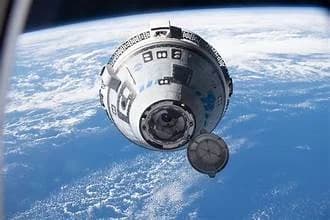
Boeing's Starliner spacecraft docks with space station after thruster issues (photo by internet)



Comments
No comments yet. Be the first to share a thought.