
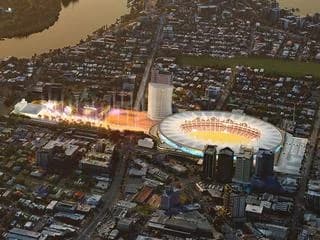
Former Queensland Premier Annastacia Palaszczuk has criticized the planning and financial management of the Brisbane 2032 Olympic Games, following reports that the construction of the Olympic villages will cost an estimated $3.5 billion. Her remarks have reignited debate over the state government’s preparedness to deliver the infrastructure necessary for the global event. The Courier-Mail revealed that the Liberal National Party (LNP)-led government received advice from the treasury about the significant expense required to build the villages. Deputy Premier Jarrod Bleijie highlighted that th
Former Queensland Premier Annastacia Palaszczuk has criticized the planning and financial management of the Brisbane 2032 Olympic Games, following reports that the construction of the Olympic villages will cost an estimated $3.5 billion. Her remarks have reignited debate over the state government’s preparedness to deliver the infrastructure necessary for the global event. The Courier-Mail revealed that the Liberal National Party (LNP)-led government received advice from the treasury about the significant expense required to build the villages. Deputy Premier Jarrod Bleijie highlighted that the previous Labor administration, under Palaszczuk’s leadership, had allocated only $155 million to the project, a stark contrast to the newly projected costs. Opposition Leader Cameron Dick defended the former government’s approach, explaining that the Labor administration had planned to collaborate with private investors to finance the Olympic villages. He argued that leveraging private partnerships could have alleviated the financial strain on taxpayers, noting that this strategy was part of their transparent planning process. Palaszczuk expressed concern over the current government’s handling of the situation, stating, “The Olympics are meant to be a unifying event for Queensland, but this level of mismanagement risks undermining public confidence in the project.” The financial revelations have sparked wider concerns about the feasibility of delivering the infrastructure required for the Games. The $3.5 billion cost has raised questions about fiscal responsibility, planning transparency, and the role of public-private collaboration in funding major projects. Hosting an event of this magnitude presents unique challenges, with less than a decade remaining until Brisbane takes the global stage. The government’s ability to address the cost discrepancies and implement effective financial strategies will be pivotal in ensuring the success of Brisbane 2032. Queenslanders are now awaiting further details on how the government plans to reconcile the funding gap while maintaining the promises of a world-class Olympic event. The debate underscores the importance of accountability and prudent management in realizing the ambitions of the Brisbane 2032 Games.



Comments
No comments yet. Be the first to share a thought.