
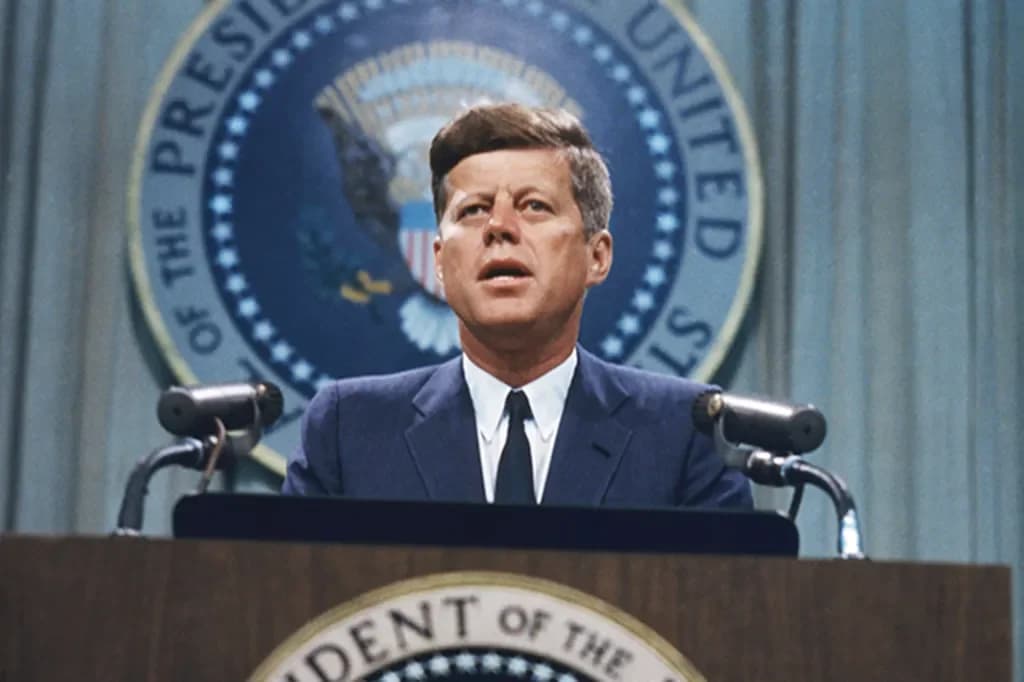
Throughout American history, many U.S. presidents have died while in office, with causes ranging from natural illnesses to assassinations. These moments not only tested the resilience of the country's leadership but also left indelible marks on its political landscape. The saddest part of this story is that this didn’t happen either once or twice. Instead, it happened in all 8 occasions in different eras. Probably this story has never come across your ears, but here is the detailed listicle. William Henry Harrison (1841) William Henry Harrison holds the unfortunate distinction of having the
Throughout American history, many U.S. presidents have died while in office, with causes ranging from natural illnesses to assassinations. These moments not only tested the resilience of the country's leadership but also left indelible marks on its political landscape. The saddest part of this story is that this didn’t happen either once or twice. Instead, it happened in all 8 occasions in different eras. Probably this story has never come across your ears, but here is the detailed listicle.
William Henry Harrison (1841)
William Henry Harrison holds the unfortunate distinction of having the shortest presidency in U.S. history. Inaugurated on March 4, 1841, Harrison delivered a lengthy address in cold weather without adequate clothing, leading to a severe illness. He succumbed to pneumonia just 31 days later, on April 4, 1841, at the age of 68. His death marked the first time a sitting U.S. president died in office, raising questions about presidential succession.
Zachary Taylor (1849-1850)
Zachary Taylor, a national hero from the Mexican-American War, assumed the presidency on March 4, 1849. On July 4, 1850, after attending a holiday celebration, Taylor fell ill and died five days later, on July 9, 1850, at 65. The sudden nature of his death led to various theories, but contemporary assessments suggest acute gastroenteritis as the cause.
Abraham Lincoln (1861-1865)
Abraham Lincoln's leadership during the Civil War preserved the Union, but his life was tragically cut short. On April 14, 1865, just days after the war's end, Lincoln was shot by John Wilkes Booth at Ford's Theatre in Washington, D.C. He died the following morning on April 15, 1865, at 56. Lincoln's assassination was the first of a U.S. president, plunging the nation into deep mourning during a pivotal period.
James A. Garfield (1881)
James A. Garfield's presidency was brief and marred by tragedy. Inaugurated on March 4, 1881, he was shot by Charles J. Guiteau, a disgruntled office seeker, on July 2, 1881. Garfield battled infections and complications for 79 days before dying on September 19, 1881, at 49. His prolonged suffering highlighted the need for advancements in medical care and presidential security.
William McKinley (1897-1901)
Re-elected for a second term, William McKinley's presidency ended abruptly when he was shot by anarchist Leon Czolgosz on September 6, 1901, during a public event in Buffalo, New York. Despite initial hopes for recovery, McKinley died on September 14, 1901, at 58. His assassination led to increased security measures for future presidents.
Warren G. Harding (1921-1923)
Warren G. Harding's term was overshadowed by scandals that came to light after his death. While on a cross-country tour, Harding fell ill and died suddenly of a heart attack on August 2, 1923, at 57, in San Francisco. His unexpected death preceded the exposure of the Teapot Dome scandal, which tainted his administration's legacy.
Franklin D. Roosevelt (1933-1945)
Serving an unprecedented four terms, Franklin D. Roosevelt led the U.S. through the Great Depression and most of World War II. However, his health deteriorated, and on April 12, 1945, at 63, he died of a cerebral hemorrhage in Warm Springs, Georgia. His death came just months before the end of World War II, ushering in Harry S. Truman's presidency during a critical juncture in global affairs.
John F. Kennedy (1961-1963)
John F. Kennedy's assassination remains one of the most shocking events in American history. On November 22, 1963, while riding in a motorcade in Dallas, Texas, Kennedy was shot and killed by Lee Harvey Oswald. At 46, he was the youngest president to die in office. His death led to nationwide mourning and significant changes in Secret Service protocols. The deaths of these eight presidents profoundly impacted the nation, leading to immediate shifts in leadership and prompting changes in security and succession protocols. Do you know where the mystery is, in this story? In a miraculous equal proportion, 4 presidents namely: William Henry Harrison (1841), Zachary Taylor (1850), Warren Harding (1923) and Franklin Delano Roosevelt (1945), died of natural causes; while other 4 namely: Abraham Lincoln (1865), James A. Garfield (1881), William McKinley (1901) and John F. Kennedy (1963) were assassinated.



Comments
No comments yet. Be the first to share a thought.