

Berlin, Germany , In a landmark shift for gender equity in public spaces, Berlin’s municipal pools have officially desexualized the female torso. Following a string of high profile discrimination complaints, the city’s pool operator, Berliner Bäder Betriebe (BBB), updated its internal regulations to permit all visitors regardless of gender to swim topless. The move, which was fully implemented in 2023 and remains a standard today in 2026, bridges the gap between Germany's historic free body culture (Freikörperkultur) and modern legal protections against gender based discrimination. The policy
Berlin, Germany, In a landmark shift for gender equity in public spaces, Berlin’s municipal pools have officially desexualized the female torso. Following a string of high profile discrimination complaints, the city’s pool operator, Berliner Bäder Betriebe (BBB), updated its internal regulations to permit all visitors regardless of gender to swim topless. The move, which was fully implemented in 2023 and remains a standard today in 2026, bridges the gap between Germany's historic free body culture (Freikörperkultur) and modern legal protections against gender based discrimination. The policy change was catalyzed by the determination of individual swimmers who refused to accept a double standard. In December 2022, a 33 year old woman was ordered to leave an indoor pool in the district of Reinickendorf because she was swimming topless. She argued that the house rules, which only required customary bathing attire, did not explicitly require women to cover their chests.
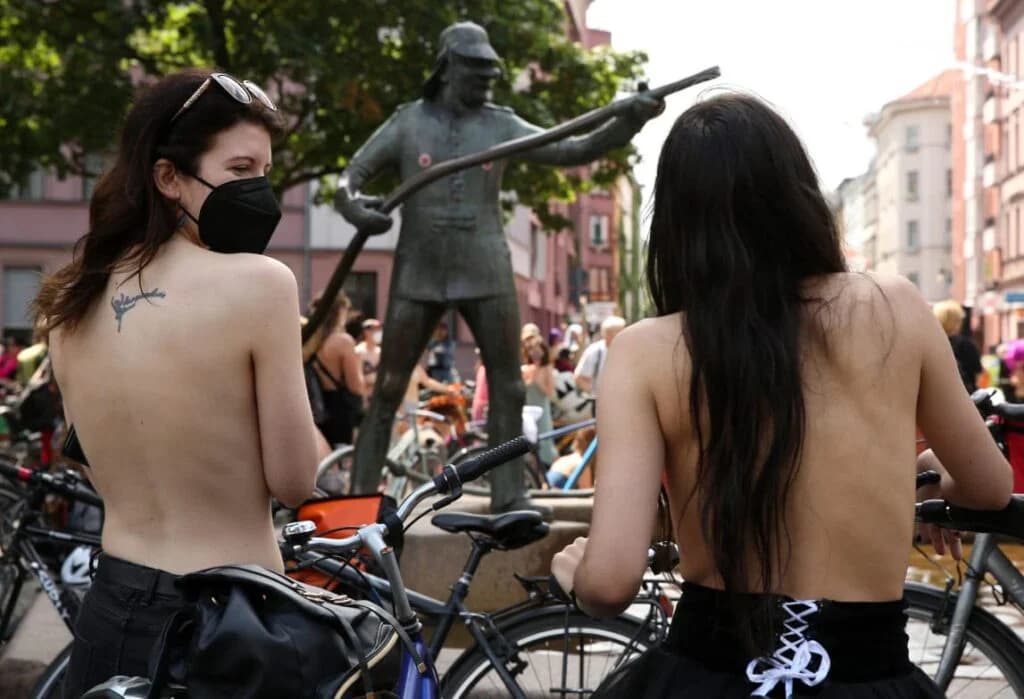
When she took her case to the Berlin Senate’s Ombudsman’s Office for equal treatment, authorities agreed that she had been a victim of discrimination. This followed a similar 2021 incident where a woman was expelled from an open air water park in Treptow-Köpenick for sunbathing topless with her five year old son. Rather than changing the law, the city simply clarified its interpretation. The Berliner Bäder-Betriebe confirmed that customary swimwear now applies gender neutrally. Under the current guidelines, only the primary sexual organs (genitals) must be covered. By categorizing the female breast as a secondary sexual characteristic similar to a beard or chest hair, Berlin has effectively ended the mandatory bikini top obligation. This transition was paved by other German cities like Göttingen and Siegen, which launched pilot programs for topless swimming in 2022. However, Berlin’s adoption across more than 80 municipal facilities made it the largest urban area in the world to institutionalize such a policy.

"The ombudsperson’s office very much welcomes the decision... because it establishes equal rights for all Berliners, whether male, female or non binary, and because it also creates legal certainty for the staff." Dr. Doris Liebscher, Head of the Ombudsman’s Office, Berlin Senate for Justice and Diversity told reporters in 2023. "I thought about it and I came to the conclusion that, 'No, I don't want to be ashamed of my breasts anymore.' This permanent sexualization that we are exposed to... I just don't want to accept it anymore." Lotte Mies, activist and swimmer, during a 2023 interview with Deutsche Welle. While the policy was met with international surprise, for many Berliners, it is simply a formalization of the city’s existing live and let live attitude. Germany's deep rooted FKK culture has long normalized public nudity in designated park areas and saunas, viewing it as a healthy, non sexual way of being in nature. By 2026, topless for all has moved from a controversial headline to a quiet reality of Berlin summers. The regulation does not mandate toplessness, but it ensures that for those who choose it, the pool remains a space of equal treatment rather than exclusion.



Comments
No comments yet. Be the first to share a thought.