
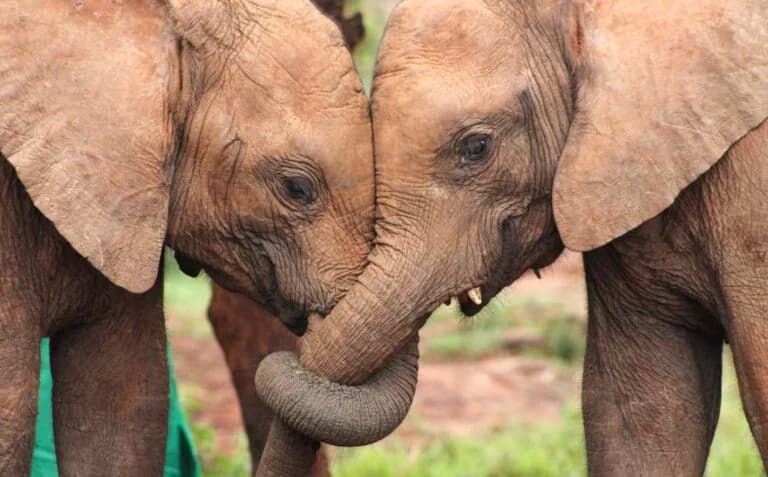
In a remarkable intersection of artificial intelligence and wildlife research, scientists have unveiled a groundbreaking discovery: African savannah elephants use individual names to call to each other. This revelation, detailed in a recent study published in Nature Ecology and Evolution, sheds new light on the complex social dynamics and communication skills of these magnificent mammals. The research was conducted in the savannahs of Kenya, where two herds of African elephants were meticulously observed. Using advanced machine learning software named Elephant Voices, researchers analyzed the
In a remarkable intersection of artificial intelligence and wildlife research, scientists have unveiled a groundbreaking discovery: African savannah elephants use individual names to call to each other. This revelation, detailed in a recent study published in Nature Ecology and Evolution, sheds new light on the complex social dynamics and communication skills of these magnificent mammals. The research was conducted in the savannahs of Kenya, where two herds of African elephants were meticulously observed. Using advanced machine learning software named Elephant Voices, researchers analyzed the vocalizations exchanged between the elephants. This software was designed to decode the nuances in elephant calls, providing insights that were previously unattainable through human observation alone. Elephant Voices employs sophisticated algorithms to categorize and interpret the calls made by elephants. By processing hours of audio recordings, the software was able to identify distinct patterns and variations in the calls. These patterns were then cross-referenced with the behavior and interactions of the elephants, allowing researchers to link specific calls to individual elephants. The study's findings are nothing short of extraordinary. It was discovered that each elephant has a unique vocalization—a "name"—that other elephants use to address it. This form of individual identification through vocalization is a hallmark of advanced social species, previously confirmed in dolphins and certain bird species, but never before in terrestrial mammals like elephants. Researchers observed that these individual calls are used in various contexts, such as coordinating movements, alerting each other to potential dangers, and strengthening social bonds within the herd. The ability to call each other by name indicates a level of cognitive complexity and social organization that parallels that of human societies. This discovery has profound implications for our understanding of elephant cognition and social behavior. It underscores the importance of preserving elephant habitats and ensuring their protection from poaching and human-wildlife conflict. The advanced social structures of elephants highlight their need for stable, uninterrupted environments where they can thrive and maintain their intricate social networks. Furthermore, the use of artificial intelligence in this study represents a significant advancement in wildlife research methodologies. Machine learning and AI have the potential to revolutionize how we study and understand animal behavior, offering deeper insights into the lives of creatures with whom we share our planet.



Comments
No comments yet. Be the first to share a thought.