
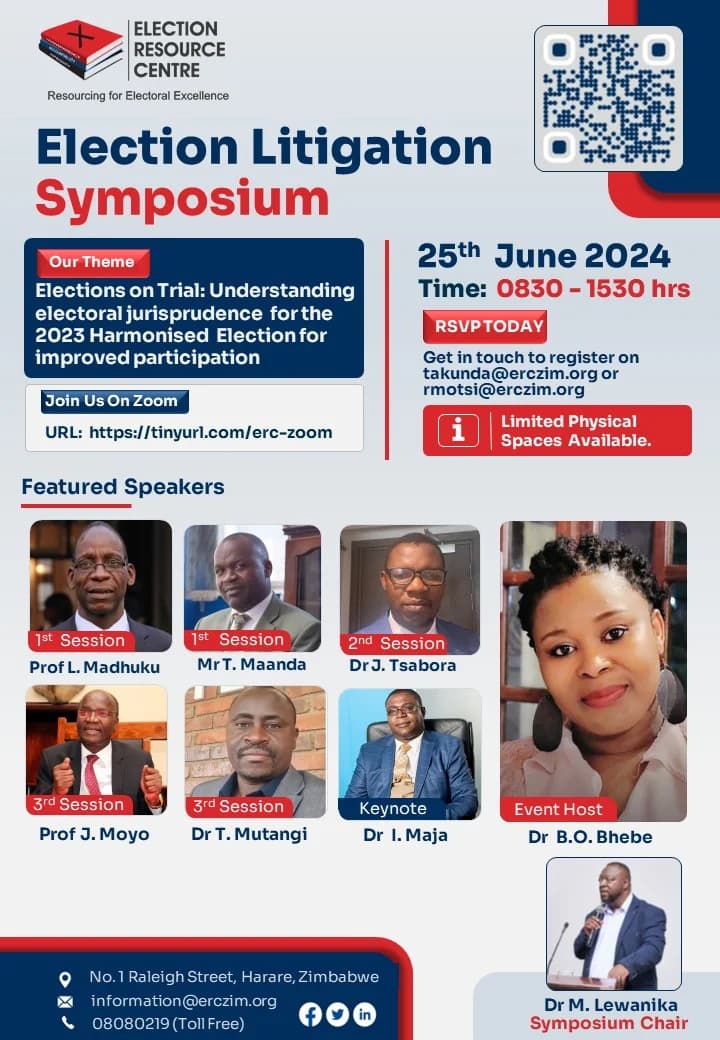
The Election Resource Centre (ERC) recently hosted an Election Litigation Symposium in Harare, focusing on the critical issue of electoral jurisprudence and the application of electoral laws in the run-up to Zimbabwe's 2023 Harmonised Elections. The symposium served as a platform for legal experts, academics, and civil society to discuss the complexities of electoral litigation and to promote a deeper understanding of electoral processes among citizens. One of the symposium's primary objectives was to foster informed participation in the electoral process and to empower women's voices in lead
The Election Resource Centre (ERC) recently hosted an Election Litigation Symposium in Harare, focusing on the critical issue of electoral jurisprudence and the application of electoral laws in the run-up to Zimbabwe's 2023 Harmonised Elections. The symposium served as a platform for legal experts, academics, and civil society to discuss the complexities of electoral litigation and to promote a deeper understanding of electoral processes among citizens. One of the symposium's primary objectives was to foster informed participation in the electoral process and to empower women's voices in leadership and democracy. This initiative aligns with broader efforts to ensure that all segments of society, particularly women, are adequately represented and actively involved in shaping the nation's democratic landscape. A significant portion of the discussions centered on a comparative analysis of the jurisprudence of Zimbabwean and South African courts. Professor Lovemore Madhuku, a distinguished legal scholar, led this segment, highlighting key differences and similarities in how the two countries handle electoral disputes. His insights provided valuable context for understanding the strengths and weaknesses of Zimbabwe's current legal framework in comparison to its regional counterpart. Another critical topic was the role of the Constitution in safeguarding citizens against the abuse of power. Speakers emphasized the importance of constitutional guarantees in ensuring free and fair elections. They discussed how the Constitution serves as a bulwark against electoral malpractice and as a tool for citizens to hold leaders accountable. The symposium also delved into the future of electoral petitions within Zimbabwe's election environment. Participants explored the challenges and opportunities that lie ahead, considering recent legal precedents and ongoing reforms. This discussion aimed to identify practical solutions for improving the efficacy of electoral petitions and ensuring that they contribute to a more transparent and accountable electoral process. In addition to Professor Madhuku, the symposium featured contributions from several prominent figures, including Arnold Tsunga and Douglas Mwonzora. Their perspectives enriched the discussions, providing a well-rounded view of the legal and practical aspects of electoral litigation in Zimbabwe. Arnold Tsunga, an esteemed human rights lawyer and advocate, shared his insights on the interplay between human rights and electoral law, emphasizing the need for a rights-based approach to electoral jurisprudence. Douglas Mwonzora, a seasoned politician and legal practitioner, offered a pragmatic view of the political and legal dynamics that influence electoral litigation.



Comments
No comments yet. Be the first to share a thought.