
Global football governing body FIFA has signaled it will not move Iran’s matches from the United States to Mexico, despite rising geopolitical tensions and safety concerns raised by Iranian officials. Iran Pushes for Change Amid Security Fears The debate intensified after the president of Iran’s football federation, Mehdi Taj, suggested that discussions were underway to relocate matches to Mexico. His concerns stem from escalating conflict involving Iran, Israel, and US-allied states, which has heightened fears over the safety of the Iranian national team. Taj’s stance was further reinfor
Global football governing body FIFA has signaled it will not move Iran’s matches from the United States to Mexico, despite rising geopolitical tensions and safety concerns raised by Iranian officials.
Iran Pushes for Change Amid Security Fears
The debate intensified after the president of Iran’s football federation, Mehdi Taj, suggested that discussions were underway to relocate matches to Mexico. His concerns stem from escalating conflict involving Iran, Israel, and US-allied states, which has heightened fears over the safety of the Iranian national team. Taj’s stance was further reinforced after comments from Donald Trump, who stated that although Iran is “welcome,” it might not be “appropriate” for them to participate due to security risks. FIFA Reaffirms Original Schedule Despite the pressure, FIFA has maintained a firm position. In an official statement, the organization emphasized that it expects all teams to compete according to the match schedule announced in December 2025. This means Iran’s group-stage fixtures remain unchanged: Against New Zealand (Los Angeles, 16 June) Against Belgium (Los Angeles, 21 June) Against Egypt (Seattle, 27 June) The tournament, co-hosted by the United States, Canada, and Mexico, is set to run from 11 June to 19 July 2026.
Political Tensions Spill Into Football
The situation reflects broader political tensions. Iran has exchanged military strikes with Israel and US-linked forces, creating uncertainty around international travel and security guarantees. Iranian authorities have argued that FIFA, not any host nation, should ensure fairness and safety. A message from the national team’s official channels even suggested that any country unable to guarantee security should not host matches. Meanwhile, FIFA President Gianni Infantino has reiterated that all qualified nations, including Iran, are welcome to participate, indicating ongoing dialogue between stakeholders.
A Familiar Scenario in Global Sports
Relocating matches due to political conflict is not unprecedented. Belarus, for example, has played “home” matches in Hungary due to its stance on the Russia-Ukraine war. Similarly, cricket rivals India and Pakistan often meet at neutral venues because of long-standing tensions. However, for now, FIFA appears determined to avoid disruption, prioritizing stability and adherence to its established tournament plan.
What Happens Next?
While Iran has not withdrawn from the competition, uncertainty remains. The coming weeks will be crucial as FIFA continues discussions with participating nations to ensure safety without altering the tournament structure. For global football, the situation underscores how deeply politics can intersect with sport—especially on the world’s biggest stage.
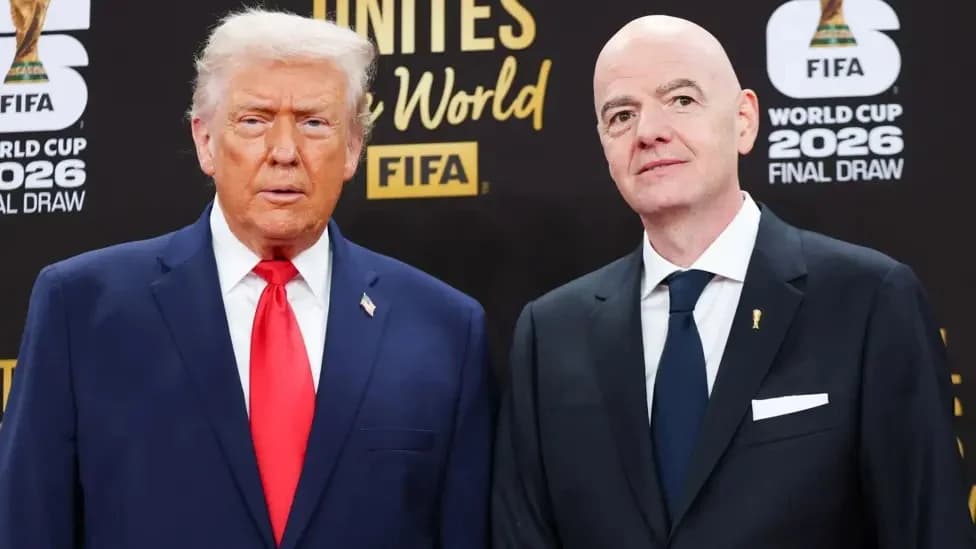
Gianni Infantino stands alongside Donald Trump during a key moment ahead of the 2026 World Cup discussions.



Comments
No comments yet. Be the first to share a thought.