
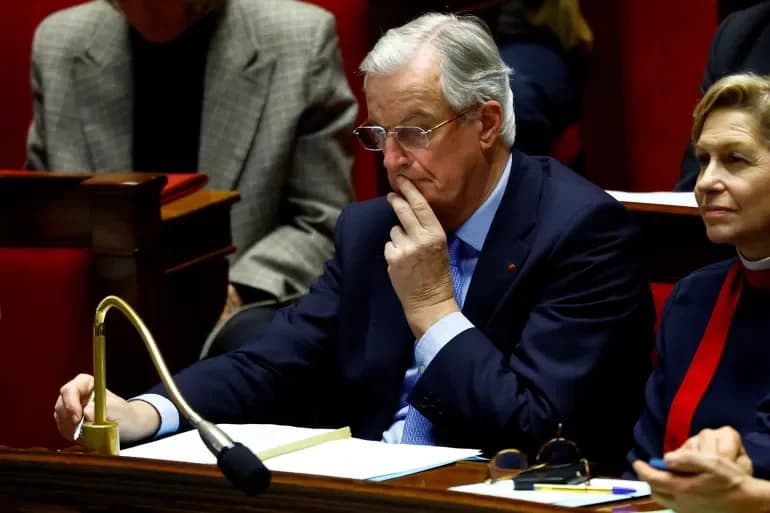
In a significant political upheaval, French Prime Minister Michel Barnier has been ousted after losing a crucial no-confidence vote in parliament on Tuesday evening. This development marks a critical moment for France, intensifying the nation’s political uncertainty amidst economic challenges and social unrest. The motion's success reflects widespread dissatisfaction with Barnier’s management of contentious economic reforms, particularly pension policies and rising inflation, which have sparked nationwide protests and strikes. Critics argue that his administration failed to address the strugg
In a significant political upheaval, French Prime Minister Michel Barnier has been ousted after losing a crucial no-confidence vote in parliament on Tuesday evening. This development marks a critical moment for France, intensifying the nation’s political uncertainty amidst economic challenges and social unrest. The motion's success reflects widespread dissatisfaction with Barnier’s management of contentious economic reforms, particularly pension policies and rising inflation, which have sparked nationwide protests and strikes. Critics argue that his administration failed to address the struggles of ordinary citizens, deepening public polarization. President Emmanuel Macron now faces the daunting task of appointing a new prime minister capable of stabilizing the government and restoring public trust. This leadership vacuum comes at a fragile moment for France’s economy, with inflation weighing heavily on households and ongoing protests disrupting daily life. Observers fear Barnier’s ousting may ignite further demonstrations, with labor unions and activist groups expected to intensify their demands for systemic change. Political analysts suggest this event underscores deeper discontent with Macron’s leadership, signaling potential long-term impacts on France’s political landscape.



Comments
No comments yet. Be the first to share a thought.