
A ship delivering humanitarian aid and carrying international activists en route to Gaza was struck and disabled by drone attacks while navigating international waters off the coast of Malta, according to its organizers. “At 00:23 Maltese time, the Conscience, a vessel operated by the Freedom Flotilla Coalition, came under direct attack in international waters,” the group reported in an official statement. They claimed that “armed drones attacked the front of an unarmed civilian vessel twice, causing a fire and a substantial breach in the hull,” attributing the strike to Israel. Activists o
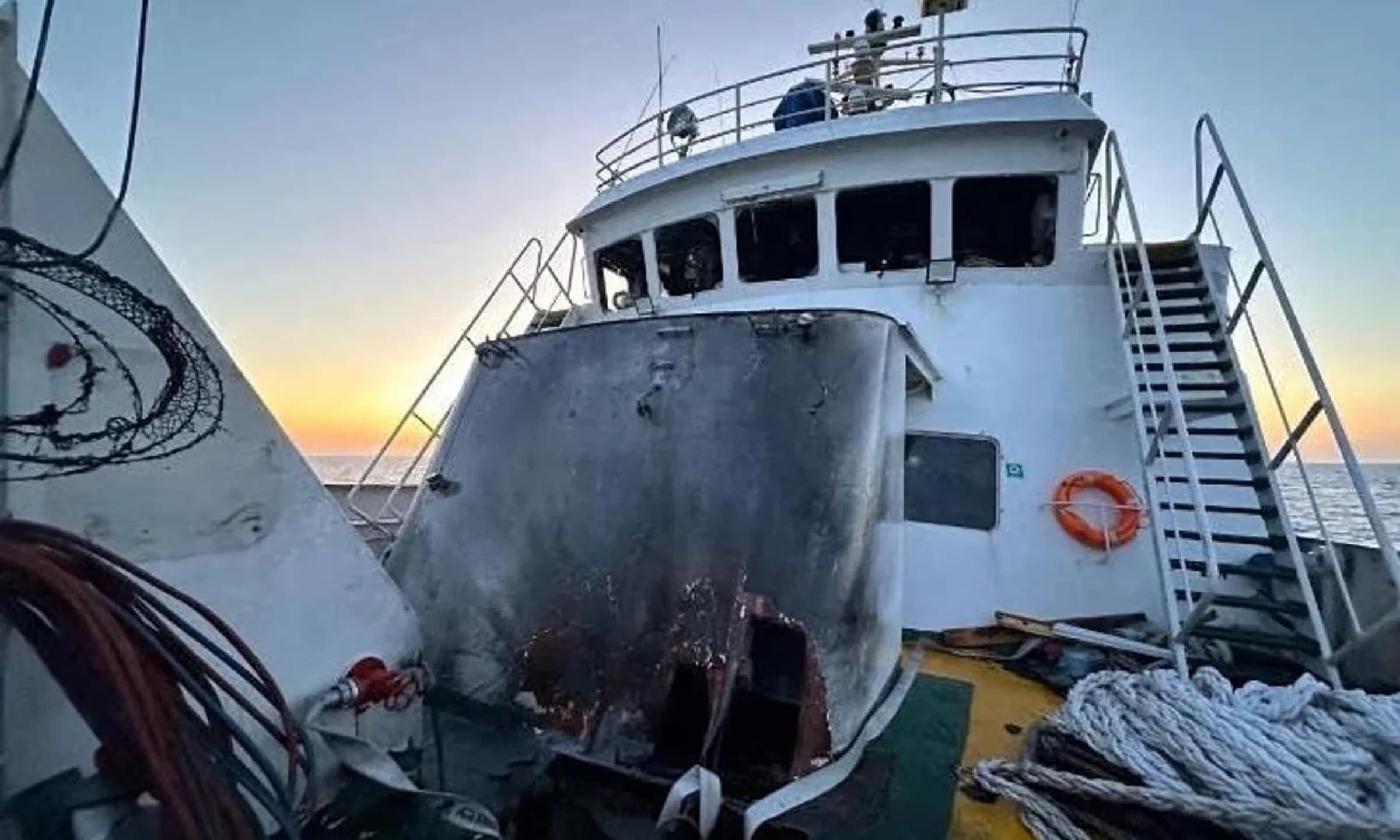
A ship delivering humanitarian aid and carrying international activists en route to Gaza was struck and disabled by drone attacks while navigating international waters off the coast of Malta, according to its organizers. “At 00:23 Maltese time, the Conscience, a vessel operated by the Freedom Flotilla Coalition, came under direct attack in international waters,” the group reported in an official statement. They claimed that “armed drones attacked the front of an unarmed civilian vessel twice, causing a fire and a substantial breach in the hull,” attributing the strike to Israel. Activists on board said the attack appeared to have specifically targeted the ship’s generator early Friday morning, knocking out its power supply and rendering it inoperable, with the vessel at risk of sinking. The Freedom Flotilla Coalition shared dramatic images on social media depicting a fierce blaze aboard the ship and two explosions. Although there was no independent verification or additional evidence confirming drones were responsible for the explosions, Cypriot authorities released images of the damaged Conscience, showing extensive structural harm. The Maltese government issued a statement Friday confirming that twelve crew members and four civilians aboard the ship were “confirmed safe.” It clarified: “The vessel had 12 crew members onboard and four civilian passengers; no casualties were reported,” and added that a nearby tug had been dispatched to assist the stricken vessel. The Freedom Flotilla Coalition said the ship was carrying activists from 21 different countries on a “mission to challenge Israel’s illegal and deadly siege of Gaza and to deliver desperately needed, life-saving aid.” Their statement called for diplomatic accountability: “Israeli ambassadors must be summoned and answer to violations of international law, including the ongoing blockade and the bombing of our civilian vessel in international waters.” Israel has not issued any public comment on the incident or the accusations. According to MarineTraffic, a ship-tracking website, the Conscience had departed from the Tunisian port of Bizerte on Tuesday and reached the area where the attack was reported by Thursday morning. The vessel was reportedly heading toward Malta to pick up additional activists, including prominent climate activist Greta Thunberg. Thunberg confirmed to Reuters that she was in Malta and had been scheduled to board the ship. “I was part of the group who was supposed to board that boat today to continue the voyage towards Gaza, which is one of many attempts to open up a humanitarian corridor and to do our part to keep trying to break Israel’s illegal siege on Gaza,” she stated. “This attack caused an explosion and major damage to the vessel, which made it impossible to continue the mission.” ALSO READ: US backs India’s right to strike back after Pahalgam terror attack Both Thunberg and the Freedom Flotilla Coalition contradicted the Maltese government’s claim of 16 people onboard, insisting instead that there were 30 individuals aboard the vessel at the time of the attack. The coalition also revealed that the voyage had been deliberately conducted under a media blackout, designed to reduce the risk of sabotage and interference. This incident echoes a deadly episode in 2010 when another Freedom Flotilla ship, the Mavi Marmara, was boarded by Israeli forces during a similar mission launched from southern Turkey. That raid ended with the deaths of 10 activists and injuries to 28 others. Israel imposed a renewed and severe blockade on Gaza two months ago, cutting off access to essential items such as food, fuel, and medicine. Military operations in Gaza were also escalated in mid-March following the breakdown of a fragile ceasefire. Humanitarian organizations operating in Gaza reported that they had exhausted their remaining supplies of flour and other basic foodstuffs. Officials warned on Friday that kitchens providing essential meals for displaced and impoverished residents would be forced to shut down within a week to ten days. The International Committee of the Red Cross also voiced concern on Friday, stating it would soon be unable to supply food, medicine, and life-saving materials for its ongoing programs unless aid shipments resumed immediately. “Aid must be allowed to enter Gaza. Hostages must be released. Civilians must be protected,” the organization declared. “Without immediate action, Gaza will descend further into chaos that humanitarian efforts will not be able to mitigate.” Medical personnel still operating in Gaza’s increasingly overwhelmed hospitals said they had begun triaging patients more stringently to ensure the dwindling supply of medicine was used only for the most critical cases. Drugs for chronic conditions such as cancer, diabetes, and high blood pressure were virtually unavailable, according to local officials. “I don’t know how people are managing. They have lost everything. The displacement continues every day and more people are searching for shelter and whatever they need to survive,” said Amjad Shawa, director of the Palestinian NGOs Network in Gaza. A United Nations team has been dispatched to Gaza to assess the population's nutritional status and determine the likelihood of famine. Israeli authorities have defended the blockade by alleging that Hamas often intercepts aid supplies, redirecting them to fighters or selling them on the black market. However, humanitarian workers in Gaza have denied any significant theft or misuse of aid in recent months. Reports in Israeli media have indicated that officials are exploring the use of private contractors to distribute food from secure hubs monitored by the Israeli military. However, humanitarian agencies have criticized the plan as both unworkable and potentially in violation of international law. The ongoing conflict was ignited by Hamas’s October 2023 attack on southern Israel, which resulted in the deaths of approximately 1,200 people, the majority of whom were civilians. The health ministry in Hamas-administered Gaza reported on Thursday that 2,326 people had been killed since Israel resumed strikes in March, pushing the total death toll since the war’s outbreak to 52,418—again, mostly civilians.



Comments
No comments yet. Be the first to share a thought.