
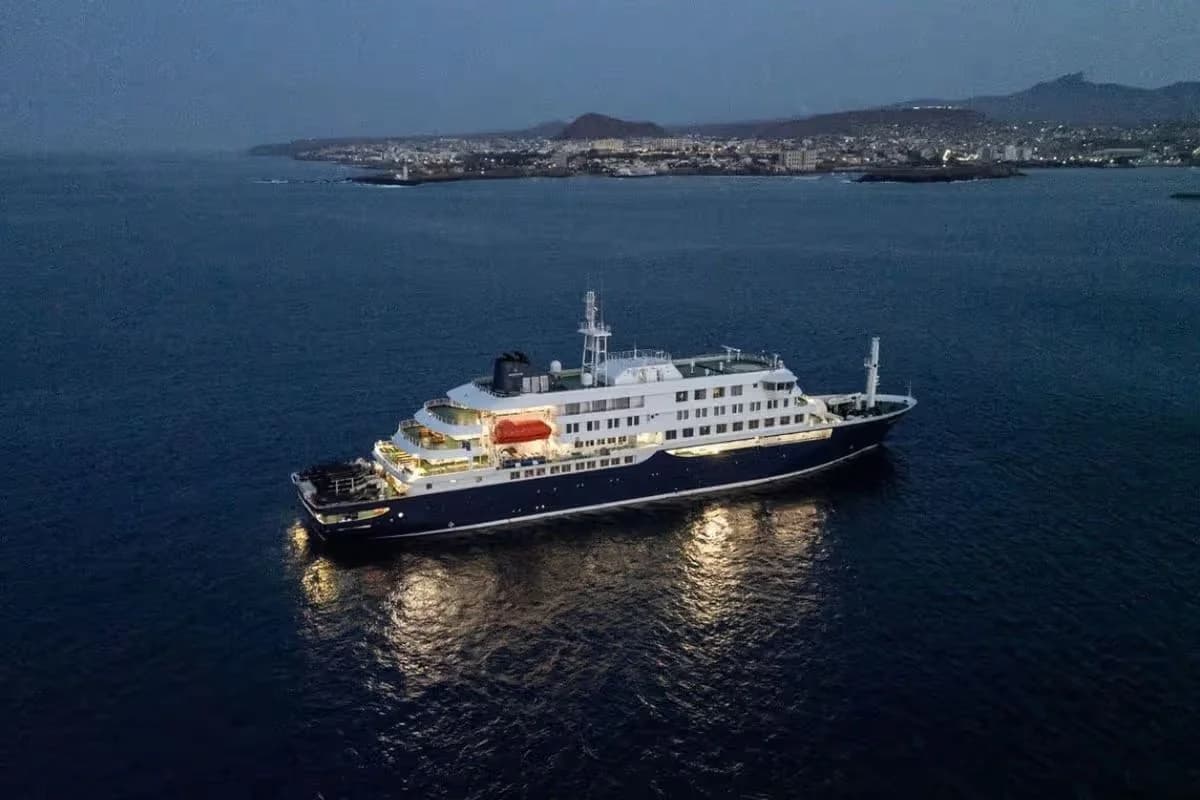
A luxury expedition cruise ship, the MV Hondius, is sailing toward Spain’s Canary Islands under strict health surveillance after a deadly hantavirus outbreak triggered emergency evacuations and international concern. The vessel, operated by Oceanwide Expeditions, had remained anchored near Cape Verde for three days before Spanish authorities authorized it to continue its journey toward Tenerife. Three passengers — a British man, a Dutch crew member, and a German citizen — were medically evacuated after showing serious symptoms linked to the virus. Two were reported in critical condition and t
A luxury expedition cruise ship, the MV Hondius, is sailing toward Spain’s Canary Islands under strict health surveillance after a deadly hantavirus outbreak triggered emergency evacuations and international concern. The vessel, operated by Oceanwide Expeditions, had remained anchored near Cape Verde for three days before Spanish authorities authorized it to continue its journey toward Tenerife. Three passengers — a British man, a Dutch crew member, and a German citizen — were medically evacuated after showing serious symptoms linked to the virus. Two were reported in critical condition and transferred to the Netherlands for treatment, while the third passenger was described as stable. The German evacuee is believed to have been closely connected to a German woman who died aboard the ship on May 2. Since the cruise departed from Ushuaia, Argentina, on April 1, three people connected to the voyage have died, raising fears among health authorities. According to the World Health Organization (WHO), at least eight hantavirus cases — three confirmed and five suspected — have been identified among people who traveled on the ship. South African health authorities later confirmed that the Andes strain of hantavirus, known for rare human-to-human transmission, was detected in two patients. Health officials from multiple countries are now tracing passengers and crew who may have been exposed. Authorities in the United States confirmed that several former passengers are under observation, though none are currently showing symptoms. The outbreak has drawn particular attention because hantavirus is commonly spread through contact with infected rodents, but experts believe close human contact may have contributed to infections aboard the vessel. WHO official Dr. Maria Van Kerkhove emphasized that the virus does not spread as easily as diseases like COVID-19 or influenza. “We’re talking about close physical contact rather than casual exposure,” she explained. Meanwhile, Spain’s Health Ministry announced that all 146 remaining passengers and crew members aboard the ship will undergo medical screening upon arrival in Tenerife. Foreign travelers cleared by doctors will be repatriated to their countries, while Spanish nationals will be quarantined in Madrid. However, the decision to allow the vessel into the Canary Islands has sparked debate. Canary Islands President Fernando Clavijo publicly opposed the move, saying local authorities had not received enough technical information regarding the health risks. Despite growing concern, international health agencies continue to insist that the risk to the general public remains low as investigations and testing continue.



Comments
No comments yet. Be the first to share a thought.