
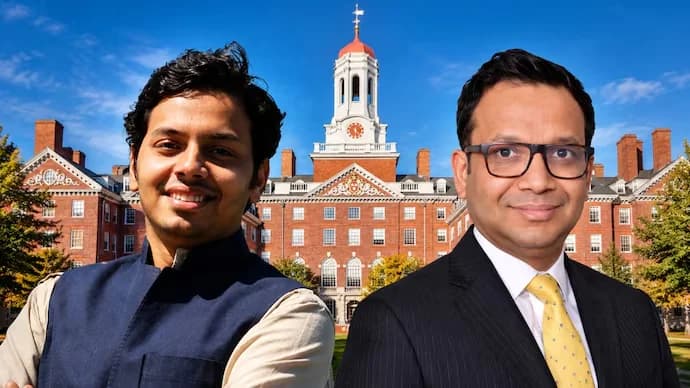
A dispute between two groups of Harvard University-affiliated individuals has intensified political tensions in India following protests against Chief Election Commissioner Gyanesh Kumar and the subsequent police action in New Delhi. The controversy began after an October 10 demonstration organised by the Citizens for Justice and Peace (CJP) and student groups over alleged electoral irregularities and the Special Intensive Revision (SIR) of voter rolls. The police response drew criticism from protesters, lawyers and civil society groups, prompting competing statements from individuals associat
A dispute between two groups of Harvard University-affiliated individuals has intensified political tensions in India following protests against Chief Election Commissioner Gyanesh Kumar and the subsequent police action in New Delhi. The controversy began after an October 10 demonstration organised by the Citizens for Justice and Peace (CJP) and student groups over alleged electoral irregularities and the Special Intensive Revision (SIR) of voter rolls. The police response drew criticism from protesters, lawyers and civil society groups, prompting competing statements from individuals associated with Harvard University. On October 12, a group of 100 Harvard-affiliated alumni, students, faculty members and staff condemned what they described as police brutality and unlawful detentions during the demonstrations. The group expressed solidarity with protesters and raised concerns about alleged violations of constitutional rights, calling for accountability and protection of peaceful assembly and access to legal assistance. CJP co-convenor Saurav Das welcomed the statement, writing on X that Harvard-affiliated individuals were condemning the treatment of protesters. However, the Harvard Club of India subsequently clarified that it had neither issued nor endorsed the statement. The alumni association emphasised that individuals were entitled to express personal opinions but could not present them as the organisation's official position. On October 14, another group of 44 Harvard-linked scholars and professionals issued a counterstatement titled Constitutional Responsibility, Rule of Law, and Institutional Integrity. The group questioned what it described as attacks on India's constitutional institutions, including the Election Commission, Supreme Court, Chief Justice of India and Parliament. It argued that allegations against public institutions should be supported by evidence and warned that inflammatory political rhetoric could undermine public confidence. At the same time, the signatories acknowledged the importance of scrutinising police conduct and protecting civil liberties. The Bharatiya Janata Party (BJP) subsequently endorsed the second group's position, highlighting its call for respect for constitutional institutions, due process and evidence-based criticism. The party's intervention has given the disagreement a broader political dimension, extending the debate beyond Harvard-affiliated circles. The controversy has also highlighted an important distinction between the personal views of university-affiliated individuals and official institutional positions. Neither of the two competing statements represents an official position of Harvard University, according to the information reported. The dispute continues to raise questions about police accountability, freedom of peaceful assembly, electoral transparency and the role of respected academic affiliations in India's political debates.



Comments
No comments yet. Be the first to share a thought.