
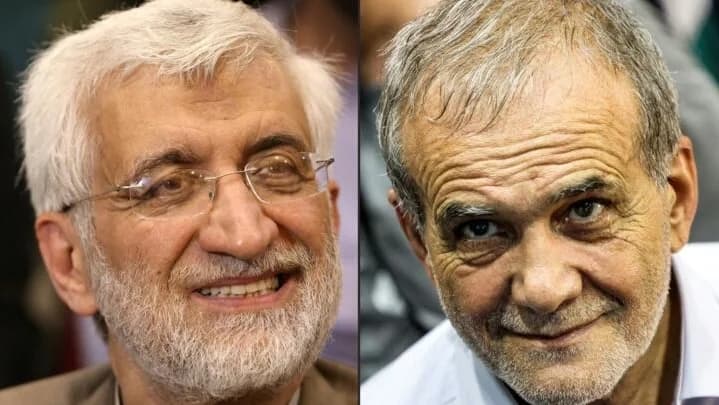
As Iran's presidential race narrows down to two main candidates, Saeed Jalili and Masoud Pezeshkian, the electorate faces a choice between two markedly different visions for the country's future. However, despite their divergent domestic policies and ideologies, experts agree that a significant shift in Iran's foreign policy is unlikely under either candidate's leadership. Saeed Jalili: The Hardliner Saeed Jalili, a veteran politician known for his hardline stance, embodies the principles of the Islamic Revolution. As a former secretary of the Supreme National Security Council and a staun
As Iran's presidential race narrows down to two main candidates, Saeed Jalili and Masoud Pezeshkian, the electorate faces a choice between two markedly different visions for the country's future. However, despite their divergent domestic policies and ideologies, experts agree that a significant shift in Iran's foreign policy is unlikely under either candidate's leadership. Saeed Jalili: The Hardliner Saeed Jalili, a veteran politician known for his hardline stance, embodies the principles of the Islamic Revolution. As a former secretary of the Supreme National Security Council and a staunch ally of the Supreme Leader, Jalili advocates for a strong, self-reliant Iran that resists Western influence. His platform focuses on economic self-sufficiency through a "Resistance Economy," which emphasizes domestic production and reducing dependency on foreign imports. Jalili’s approach to governance is deeply rooted in conservative values, aiming to preserve the ideological purity of the Islamic Republic. Masoud Pezeshkian: The Reformist In stark contrast, Masoud Pezeshkian represents the reformist camp. A seasoned parliamentarian and former Minister of Health, Pezeshkian calls for greater political freedoms, economic reforms, and improved relations with the West. He envisions a more open society with increased social liberties and a diversified economy that welcomes foreign investment. Pezeshkian's campaign highlights the need for modernization and technological advancement to propel Iran forward, advocating for policies that align with global economic trends. Similarities in Foreign Policy Despite these contrasting domestic agendas, analysts contend that the overarching framework of Iran's foreign policy will remain largely unchanged. This continuity is attributed to the significant influence of the Supreme Leader, Ayatollah Ali Khamenei, who holds ultimate authority over the nation's international relations and strategic decisions. Both candidates, regardless of their personal ideologies, will operate within the boundaries set by the Supreme Leader and the entrenched security apparatus. Key Foreign Policy Stances Nuclear Program: Iran's nuclear program will continue to be a focal point of its foreign policy. Both Jalili and Pezeshkian are expected to uphold Iran's right to nuclear technology while navigating the complex landscape of international negotiations and sanctions. Regional Influence: Iran's involvement in regional conflicts and support for allied groups in countries like Syria, Iraq, and Lebanon is likely to persist. This strategy aims to bolster Iran's regional influence and counterbalance rival powers such as Saudi Arabia and Israel. Relations with the West: While Pezeshkian might adopt a more conciliatory tone towards the West, seeking to alleviate economic sanctions through diplomatic engagement, Jalili is expected to maintain a more confrontational approach. However, both will be constrained by the overarching strategic goals dictated by the Supreme Leader.



Comments
No comments yet. Be the first to share a thought.