
Iran claims it has shot down a US drone over the Strait of Hormuz, as military tensions intensify across the Gulf and Israel launches a new operation in central Gaza.
The conflict between the United States and Iran has intensified following reports of a US military strike on an Iranian missile launch site on Qeshm Island, near the strategically important Strait of Hormuz.
A US military official told Al Jazeera that American aircraft targeted an Islamic Revolutionary Guard Corps (IRGC) missile launch site using what the official described as precision munitions. Washington said the operation was conducted in response to what it called IRGC aggression against US personnel.
In a separate development, Iran's army claimed it had shot down an American MQ-9 Reaper drone east of the Strait of Hormuz, further escalating the confrontation between the two countries. The claim adds to growing military tensions in a region that plays a critical role in global energy supplies and international shipping.
Iran has also intensified attacks targeting locations in Bahrain and Kuwait, marking a significant escalation in its response to US military operations, according to Al Jazeera's reporting.
Reporting from Tehran, journalist Resul Serdar Atas said Iran's strategy appears increasingly focused on raising the economic and military costs of the confrontation to pressure Washington into negotiations.
Iran has also warned vessels passing through the Strait of Hormuz without its clearance, describing some shipping activities as oil smuggling and threatening to treat such vessels as legitimate targets.
The developments have raised concerns over the security of oil tankers and the potential disruption of international energy markets.
Meanwhile, the International Atomic Energy Agency (IAEA) continues to face difficulties verifying the status of Iran's nuclear materials following previous attacks on nuclear facilities.
Nuclear arms control specialist Tariq Rauf told Al Jazeera that military strikes on Iran's nuclear infrastructure in 2025 and 2026 disrupted inspection activities, leaving the UN nuclear watchdog unable to establish the current status of materials it had been monitoring.
The IAEA has estimated that Iran possessed 440.9 kilograms of uranium enriched to 60 percent before the latest bombing campaign, according to Rauf.
IAEA Director General Rafael Grossi has also warned that the agency cannot adequately verify the status of Iran's declared nuclear materials without access to the relevant facilities.
Beyond the Gulf, tensions have also escalated in the Gaza Strip, where the Israeli military announced a new concentrated operation in three areas of central Gaza.
The Israeli army said the operation was intended to eliminate what it described as threats to its forces. Israeli tanks have reportedly been operating near Salah al-Din Road, between the Bureij and Nuseirat refugee camps, amid shelling and drone attacks.
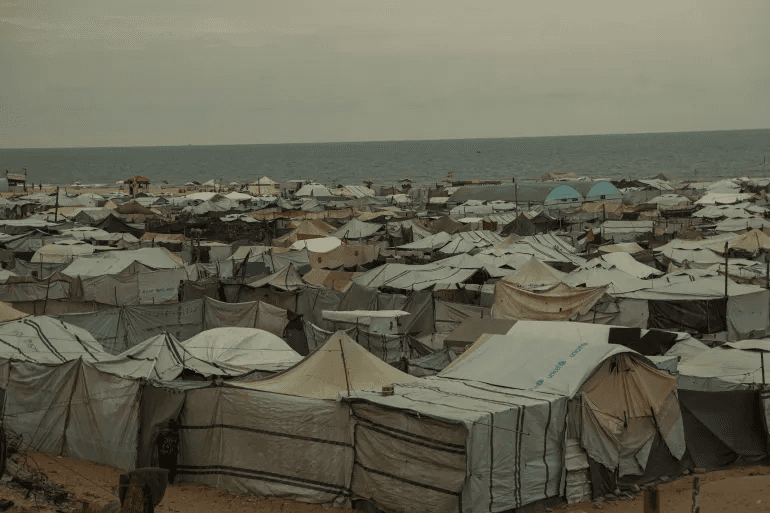
The operation has triggered further displacement among Palestinians living near the affected areas.
Hamas has condemned the military action, describing it as a blatant violation of the ceasefire agreement signed in October 2025.
Gaza's Ministry of Social Development has called on the United Nations to intervene urgently, protect civilians and shelters, and ensure safe passage for displaced people.
As military operations continue across the region, concerns are growing over civilian safety, international shipping, energy security and the possibility of a wider regional conflict.

Comments
No comments yet. Be the first to share a thought.