
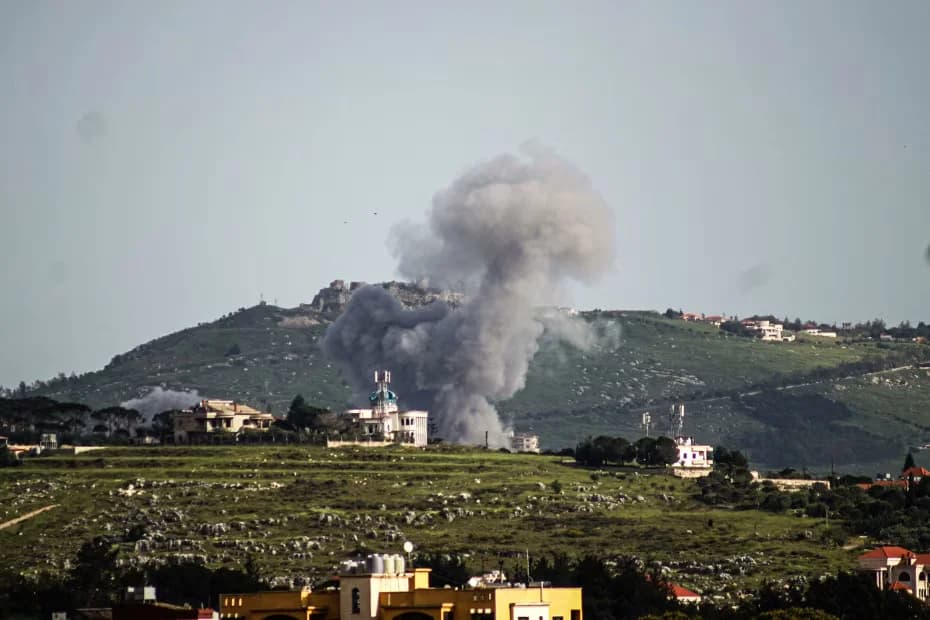
Israel launched fresh strikes in southern Lebanon on Sunday as a U.S.-brokered ceasefire with the Iran-backed group Hezbollah unraveled, the latest sign that a regional crisis rooted in the ongoing conflict with Iran is intensifying on multiple fronts simultaneously. The Israel Defense Forces said it targeted Hezbollah positions after rockets and drones were launched toward northern Israel, in what it described as a violation of a temporary truce announced on April 16 by U.S. President Donald Trump. The agreement, initially set for 10 days and later extended, was intended to halt escalating vi
Israel launched fresh strikes in southern Lebanon on Sunday as a U.S.-brokered ceasefire with the Iran-backed group Hezbollah unraveled, the latest sign that a regional crisis rooted in the ongoing conflict with Iran is intensifying on multiple fronts simultaneously.
The Israel Defense Forces said it targeted Hezbollah positions after rockets and drones were launched toward northern Israel, in what it described as a violation of a temporary truce announced on April 16 by U.S. President Donald Trump. The agreement, initially set for 10 days and later extended, was intended to halt escalating violence along the border.
But Hezbollah officials have dismissed the arrangement. Hezbollah lawmaker Ali Fayyad described the ceasefire as "meaningless," citing continued Israeli strikes and military activity.
The latest exchanges come amid a broader Israeli campaign in Lebanon that has expanded into sustained air and ground operations. Earlier this month, Israel launched a large-scale aerial offensive targeting more than 100 sites in a single wave of strikes. The Lebanese Health Ministry says at least 357 people were killed in that attack alone, and reports that 2,491 people have been killed and 7,719 wounded in the current round of fighting.
Both crises trace to the same root: Iran. Hezbollah resumed rocket attacks on Israel after direct U.S.-Israeli strikes on Iran began on February 28, 2026, linking the fate of the Lebanon front directly to the outcome of nuclear negotiations between Washington and Tehran.
Diplomatic efforts on that front suffered a major setback this weekend. Talks between U.S. and Iranian officials in Islamabad ended without agreement after more than 20 hours of negotiations, with the dispute over Iran's nuclear programme emerging as the central obstacle.
Washington is demanding that Iran halt uranium enrichment entirely, while Tehran maintains that its nuclear activities are civilian and permitted under international agreements. President Donald Trump, writing on Truth Social, said the "only point that really mattered (nuclear) was not" resolved.
The White House has since cancelled a planned diplomatic mission to Pakistan involving senior envoys, effectively suspending further in-person negotiations. Trump signaled that any progress would now depend on Iran reinitiating contact.
Meanwhile, tensions have intensified in the strategic Strait of Hormuz, where Iranian forces have seized commercial vessels and effectively blocked the passage, while the United States has expanded naval operations and imposed a blockade on Iranian ports, raising fears of disruption to global oil supplies.
Attention now turns to whether Iran re-engages diplomatically with Washington and whether the extended ceasefire along the Israel–Lebanon border can hold in the coming days.



Comments
No comments yet. Be the first to share a thought.