
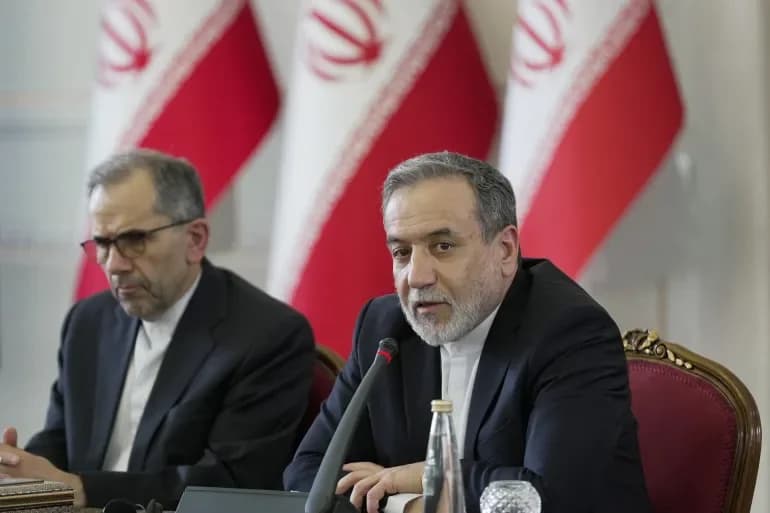
Iran's Foreign Minister Abbas Araghchi has declared that Tehran will not abandon its uranium enrichment programme, despite the severe damage inflicted by recent US and Israeli airstrikes on nuclear and military facilities. Speaking in a televised interview with Fox News aired Monday, Araghchi said: “It is now stopped because, yes, damages are serious and severe, but obviously, we cannot give up our enrichment because it is an achievement of our own scientists, and now, more than that, it is a question of national pride.” While acknowledging Iran’s openness to negotiations, Araghchi ruled out
Iran's Foreign Minister Abbas Araghchi has declared that Tehran will not abandon its uranium enrichment programme, despite the severe damage inflicted by recent US and Israeli airstrikes on nuclear and military facilities. Speaking in a televised interview with Fox News aired Monday, Araghchi said: “It is now stopped because, yes, damages are serious and severe, but obviously, we cannot give up our enrichment because it is an achievement of our own scientists, and now, more than that, it is a question of national pride.” While acknowledging Iran’s openness to negotiations, Araghchi ruled out direct talks with the United States “for the time being.” However, he expressed readiness to engage in a diplomatic process if it offered a “win-win solution.” “We are ready to do any confidence-building measure needed to prove that Iran’s nuclear programme is peaceful and would remain peaceful forever, and Iran would never go for nuclear weapons,” he said. “In return, we expect them to lift their sanctions.” He added: “So, my message to the United States is that let’s go for a negotiated solution for Iran’s nuclear programme. We have done it once in the past. We are ready to do it once again.” His comments come amid renewed tensions following a joint US-Israeli military operation launched on June 13, which targeted Iran’s nuclear infrastructure. The attacks resulted in the deaths of more than 900 people in Iran and at least 28 in Israel before a ceasefire took effect on June 24. The Pentagon later claimed the strikes set back Iran’s nuclear programme by up to two years. Araghchi confirmed that Iran’s Atomic Energy Organisation is still assessing the extent of damage to its enriched uranium reserves and that findings would soon be shared with the International Atomic Energy Agency (IAEA). He noted, however, that any future inspections would be “carefully considered.” “We have not stopped our cooperation with the agency,” he insisted. That claim comes despite the IAEA’s withdrawal from Iran after President Masoud Pezeshkian signed a law earlier this month suspending cooperation with the UN nuclear watchdog. The move followed a resolution passed by the IAEA board on June 12 accusing Tehran of non-compliance with nuclear obligations, a resolution Iranian officials claim was used by Israel as a pretext for the June 13 attacks.



Comments
No comments yet. Be the first to share a thought.