

Penalty shootouts, new points system and a transitional season spark debate over the future of league football In a move that has stunned football fans and sparked global debate, Japan’s top professional league has announced that matches in its special 2026 centenary competition will no longer be allowed to end in a draw. To celebrate the league’s 100th anniversary, the J-League has introduced a radical twist: if teams remain level after 90 minutes, the match will go straight to a penalty shootout to determine a winner. Andreas iniesta playing in Japanese league The change, implemented u
Penalty shootouts, new points system and a transitional season spark debate over the future of league football In a move that has stunned football fans and sparked global debate, Japan’s top professional league has announced that matches in its special 2026 centenary competition will no longer be allowed to end in a draw. To celebrate the league’s 100th anniversary, the J-League has introduced a radical twist: if teams remain level after 90 minutes, the match will go straight to a penalty shootout to determine a winner.
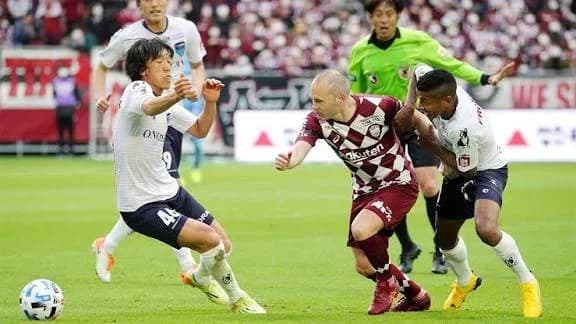
Andreas iniesta playing in Japanese league
The change, implemented under the newly launched J1 100 Year Vision League, represents one of the most dramatic departures from traditional league football rules in modern history.
No more stalemates: every match must produce a winner
For decades, league football has been built around the possibility of a draw a result that can shape title races, relegation battles, and tactical approaches. Japan’s new centenary format removes that outcome entirely. Instead, level matches will now be decided immediately from the penalty spot, bringing the kind of knockout drama usually reserved for cup competitions into the league environment. The J-League has also adjusted its points system to reflect the new structure: •Win in regulation time: 3 points •Penalty shootout win: 2 points •Penalty shootout loss: 1 point •Loss in regulation: 0 points The goal is to reward teams that secure victories within 90 minutes, while still ensuring that closely fought matches deliver a decisive outcome.
Why is Japan doing this now?
While the announcement has been widely shared online as a permanent rule change, league officials have stressed that the draw-free format is limited to the 2026 transitional season. The centenary competition was created not only as a celebration, but also as a bridge between two eras. Japan’s domestic league is preparing to shift from its long-standing calendar-year schedule to a European-style season beginning later in 2026–27. The special tournament, running from February to June, fills the gap created by that restructuring. In other words, this is an anniversary experiment but one with serious implications.
Early drama already unfolding
The new format has already delivered tense moments. One of the first matches played under the revised rules ended 1–1 after regulation, forcing an immediate shootout. FC Tokyo edged Kashima Antlers 5–4 on penalties, earning two points while the losing side still walked away with one. Such scenes are rare in league play, where penalty shootouts have traditionally been absent. Now, every fixture carries the potential for high-pressure endings — and the kind of spectacle that keeps stadiums and television audiences locked in until the final kick.
A league innovation that divides opinion
Supporters of the new system argue that it boosts excitement and ensures fans always leave with a clear winner and loser. “It adds entertainment value,” one analyst noted, pointing to the growing demand for decisive outcomes in modern sports broadcasting. However, critics warn that the removal of draws could undermine one of football’s most strategic elements. Draws often reward defensive discipline, tactical balance, and long-term consistency, qualities that have shaped league football for over a century. Others have questioned whether deciding league points through penalties introduces too much randomness into a competition designed to measure performance across an entire season.
Could other leagues follow?
Japan’s experiment is being watched closely beyond Asia. In the past, leagues in North America and some youth competitions have tested shootouts to eliminate draws, but major professional football leagues have largely resisted such changes.
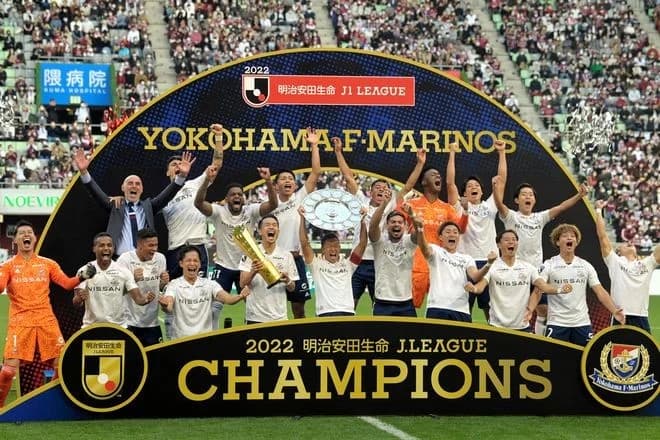
Yokohama celebrating as the champions
If the J-League’s centenary season proves successful in attracting fans and boosting competitiveness, it could reignite discussions about whether the sport’s traditional league format should evolve. For now, however, officials insist this remains a one-off anniversary competition, not a permanent rewrite of Japanese football rules.
A centenary celebration with a modern twist
As the J-League marks 100 years of history, its bold decision to abolish draws reflects a league willing to experiment, innovate, and challenge football convention. Whether the draw-free format becomes a beloved spectacle or a controversial footnote, one thing is certain: In Japan’s centenary season, there will always be a winner even if it takes penalties to decide it.



Comments
No comments yet. Be the first to share a thought.