
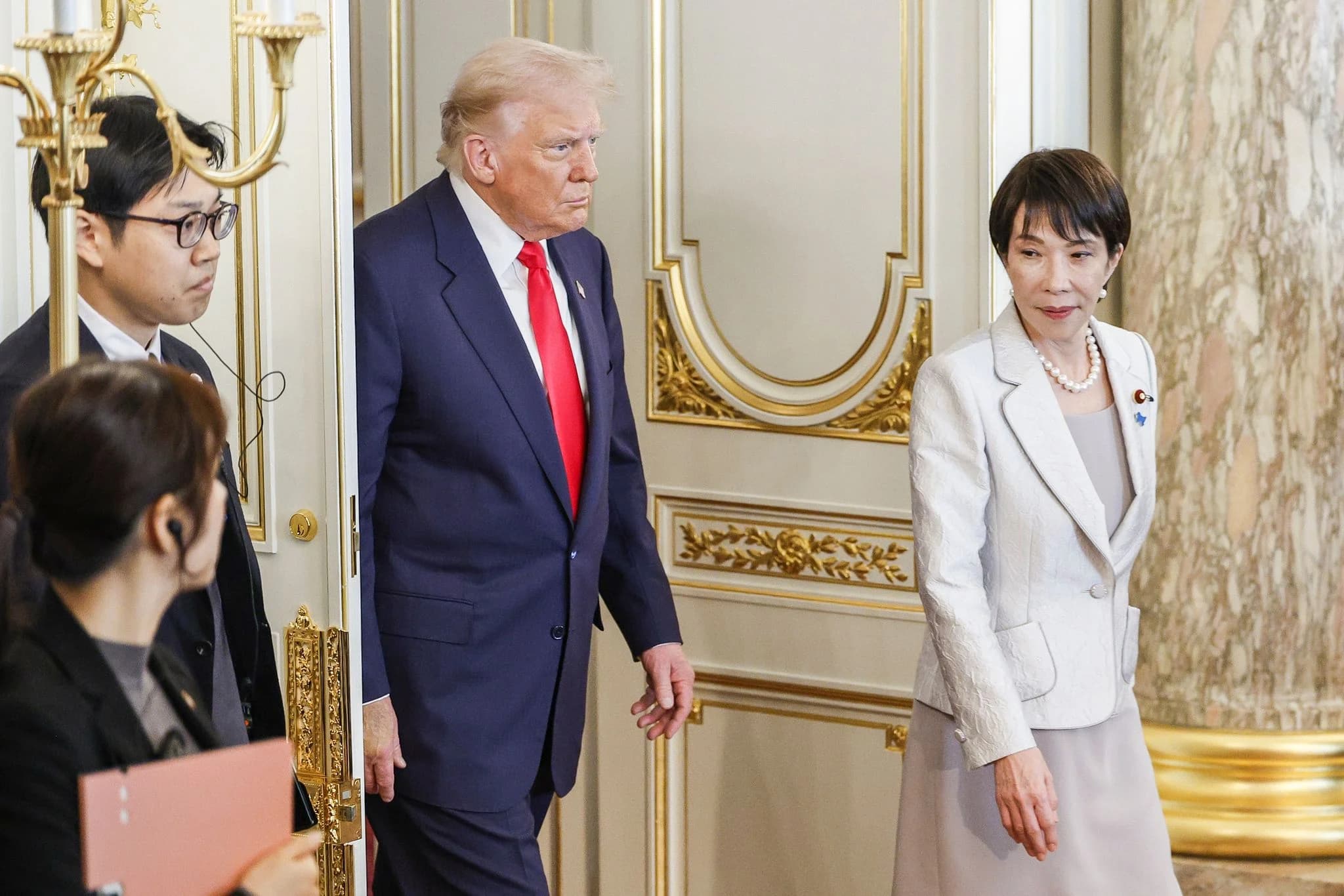
Japanese Prime Minister Sanae Takaichi said U.S. President Donald Trump told her to “call me anytime” during their phone conversation on Tuesday, their first since Tokyo became embroiled in a diplomatic dispute with Beijing. The tension began after Takaichi stated in parliament earlier this month that a hypothetical Chinese attack on Taiwan could prompt Japanese military action. Her comments triggered a strong reaction from China, which responded with measures including a travel boycott targeting Japan. China claims Taiwan located just over 100 km from Japanese territory and has not ruled o
Japanese Prime Minister Sanae Takaichi said U.S. President Donald Trump told her to “call me anytime” during their phone conversation on Tuesday, their first since Tokyo became embroiled in a diplomatic dispute with Beijing. The tension began after Takaichi stated in parliament earlier this month that a hypothetical Chinese attack on Taiwan could prompt Japanese military action. Her comments triggered a strong reaction from China, which responded with measures including a travel boycott targeting Japan. China claims Taiwan located just over 100 km from Japanese territory and has not ruled out using force to take the island. Taiwan’s government rejects Beijing’s claims, insisting that the island’s future can only be decided by its people. Trump has not publicly addressed the dispute between Japan, a key U.S. ally, and China, the United States’ main strategic rival. Analysts say this silence has raised concern among some officials in Tokyo. Speaking to reporters after the call, Takaichi emphasized that the U.S. president reaffirmed his support. “President Trump said he and I are extremely good friends, and that I should contact him anytime,” she said. According to Takaichi, Trump also briefed her on the state of U.S.-China relations, including his call on Monday with Chinese President Xi Jinping. China’s Xinhua news agency reported that Xi told Trump Taiwan’s “return to China” remains central to Beijing’s global vision. Trump later said on Truth Social that U.S.-China trade talks were progressing and that relations were “extremely strong,” although he did not mention Taiwan. The White House did not immediately respond to requests for comment about Trump’s conversation with Takaichi. Taiwan Premier Cho Jung-tai reiterated on Tuesday that the island’s 23 million citizens would not accept any “return” to China. Japan’s Chief Cabinet Secretary Minoru Kihara said the stability of U.S.-China relations is crucial for the international community, including Japan. He declined to comment on Xi’s reported remarks to Trump. Taiwan lies along key maritime routes essential to Japan’s trade and energy supplies. Encouraged by the United States, Japan has undertaken a significant military expansion to counter China’s growing influence and assertiveness in the region. Earlier on Monday, Beijing criticized Tokyo’s plan to deploy a medium-range surface-to-air missile unit to Yonaguni, Japan’s island closest to Taiwan, calling the move an attempt to “create regional tension and provoke military confrontation.” While Trump has avoided directly commenting on the Japan-China dispute, U.S. Ambassador to Japan George Glass has said Washington supports Tokyo in the face of China’s “coercion.” Some Japanese officials worry that Trump may soften support for Taiwan to secure trade concessions from China—an approach they fear could embolden Beijing and increase the risk of conflict in East Asia.



Comments
No comments yet. Be the first to share a thought.