
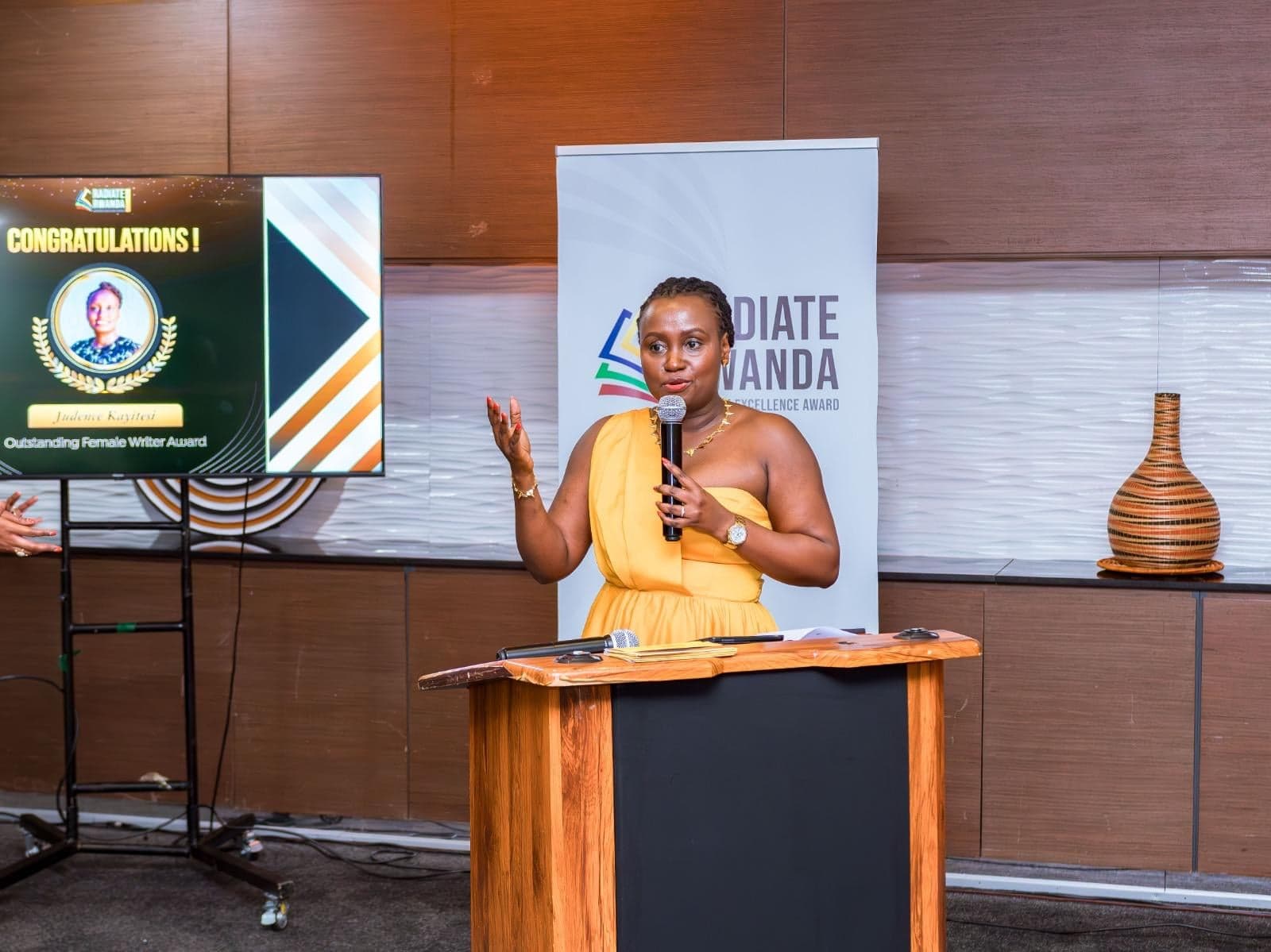
For Rwandan author Judance Kayitesi, writing is more than a profession; it is a journey of healing, resilience and preserving history. A genocide survivor who lost her parents and siblings during the 1994 Genocide against the Tutsi, Kayitesi has transformed her painful personal experiences into powerful literary works that inspire resilience and encourage conversations about Rwanda’s history.
Originally from Rwanda but currently living in Germany, Kayitesi says her writing journey began with her first book, A Broken Knife, which she initially approached as a form of therapy to help her process the trauma of losing her family at the age of 11.
Although she survived alongside two other family members, she was the eldest among them. Writing became a way of expressing emotions and confronting painful memories that had remained with her for years.
She also believes her passion for writing and the arts may have been inherited from her father, who was a songwriter. According to her, creativity runs in the family, as her siblings also have interests in writing and drawing.
Following her first publication, Kayitesi wrote Choosing Resilience, a book inspired by her belief that survivors must find the strength to move forward despite the painful experiences they have endured.
She emphasises that living a meaningful and successful life is one of the strongest responses survivors can give to those who attempted to destroy them.
“For me, one of the greatest forms of revenge is to live well, remain strong and continue building your life,” is the message reflected in her philosophy.
Her third book, Unit Quest, emerged from another important chapter in her life: becoming a mother. Kayitesi began asking herself how parents could explain the history of the Genocide against the Tutsi to children born after 1994.
She recognised that discussing such painful history with younger generations is not easy, particularly for parents who experienced the tragedy personally.
She also considered the complex realities of children growing up in families affected by the genocide, including those whose parents were killed and those whose parents were imprisoned.
Through Unit Quest, she seeks to provide parents with a resource that can help them initiate difficult conversations with their children and explain Rwanda's history in a way that younger generations can understand.
The book has since received recognition, winning an award last year. It is also taught in Germany and is available in three languages: German, Kinyarwanda and English.
Kayitesi says the recognition is particularly meaningful because the book has helped her find a way to communicate a painful part of Rwanda's history to younger generations.
Beyond books focusing on the genocide and its aftermath, she has continued exploring other literary themes, including through her work A Bridge Between the World.
For Kayitesi, writing is ultimately part of a broader responsibility to help rebuild Rwanda, preserve collective memory and ensure that future generations understand the country's past.
She believes that remembering history, encouraging dialogue and teaching younger generations are essential steps towards building a united society and ensuring that the Genocide against the Tutsi never happens again.
Her literary journey demonstrates how personal pain can become a source of strength, education and inspiration, turning the written word into a bridge between the past, the present and future generations.


Comments
No comments yet. Be the first to share a thought.