
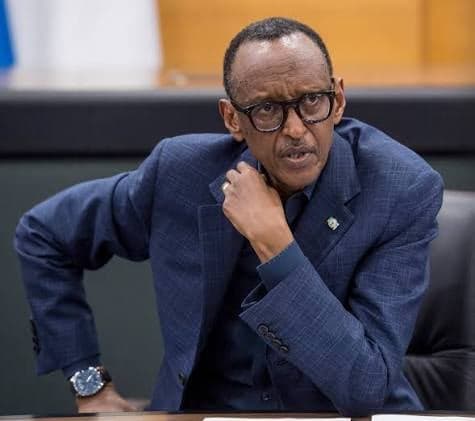
President Paul Kagame has called for a more inclusive approach to artificial intelligence (AI), arguing that its benefits will be greater when people and countries have a meaningful role in shaping how the technology develops.
Speaking on October 28, 2026, during a virtual meeting of the AI for Good Global Commission, Kagame stressed the need to move beyond discussions about AI and focus on practical solutions that deliver benefits across societies.
The Rwandan leader co-chairs the commission with Marc Benioff, CEO and co-founder of Salesforce. The meeting also brought together Doreen Bogdan-Martin, Secretary-General of the International Telecommunication Union (ITU), and other commission members to review progress and discuss ways to expand AI’s contribution to economic growth and social well-being.
“The benefits of AI will grow as we all have a say in shaping the future of this new technology,” Kagame said, emphasizing the importance of asking the right questions and committing the expertise and resources needed to find practical answers.
For African countries, the debate over AI is not simply about adopting new technology. It is also about ensuring that the continent has a voice in determining how that technology is developed, governed and used.
Without adequate investment, digital infrastructure, technical skills and access to resources, developing countries risk falling behind as AI reshapes economies and societies. Greater participation in global decision-making could help African countries address these challenges while identifying opportunities in education, healthcare, agriculture, public services and business.
The AI for Good Global Commission, supported by the ITU and the United Nations Educational, Scientific and Cultural Organization (UNESCO), seeks to encourage responsible AI development, strengthen technical capacity and reduce inequalities in access to technology.
It brings together leaders from governments, international organizations and the private sector, including major technology companies such as Nvidia, Amazon and Microsoft.
For Rwanda, the discussion connects with a wider question about the country’s digital future: how to turn technological progress into practical opportunities for citizens, businesses and institutions.
Kagame’s message places inclusion at the centre of that challenge. The question is no longer only how quickly countries can adopt AI, but also whether they have the capacity and influence to shape it.
As AI continues to transform the global economy, ensuring that African countries help shape its future could be as important as ensuring they have access to the technology itself.


Comments
No comments yet. Be the first to share a thought.