
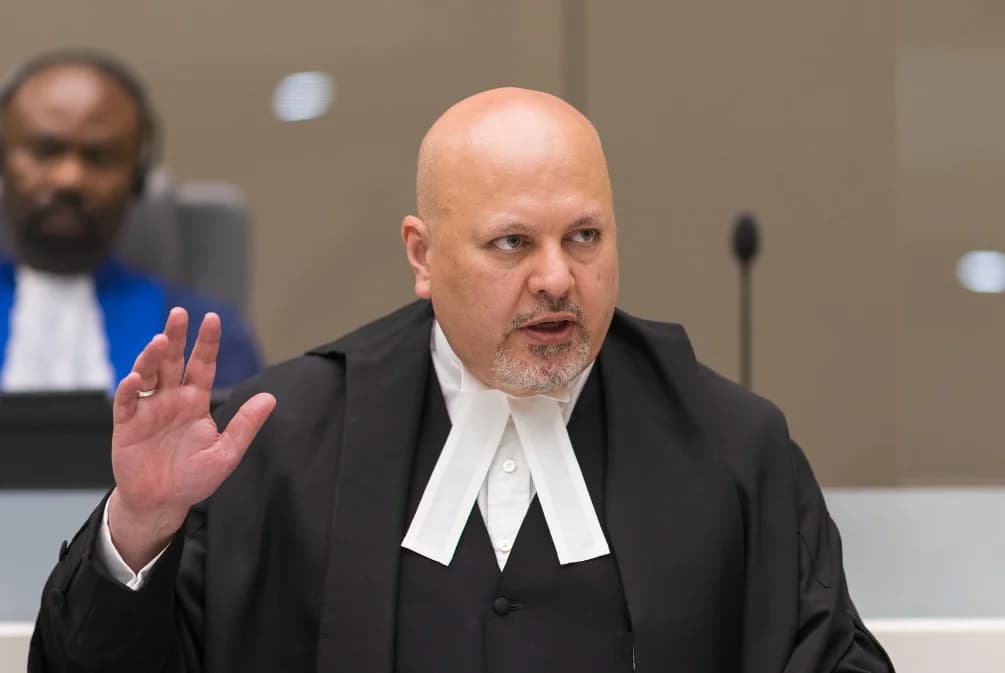
The International Criminal Court (ICC) is facing one of the most significant crises in its history as Chief Prosecutor Karim Khan finds himself at the center of a major misconduct investigation, marking a stunning reversal for one of the world's most prominent legal figures. For years, Khan stood at the forefront of international justice, overseeing investigations into some of the globe's most sensitive conflicts and human rights cases. His work brought him into the spotlight on issues ranging from the war in Ukraine to the conflict in the eastern Democratic Republic of Congo (DRC), where alle
The International Criminal Court (ICC) is facing one of the most significant crises in its history as Chief Prosecutor Karim Khan finds himself at the center of a major misconduct investigation, marking a stunning reversal for one of the world's most prominent legal figures.
For years, Khan stood at the forefront of international justice, overseeing investigations into some of the globe's most sensitive conflicts and human rights cases. His work brought him into the spotlight on issues ranging from the war in Ukraine to the conflict in the eastern Democratic Republic of Congo (DRC), where allegations involving regional actors, including Rwanda, attracted significant international attention.
Khan's approach was praised by those who accused Kigali of playing a destabilizing role in eastern DRC. However, Rwandan officials and supporters consistently rejected such claims, arguing that accusations against Rwanda were politically motivated and lacked sufficient evidence.
Now, the focus has shifted dramatically away from the conflicts Khan investigated and onto the prosecutor himself.
According to reports from The Associated Press, Khan has been suspended from his duties pending a decision by ICC member states after an 18-month investigation concluded that he had committed what investigators described as "serious misconduct." Khan has categorically denied the allegations, maintaining that the process has been unfair and unsupported by credible evidence.
The allegations first surfaced in 2024 and triggered growing scrutiny within the international legal community. In May 2025, Khan temporarily stepped aside from his role as a United Nations-led investigation examined the claims. Following the conclusion of that inquiry, the ICC's governing body referred the matter to the court's 125 member states, which will ultimately determine his future within the institution.
The developments have sent shockwaves through international legal circles and raised broader questions about accountability within organizations tasked with upholding justice. Analysts note that the situation illustrates the complex and often unpredictable nature of international politics, where even those responsible for enforcing legal standards can themselves become subjects of investigation.
For observers of the Great Lakes region, the unfolding controversy has also prompted reflection on the intense diplomatic and legal battles surrounding the conflict in eastern DRC. Some argue that the case demonstrates the importance of allowing facts and evidence not political pressure to guide international justice processes.
As ICC member states prepare to decide Khan's fate, the episode serves as a powerful reminder that accountability applies to everyone, regardless of position or influence. Institutions dedicated to enforcing justice are not exempt from scrutiny, and those who wield authority must ultimately be prepared to answer for their own conduct.
In a remarkable twist of events, the man who once led some of the world's most consequential international prosecutions now finds himself defending his own actions before the very system he once represented.
Whether Khan is ultimately cleared or sanctioned, his case is already being viewed as one of the most extraordinary chapters in the history of the ICC an institution founded on the principle that no individual stands above accountability.



Comments
No comments yet. Be the first to share a thought.