
The Murujuga cultural landscape in Western Australia [home to over a million ancient Indigenous petroglyphs, some dating back 50,000 years] has officially been inscribed on the UNESCO World Heritage List, following a successful lobbying effort by the Australian government. According to The Guardian, the announcement was made on Friday during a meeting of UNESCO’s World Heritage Committee in Paris, where the site was described as a “manifestation of creative genius, inscribed in the landscape since deep time.” The campaign to secure world heritage recognition was spearheaded by the Murujuga A
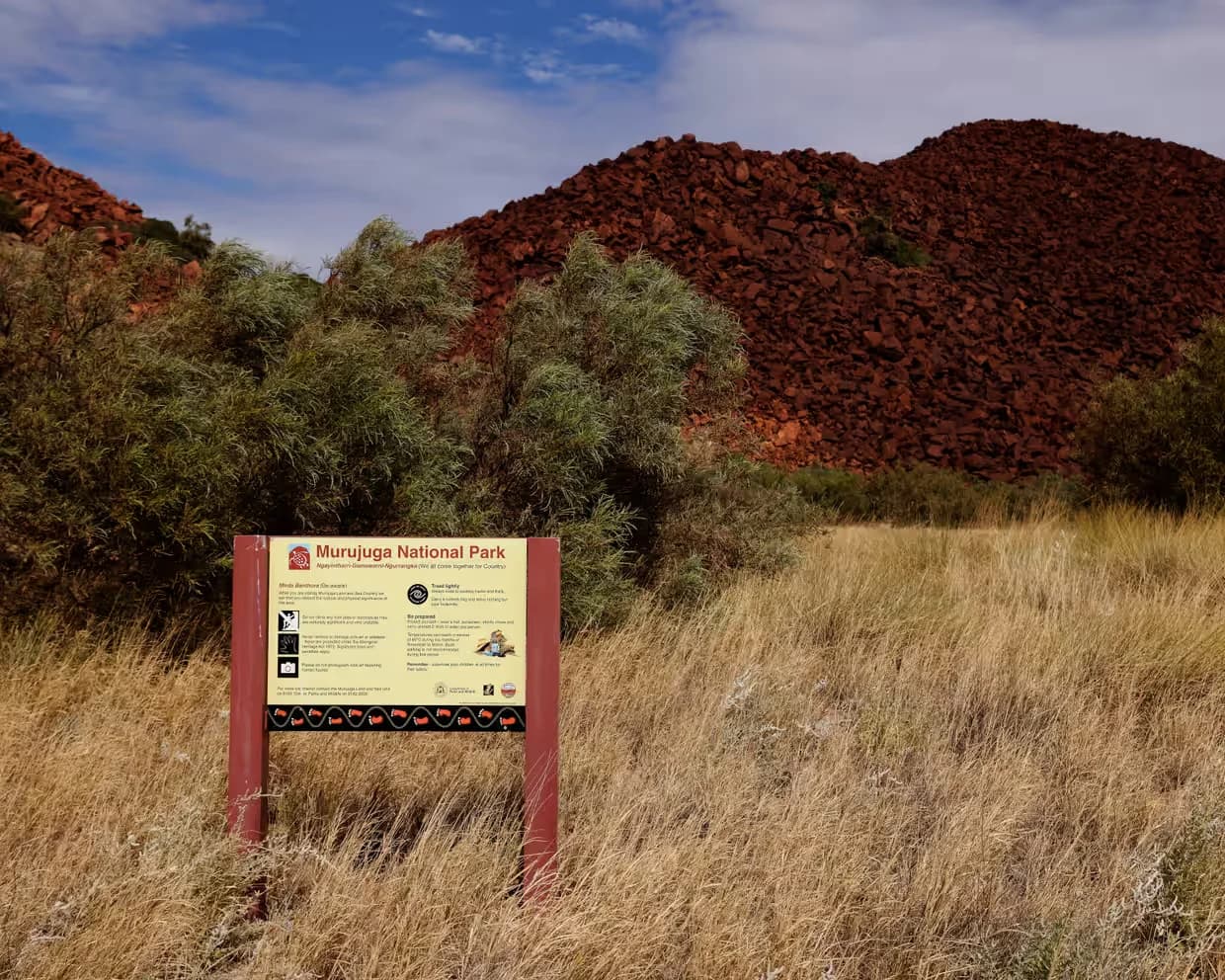
The Murujuga cultural landscape in Western Australia [home to over a million ancient Indigenous petroglyphs, some dating back 50,000 years] has officially been inscribed on the UNESCO World Heritage List, following a successful lobbying effort by the Australian government. According to The Guardian, the announcement was made on Friday during a meeting of UNESCO’s World Heritage Committee in Paris, where the site was described as a “manifestation of creative genius, inscribed in the landscape since deep time.” The campaign to secure world heritage recognition was spearheaded by the Murujuga Aboriginal Corporation (MAC). Members of the MAC delegation, present in Paris, were visibly emotional as the decision was confirmed, marking the end of a two-decade effort by Traditional Owners to protect the site. Murujuga now becomes Australia’s 21st World Heritage site, joining iconic locations such as the Great Barrier Reef, Kakadu National Park, and the Sydney Opera House. It is also only the second site in Australia recognised specifically for Aboriginal cultural values, following the Budj Bim aquaculture system in Victoria, which received the designation in 2019. Spanning nearly 100,000 hectares, the Murujuga site was originally the land of the Yaburara people, who were massacred in 1868 by colonial settlers. Today, the Ngarda-Ngarli people are the custodians of the land. The petroglyphs, created by striking one rock against another, depict a wide range of imagery including extinct animals, plants, and early human figures. Some of these are among the earliest known anthropomorphic depictions on Earth. Despite its cultural and historical significance, Murujuga is located near heavy industrial activity, including Woodside’s Karratha gas plant. A UN advisory group had initially recommended deferring the inscription until concerns about acidic emissions from nearby industrial plants were addressed. The advisory group also called for a halt to any further industrial expansion. However, the Australian government disputed the advisory body’s claims, asserting that they were based on “factual inaccuracies.” Officials cited a comprehensive environmental monitoring report compiled by around 50 scientists, which they said, found no current threat to the petroglyphs. Some scientists, however, have challenged this conclusion. A total of 18 of the 21 countries on the UNESCO committee including Kenya, Senegal, Ukraine, Qatar, Belgium, and India, voted in favour of immediate inscription, amending the original recommendation to include Murujuga without conditions. The site met three UNESCO criteria: it represents a “masterpiece of human creative genius”, provides “a unique testimony to a cultural tradition”, and demonstrates “an outstanding interaction between human society and the environment.” Federal Environment Minister Murray Watt, who was part of the Australian delegation in Paris, said the recognition “belongs to the Ngarda-Ngarli; the traditional owners and custodians of Murujuga, whose deep knowledge, cultural leadership and enduring connection to country are at the heart of this inscription.” Peter Hicks, Chair of MAC, described the moment as “elation” and a tribute to the Traditional Owners: “This is recognition of the way our ancestors have managed this extraordinary landscape for over 50,000 years. We are proud to continue that legacy.” Despite the success, the decision has drawn criticism from conservationists and Traditional Owners concerned about industrial impacts. Raelene Cooper, former MAC chair and a Marduthunira woman, attended the Paris meeting as part of the Save Our Songlines group, which had urged the committee to follow the original recommendations from the International Council on Monuments and Sites (ICOMOS). “Today, Australia rewrote the world heritage listing in the interests of the gas industry,” Cooper said. “Even though the recommended protections were removed after concerted lobbying from the Australian government, we are still overjoyed to see Murujuga finally world heritage listed by UNESCO.” Some committee members voiced concern over industrial emissions and stressed the need for ongoing monitoring. Cooper added: “Global scrutiny will now be applied to what is happening at Murujuga. We will continue to fight for protection for this very special place, and the world is now aware of what we are up against,” The Guardian reported.

Comments
No comments yet. Be the first to share a thought.