
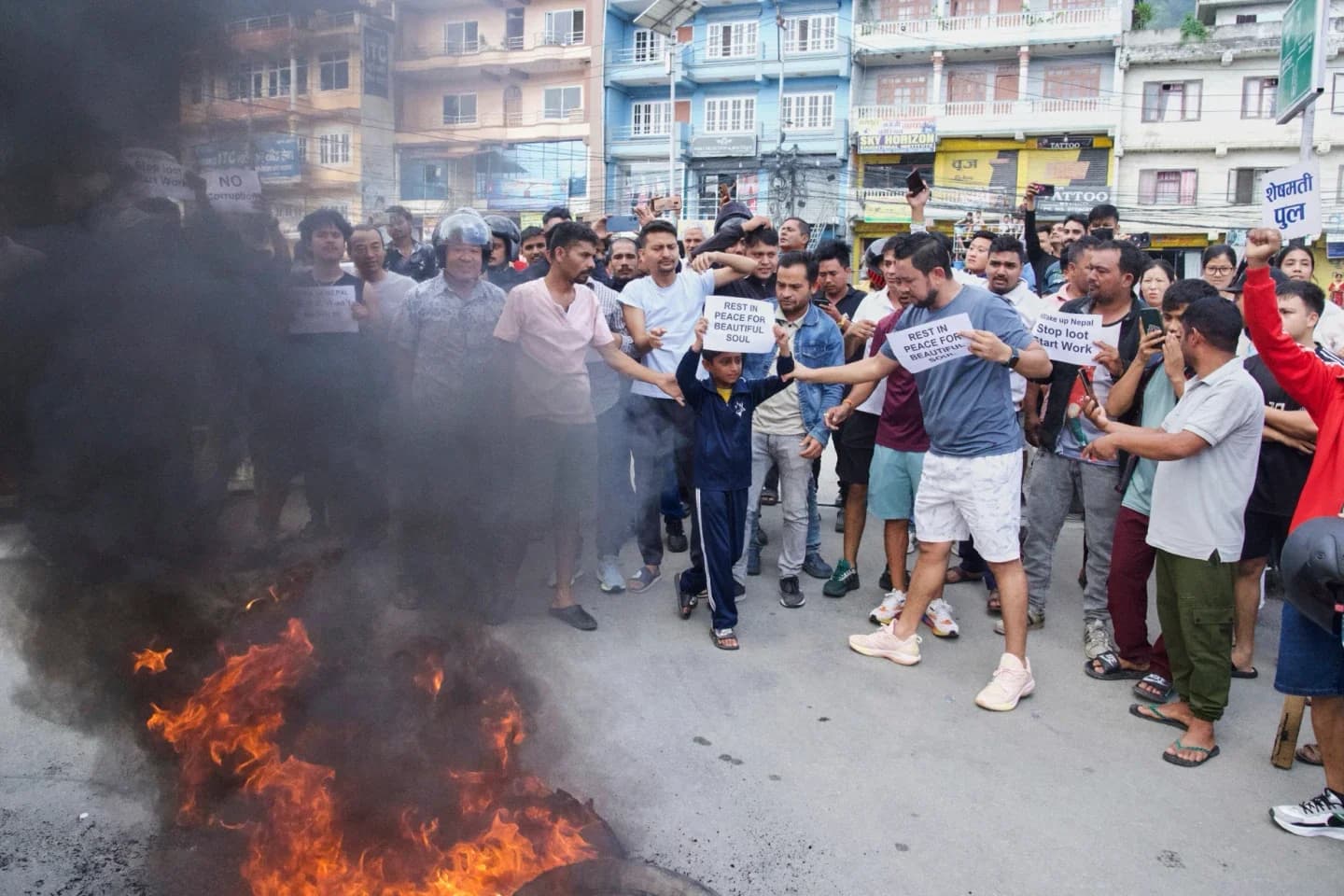
Protesters set fire to the homes of several of Nepal’s most prominent political leaders and attacked parliament amid nationwide unrest over a government social-media crackdown, even as authorities lifted the ban early Tuesday following deadly clashes that left 19 people dead. AP News citing local reports and videos circulating online, reports that crowds targeted residences in and around Kathmandu. Properties belonging to Sher Bahadur Deuba, leader of the largest party Nepali Congress; President Ram Chandra Poudel; Home Minister Ramesh Lekhak; and Pushpa Kamal Dahal, leader of the Communist
Protesters set fire to the homes of several of Nepal’s most prominent political leaders and attacked parliament amid nationwide unrest over a government social-media crackdown, even as authorities lifted the ban early Tuesday following deadly clashes that left 19 people dead.
AP News
citing local reports and videos circulating online, reports that crowds targeted residences in and around Kathmandu. Properties belonging to Sher Bahadur Deuba, leader of the largest party Nepali Congress; President Ram Chandra Poudel; Home Minister Ramesh Lekhak; and Pushpa Kamal Dahal, leader of the Communist Party of Nepal (Maoist), were set ablaze. A private school owned by Foreign Minister Arzu Deuba Rana, Deuba’s wife, was also torched. Authorities imposed an indefinite curfew in the capital and other cities, and schools in Kathmandu were closed. Police using loudspeakers urged people to return home, but several protests continued Tuesday despite the restrictions.
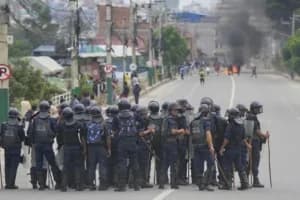
Policemen on a street in Kathmandu as protesters burn tires in violation curfew orders, September 9, 2025. (Niranjan Shrestha/AP)
What began as demonstrations against the government’s decision to block Facebook, X and YouTube escalated into wider anti-government protests fueled by public frustration over alleged corruption and political dysfunction. “I am here to protest about the massive corruption in our country,” said Bishnu Thapa Chetri, a student. “The country has gotten so bad that for us youths there is no grounds for us to stay back in the country.” Another protester, Narayan Acharya, called for Prime Minister Khadga Prasad (K.P.) Oli to step down: “We are here to seek that justice is done and the present regime is ousted. K.P. Oli should be chased away.” “We need to protest the killings of so many young ones and students aiming directly at their head by this Hitler-like K.P. Oli’s government,” said Durganah Dahal. “We protest until this government is finished.”
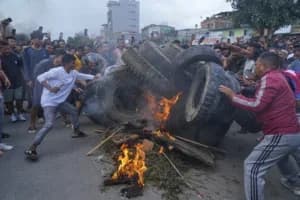
Demonstartors burning tires in violation of curfew orders in Kathmandu, Tuesday, September 9, 2025. (Niranjan Shrestha/AP)
Crowds on Monday swelled to tens of thousands in Kathmandu and surrounded the Parliament building. Police then opened fire, according to witnesses. Demonstrators chanted, “Stop the ban on social media. Stop corruption, not social media,” and “Punish the murders in government. Stop killing children.” Organizers dubbed it the “Gen Z” protest, referring to those born between 1995 and 2010. Seven of those killed and scores of wounded were received at Nepal’s National Trauma Center, the country’s main hospital. Dr. Badri Risa said many patients were in serious condition and appeared to have been shot in the head and chest. Families waited for updates while residents lined up to donate blood. Prime Minister Oli said he is forming an investigating committee to deliver a report within 15 days, and pledged compensation for the bereaved and free treatment for the injured. At an emergency Cabinet meeting late Monday, Home Minister Ramesh Lekhak resigned. Despite the violence, the government lifted the social-media ban early Tuesday, a day after the deadliest clashes. The curfew remained in place. The platforms were blocked last week after they failed to comply with a new government requirement to register in Nepal and submit to official oversight. The move is part of a broader social-media regulation bill the government says will ensure platforms are “properly managed, responsible and accountable.” Rights groups and critics say the bill is a censorship tool aimed at muzzling dissent online. The bill would require platforms to appoint a liaison office or point of contact in Nepal. The registration requirement covered about two dozen widely used networks. Google (YouTube), Meta (Facebook, Instagram, WhatsApp) and X did not respond to requests for comment. TikTok, Viber and three other platforms have registered and continued operating. Nepal banned TikTok in 2023 for allegedly disrupting “social harmony” and spreading indecent material; the ban was lifted last year after the company pledged to comply with local laws, including a 2018 ban on pornographic sites. Alongside the attacks on leaders’ homes, protesters also damaged parliament’s perimeter, underscoring the breadth of public anger at the political class. The fires and the scale of Monday’s mobilization — followed by fresh gatherings on Tuesday despite curfew orders — highlighted the government’s challenge in restoring order. As of Tuesday afternoon, the curfew and school closures in Kathmandu remained, with a heavy security presence across the city. The government’s inquiry, compensation promises and the reversal of the social-media blackout did little to stem protesters’ calls for accountability, an end to corruption, and the ouster of the Oli government.



Comments
No comments yet. Be the first to share a thought.