
Diplomatic efforts to end the ongoing conflict between the United States and Iran have intensified, with Qatar stepping up its mediation as fears grow that Washington could resume large-scale military strikes against Tehran.
Qatar’s Prime Minister, Sheikh Mohammed bin Abdulrahman bin Jassim Al Thani, is in Washington, DC, where he is expected to meet US President Donald Trump and Vice President JD Vance at the White House on Monday, November 9, 2026.
The meeting comes at a critical moment as regional and international efforts continue to find a diplomatic solution to the eight-month conflict involving the United States, Israel and Iran.
A senior Qatari official confirmed to Al Jazeera that negotiations between the parties and mediators are still ongoing, with discussions focusing on key elements of a potential agreement to end the war.
However, significant disagreements remain. Iran has insisted that meaningful progress towards peace depends on the United States lifting its naval blockade, ending military attacks, releasing frozen Iranian assets and removing economic sanctions.
Iranian Foreign Ministry spokesperson Esmaeil Baghaei accused Washington of abandoning commitments previously reached under the 14-point Islamabad understanding, arguing that the United States must honour its obligations before a lasting agreement can be achieved.
Meanwhile, Iranian President Masoud Pezeshkian revealed that Supreme Leader Mojtaba Khamenei had issued new directives calling for an end to the current state of neither war nor peace between Tehran and Washington.
Speaking about the possibility of negotiations, Pezeshkian said Iran was prepared to pursue a diplomatic solution while maintaining its dignity.
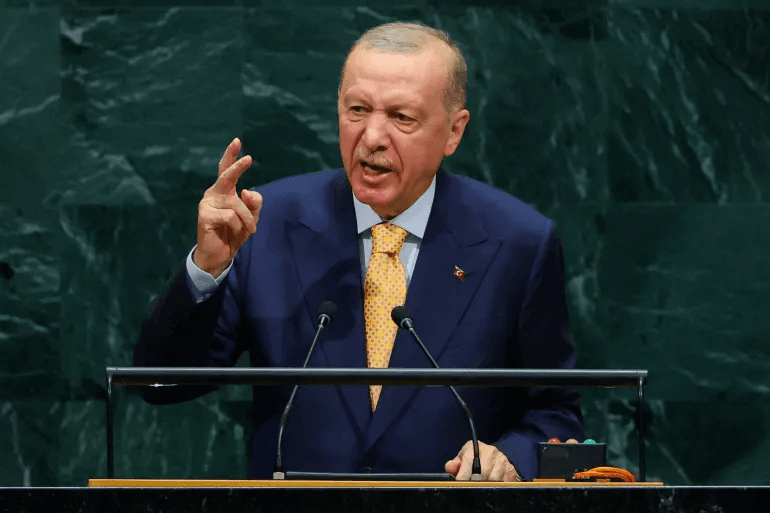
The diplomatic developments come amid renewed warnings from Türkiye. President Recep Tayyip Erdoğan said he had communicated his concerns to Trump, urging all parties to prioritise dialogue and prevent another wave of US-Israeli attacks on Iran.
Erdoğan warned that renewed military action could push the region into further instability.
Despite the diplomatic engagement, tensions remain high, particularly around the Strait of Hormuz, a strategically important maritime route for global energy supplies.
The United States has also expanded its pressure on Iran through a new initiative known as Task Force Iron Gate, aimed at disrupting the movement of weapons, sanctioned materials and financial resources through Iran’s land borders and the Caspian Sea.
With diplomatic negotiations continuing and military tensions unresolved, Qatar’s engagement in Washington could prove significant in determining whether the conflict moves towards a negotiated settlement or another phase of escalation.

Comments
No comments yet. Be the first to share a thought.