
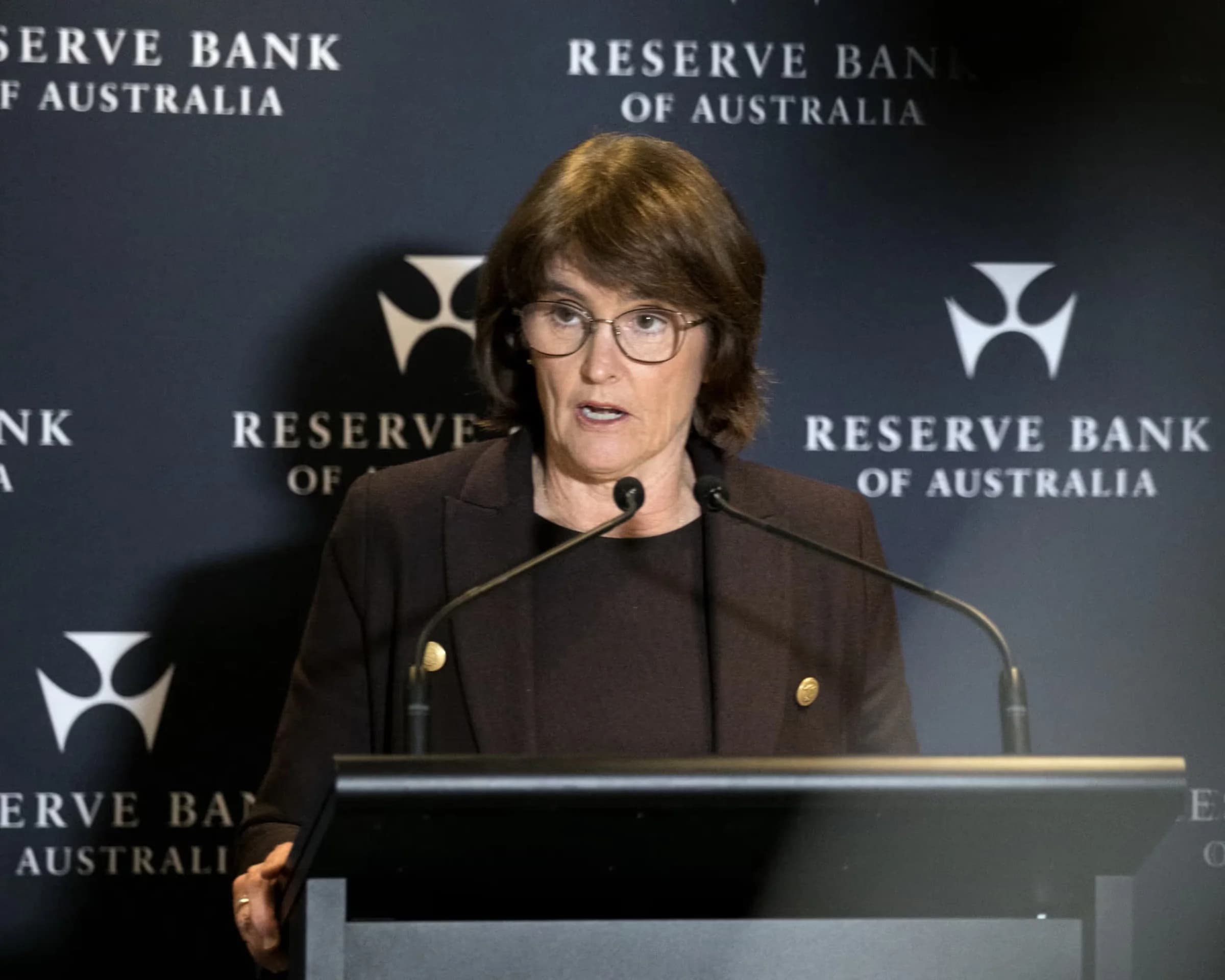
Reserve Bank governor Michele Bullock has clarified that the decision to hold interest rates steady was primarily a matter of timing, rather than a signal of a change in direction. Her remarks followed earlier comments by Treasurer Jim Chalmers, who noted a division within the RBA board over Tuesday’s rate call. Speaking at a press conference attended by The Guardian journalist Patrick Commins, Bullock addressed questions about the three board members who dissented from the majority position to keep the official cash rate on hold. When asked if she could disclose more about the dissenters, s
Reserve Bank governor Michele Bullock has clarified that the decision to hold interest rates steady was primarily a matter of timing, rather than a signal of a change in direction. Her remarks followed earlier comments by Treasurer Jim Chalmers, who noted a division within the RBA board over Tuesday’s rate call. Speaking at a press conference attended by The Guardian journalist Patrick Commins, Bullock addressed questions about the three board members who dissented from the majority position to keep the official cash rate on hold. When asked if she could disclose more about the dissenters, such as whether they were internal RBA staff and what position they supported, Bullock responded: “They’re unattributed votes. So, I can’t tell you who voted what way.” She added: “What I can say is that what it demonstrates, I hope, is that there was really good active debate in the boardroom about the pros and cons of holding and easing, and I would characterise it as saying that the difference between the two camps really was down to a slightly softer reading.” According to Bullock, those who favoured a rate cut had taken a more cautious interpretation of the latest inflation figures and were increasingly concerned about downside risks to the economy, particularly those stemming from global volatility. Despite this, Bullock repeatedly emphasised that the discussion centered on when to ease monetary policy; not if the bank would do so. She reinforced this point when asked how she would respond to mortgage holders disappointed by the board's decision: “I’m very conscious of that. I’m also really conscious that we don’t want to end up having to fight inflation again. We want to make sure we’ve nailed it.” “And as I said, the biggest thing here is that it wasn’t really directionally - where we think we’re heading in terms of easing. It was more about timing.” The RBA’s decision to keep the rate unchanged reflects a careful balancing act between safeguarding the progress made on inflation and addressing emerging economic vulnerabilities.



Comments
No comments yet. Be the first to share a thought.