
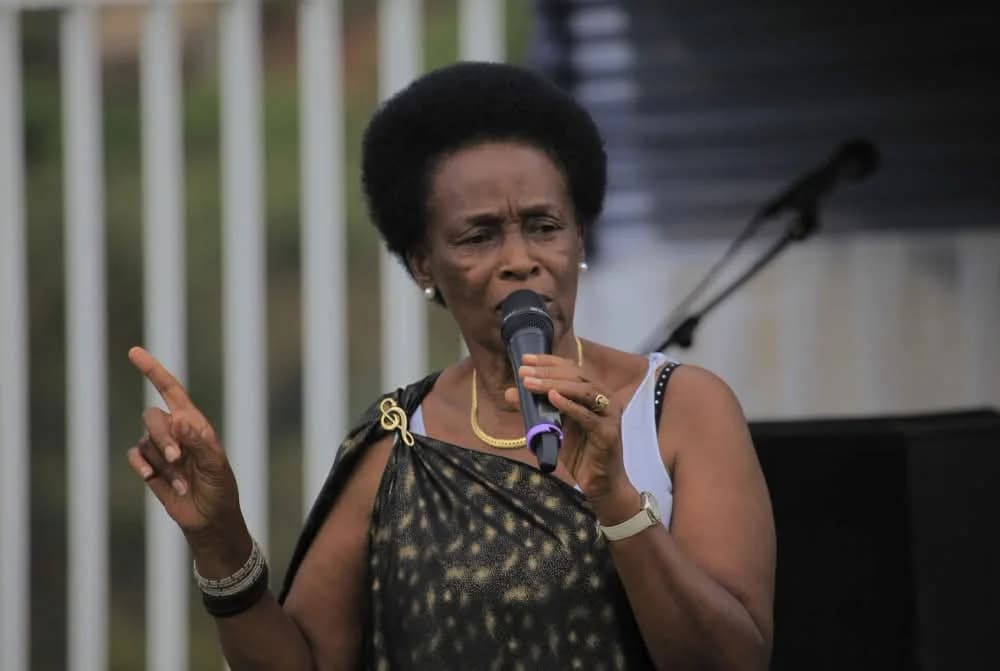
Rwanda has lost one of its celebrated voices in traditional music. Veteran musician Suzanne Nyiranyamibwa, whose songs captured the country’s cultural identity, history and collective emotions, died on Friday morning, October 16, 2026. Her death marks the end of a remarkable chapter in Rwanda’s musical history, leaving behind a legacy shaped by cultural preservation, personal resilience and a deep attachment to her homeland. Her family announced her passing in a statement expressing grief over the sudden loss. Details of her funeral arrangements were expected to be announced later. The circums
Rwanda has lost one of its celebrated voices in traditional music. Veteran musician Suzanne Nyiranyamibwa, whose songs captured the country’s cultural identity, history and collective emotions, died on Friday morning, October 16, 2026. Her death marks the end of a remarkable chapter in Rwanda’s musical history, leaving behind a legacy shaped by cultural preservation, personal resilience and a deep attachment to her homeland. Her family announced her passing in a statement expressing grief over the sudden loss. Details of her funeral arrangements were expected to be announced later. The circumstances surrounding her death had not been publicly established at the time of writing. For decades, Nyiranyamibwa contributed to the preservation and development of traditional Rwandan music, using her voice and artistic talent to keep the country’s cultural heritage alive. She was known for songs such as Telefone ko ititaba and Ni muberwe bakobwa, which earned her recognition among audiences who appreciate Rwanda’s traditional musical expression. She was also among the founders of Itorero Isamaza, a cultural ensemble whose music played a role in encouraging and supporting the struggle to liberate Rwanda. Her contribution went beyond performance. Through her music, she helped carry Rwanda’s traditions, values and stories from one generation to another, reinforcing the role of artists as custodians of national heritage. Nyiranyamibwa’s life was also shaped by Rwanda’s difficult history. In 1973, she left the country amid persecution targeting Tutsi and sought refuge in the Democratic Republic of Congo before later moving to Belgium. Although she spent years outside Rwanda, her connection to her homeland remained strong. She eventually returned, choosing to spend her later years in the country that had shaped her identity and artistic journey. Her story reflects the experiences of Rwandans whose lives were disrupted by exile but whose attachment to home remained unbroken. Nyiranyamibwa also used music to express the pain and lasting consequences of the 1994 Genocide against the Tutsi. Her song Ese mbaze nde? stands among her works associated with the anguish and suffering experienced by Rwandans during and after the genocide. Through music, she gave expression to grief that words alone could not always convey. Her work became part of a broader cultural effort to preserve memory, confront painful history and ensure that the experiences of survivors and affected families are not forgotten. Nyiranyamibwa was a mother of four and came from a family of nine children. Her husband died while the family was in exile in the Democratic Republic of Congo. Her passing leaves a significant gap in Rwanda’s traditional music scene, particularly among the generation of artists who helped preserve the country’s cultural identity through song. But her influence will not be measured by the years she lived alone. It will also be remembered through the songs she left behind, the traditions she helped protect and the history she documented through her art. For Rwanda, Suzanne Nyiranyamibwa was more than a musician. She was a voice of culture, memory and belonging. As the country reflects on her life and contribution, her music remains a lasting reminder of the power of art to preserve identity, express grief and keep a nation’s stories alive. May she rest in peace.



Comments
No comments yet. Be the first to share a thought.