
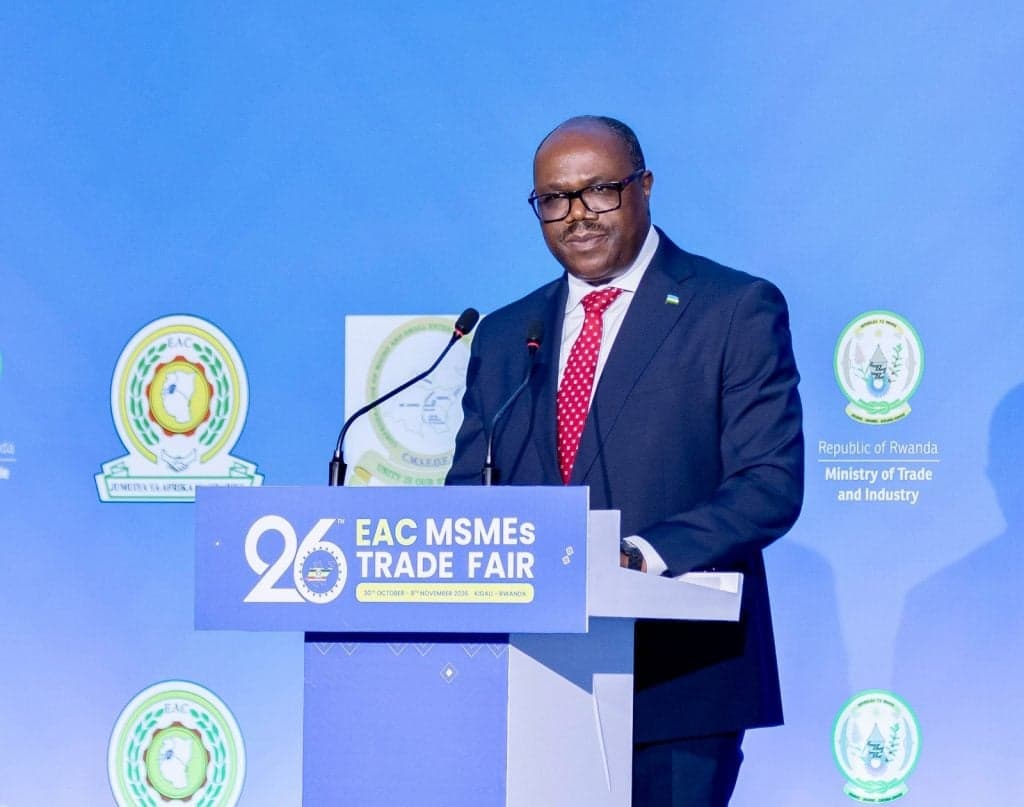
Rwanda’s Prime Minister, Dr Justin Nsengiyumva, has urged small and medium-sized enterprises (SMEs) across the East African Community (EAC) to set ambitious goals, embrace opportunities and expand their businesses to compete in wider African markets.
He made the remarks on November 3, 2026, while officially opening the 26th East African Community Small and Medium Enterprises Trade Fair at the Gikondo Expo Grounds in Kigali.
The exhibition, running from October 30 to November 8, is focused on strengthening regional value chains in the leather industry and horticulture, particularly vegetables, fruits and flowers.
Addressing entrepreneurs, Nsengiyumva highlighted Rwanda’s ambition to create 250,000 jobs annually and increase non-traditional exports, particularly horticultural products, from $1.4 billion to $3.2 billion over the next five years.
He encouraged business owners not to limit their ambitions to small-scale operations, assuring them of government support in achieving sustainable growth.
“We want small and medium-sized enterprises to grow and eventually reach the level of becoming wealthy business owners. We are here to help you achieve that,” he said.
The Prime Minister noted that regional integration is essential for business growth, as cooperation among neighbouring countries creates access to larger markets, raw materials and new investment opportunities.
This year's trade fair has attracted approximately 1,500 exhibitors from East Africa and other parts of Africa. Since its establishment in 1999, the event has served as a platform for entrepreneurs to build partnerships and explore new markets.
Nsengiyumva also acknowledged challenges facing SMEs, including expensive loans, limited market access and high cross-border transportation costs.
He called for simplified customs procedures, removal of non-tariff barriers, improved logistics and greater access to business financing.
He further highlighted digital commerce and the Pan-African Payment and Settlement System (PAPSS) as important tools for facilitating trade.
He urged entrepreneurs to look beyond East Africa and take advantage of opportunities offered by the African Continental Free Trade Area (AfCFTA), adding that investment in processing agricultural products and leather goods could strengthen African industries and increase their competitiveness internationally.



Comments
No comments yet. Be the first to share a thought.