
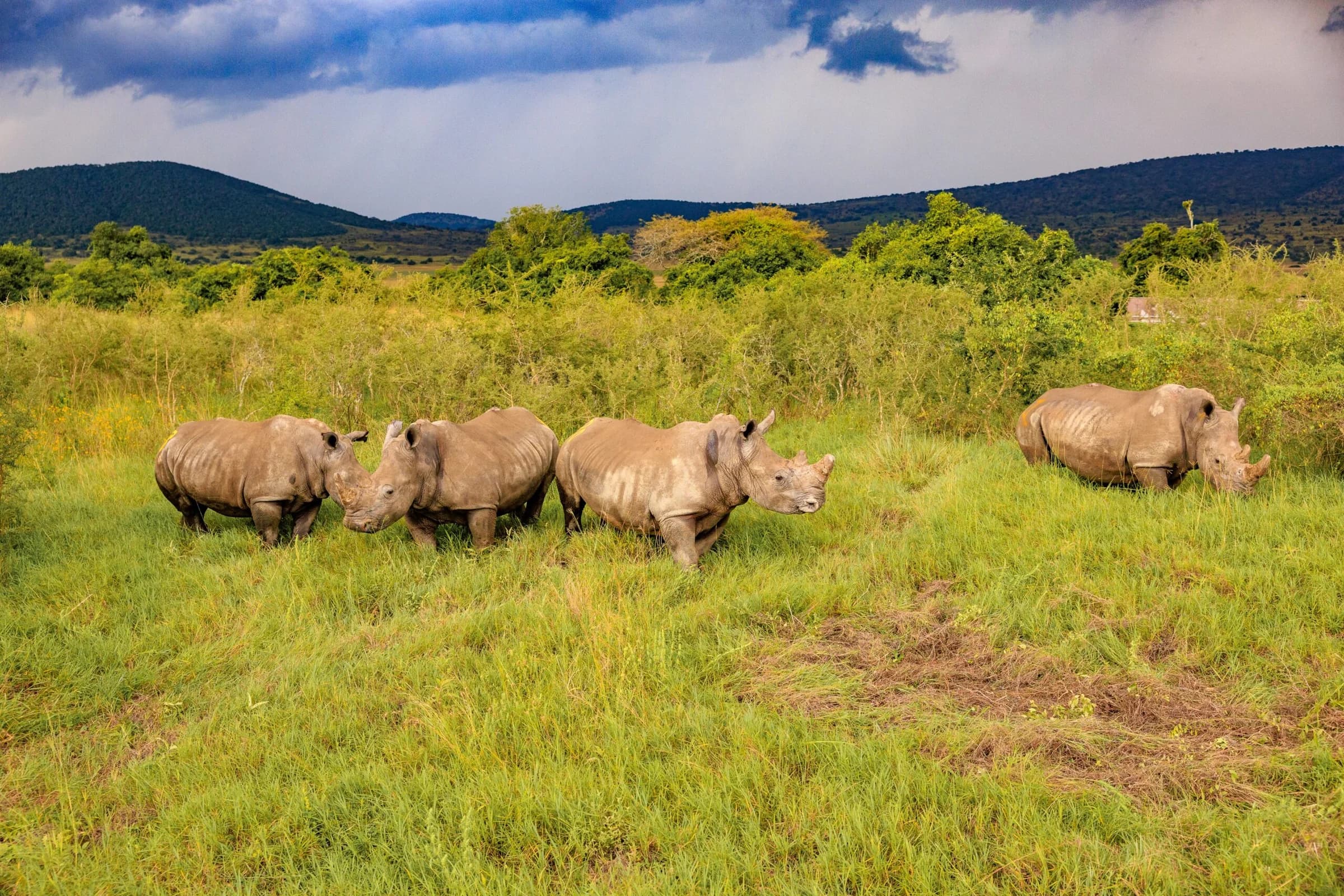
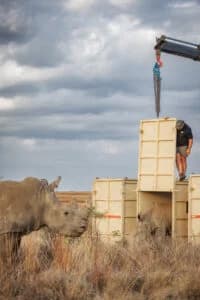
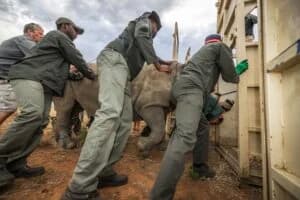
African Parks and the Rwanda Development Board (RDB), on Tuesday, June 10, announced the translocation of 70 southern white rhinos from South Africa to Akagera National Park in Rwanda. This translocation was completed in two phases, each comprising 35 rhinos, spaced three days apart. The final phase of the 3,400 km journey involved the rhinos being transported by truck in individual steel crates from the Munywana Conservancy (South Africa) to King Shaka International Airport in Durban. They were then carefully loaded by cranes into a Boeing 747 , flown to Kigali International Airport, and f
African Parks and the Rwanda Development Board (RDB), on Tuesday, June 10, announced the translocation of 70 southern white rhinos from South Africa to Akagera National Park in Rwanda. This translocation was completed in two phases, each comprising 35 rhinos, spaced three days apart. The final phase of the 3,400 km journey involved the rhinos being transported by truck in individual steel crates from the Munywana Conservancy (South Africa) to King Shaka International Airport in Durban. They were then carefully loaded by cranes into a Boeing 747 , flown to Kigali International Airport, and finally transported to Akagera National Park by road. Located in eastern Rwanda, Akagera spans over 1,000 square kilometers. It features a variety of ecosystems including savannah, wetlands, and lakes. The park’s wildlife population has grown from fewer than 5,000 animals in 2010 to nearly 12,000 today. According to the statement from the RDB, this significant move, part of African Parks’ Rhino Rewild Initiative and made possible with funding from The Howard G. Buffet Foundation, aims to bolster Akagera’s white rhino population so that it can contribute more meaningfully to regional conservation efforts and reinforce Rwanda’s growing role in global rhino conservation efforts. The objective of the Rhino Rewild Initiative is to rewild over 2,000 rhinos to safe, well-managed protected areas across the continent. In 2021, African Parks moved 30 southern white rhinos to Akagera National Park. This initial population has increased to 41 animals today. “Building on this success, the additional 70 animals will now play a crucial role in ensuring the presence of meta-populations across the continent, presenting opportunities for future range expansion”, read the statement from RDB. Jean-Guy Afrika, CEO of the Rwanda Development Board has said that this historic translocation reflects Rwanda’s growing contribution to global conservation efforts. “Our commitment to protecting endangered species is closely tied to our vision for sustainable tourism, where thriving wildlife and well-managed protected areas like Akagera National Park create long-term value for both visitors and communities. This milestone reinforces our dedication to strengthening Rwanda’s protected landscapes and enhancing the country’s appeal as a destination for conservation-based tourism. We thank our partners for their continued collaboration and shared commitment to safeguarding Africa’s natural heritage.” Peter Fearnhead, CEO of African Parks thanked the Rwanda Government’s partnership and visionary conservation efforts, along with the invaluable support from The Howard G. Buffett Foundation, in making this translocation a reality. White rhinos were once widespread across sub-Saharan Africa. However, their numbers declined sharply due to hunting by European settlers and, later, widespread poaching. According to the International Rhino Foundation (IRF), rhino poaching in Africa increased by four percent from 2022 to 2023, with at least 586 rhinos killed in 2023. The southern white rhino, one of two subspecies, is now listed as “near threatened” by the International Union for Conservation of Nature (IUCN). Around 17,000 individuals remain in the wild.

Comments
No comments yet. Be the first to share a thought.