
Rwanda’s Sports Sector Faces Questions Over Talent Development, Investment and Governance
Rwanda’s ambition to build a competitive and economically sustainable sports industry has brought renewed attention to challenges surrounding talent development, club management, sports governance and investment in grassroots competitions.
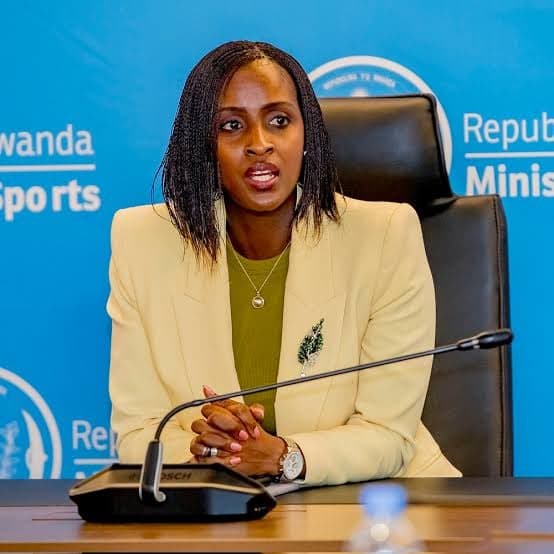
These issues featured prominently during a special interview with the Minister of Sports, Nelly Mukazayire, hosted by Scovia Mutesi on Mama Urwagasabo TV.
The discussion examined the structures needed to transform sports into a sustainable business while highlighting the importance of supporting athletes from grassroots competitions to professional careers.
Developing talent beyond the playing field
One of the key issues raised was the need to treat sports as a business driven by talent and supported by professional management.
“Sports is a business. It is a business built on talent,” the discussion highlighted, pointing to growing interest in young footballers and the need for a reliable system to identify and develop promising athletes.
The example of three players from the Under-17 category who had attracted interest from clubs seeking to recruit them and take them to Muhanga raised questions about the future of youth talent development.
The Isonga programme was recalled as an example of an initiative that previously played a role in developing young footballers but eventually disappeared, highlighting the importance of sustainable structures for nurturing emerging talent.
The discussion also emphasized the importance of managing athletes beyond their performances on the pitch, particularly when they begin attracting public attention and recognition.
“When a player becomes a star and scores goals, everyone celebrates him. But once he starts believing he has become a global star, there needs to be someone to manage him and protect him from alcohol consumption and other irresponsible behaviour.”
This highlighted the need for professional guidance to help athletes manage fame, finances, discipline and their long-term careers.
Financial challenges facing local clubs
The ability of local football clubs to establish and maintain their own academies was another concern.
Academies require substantial financial resources, making it difficult for many clubs to independently invest in youth development.
The Isonga programme was proposed as a potential shared talent-development structure, allowing clubs to benefit from a national pool of young players without each having to establish expensive academies.
The financial sustainability of domestic football was also highlighted. The discussion cited an example of clubs spending close to FRW 60 million to complete a championship season while competing for a final prize of approximately FRW 18 million.
The comparison highlighted the financial pressure facing clubs and the need for more sustainable business models within domestic football.
Expanding sports opportunities beyond Kigali
The discussion further examined the concentration of sporting activities in Kigali and the need to extend opportunities to other parts of the country.
Expanding sports development to other districts requires considerable financial and human resources, particularly for identifying, nurturing and monitoring emerging talent.
The Umurenge Kagame Cup was also highlighted as an important grassroots initiative, with its role in promoting participation and developing future professional athletes forming part of the wider discussion on sports development.
Sports investment and economic returns
Beyond grassroots development, the conversation explored the economic potential of major international sporting events, including Formula 1.
The discussion stressed that investments in international sporting events should deliver tangible benefits to the national economy rather than being measured solely through visibility and international recognition.
“Rwandans must understand that the money we invest in these events should generate returns for the country.”
The importance of evaluating sports investments through their potential to generate revenue, create employment and strengthen economic opportunities for Rwandans was also emphasised.
Federation governance and accountability
Governance within sports federations emerged as another significant concern.
The discussion highlighted the importance of improving leadership, accountability and institutional management within sports federations while respecting the independence requirements of international governing bodies, including FIFA and the Confederation of African Football (CAF).
The decline of some popular sporting teams was also cited as an indication of how management and governance challenges can undermine the long-term survival of sporting institutions.
Strengthening institutional leadership and accountability remains essential to protecting clubs, federations and the wider sports ecosystem.
Building a sustainable sports industry
The interview highlighted several important aspects of Rwanda's sports sector, including the development of young athletes, the financial capacity of local clubs, the management of federations and the economic value of international sporting investments.
Ultimately, Rwanda's challenge is not simply to organise competitions or identify talented athletes, but to establish a sustainable system that can nurture talent, support professional careers, strengthen sports institutions and ensure that investment translates into long-term national benefits.
Comments
No comments yet. Be the first to share a thought.