
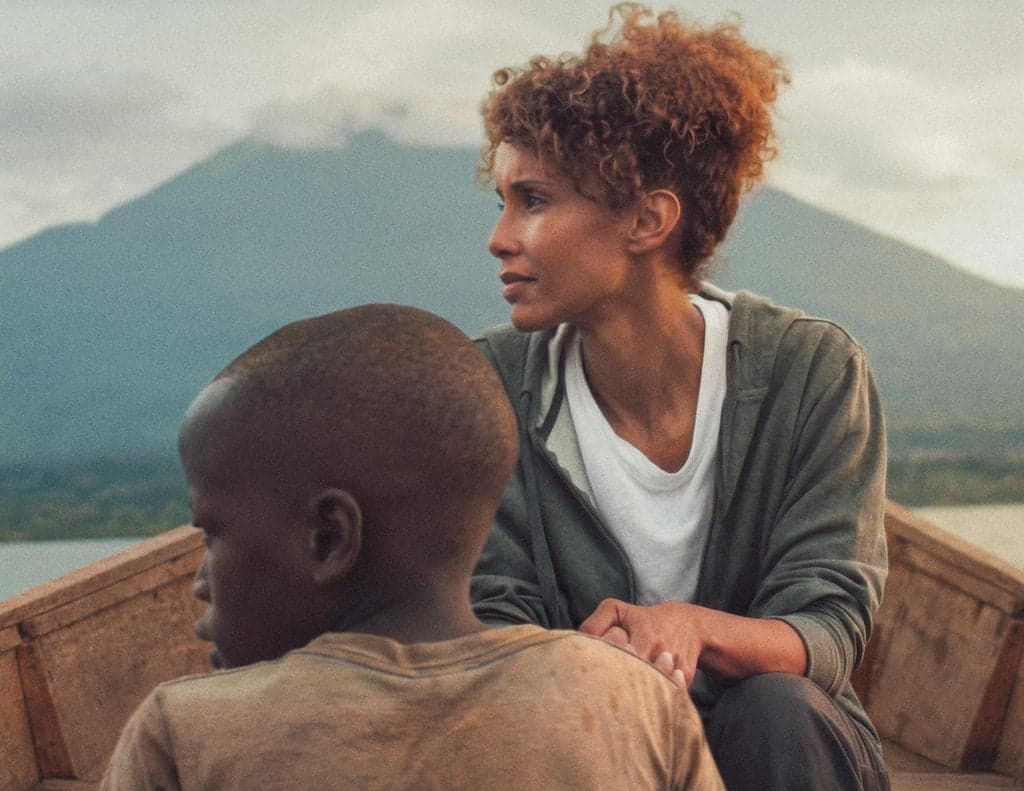
The film follows a Franco-Rwandan basketball player whose return to Rwanda forces her to confront childhood memories and the lasting impact of the 1994 Genocide against the Tutsi.
A new film starring Sonia Rolland is bringing Rwanda’s history, the power of remembrance and the lasting impact of trauma to the screen through the story of a professional basketball player reconnecting with her roots.
Titled Kwibuka, se souvenir, the drama follows Lia, a Franco-Rwandan basketball player invited to represent Rwanda at an African championship. Her return to the country she fled as a nine-year-old becomes more than a sporting opportunity, opening a difficult journey into her past and the experiences that shaped her identity.
Directed by Jonas d’Adesky, the film is scheduled for release in French cinemas on November 4, 2026, following advance screenings in seven French cities from October 26 to 30.
A basketball opportunity becomes a journey into the past
For Lia, the invitation to join Rwanda’s national basketball team offers an opportunity to reconnect with the country of her birth. However, returning after years away brings back memories she has tried to leave behind.
As she prepares to represent Rwanda, Lia must confront questions about her childhood, her origins and the relationship between her personal history and the country she left behind.
Basketball provides the link that brings her home, but the story extends far beyond sport. Through Lia’s experience, the film explores how returning to a place of origin can reopen painful memories while creating an opportunity to understand the past in a new way.
Her journey reflects a broader reality for people whose lives have been shaped by conflict, displacement and separation from their homeland.
Remembering the 1994 Genocide against the Tutsi
At the heart of Kwibuka, se souvenir is the legacy of the 1994 Genocide against the Tutsi in Rwanda and its continuing impact on survivors and families.
The film examines how historical trauma can remain part of a person’s life long after the events themselves, influencing identity, relationships and the way individuals understand their place in the world.
Through Lia, the story connects collective memory with personal experience. Rwanda’s history is not simply a distant account of events that happened before her return; it is part of her own story, shaping the questions she must confront as she reconnects with her homeland.
The film also raises a wider question: what happens when someone spends years trying to move beyond painful memories, only to discover that understanding the past is essential to understanding themselves?
Rather than presenting basketball as the central subject, the story uses the sport as a bridge between countries, generations and experiences. It explores the possibility of confronting difficult memories while rebuilding a relationship with one's origins.
Sonia Rolland takes on the role of Lia
Rolland, who was crowned Miss France in 2000, stars as Lia. With Rwandan and French roots, the actress takes on a character whose life connects the two countries through family history, displacement and a search for identity.
Her role places her at the centre of a story that moves between sporting ambition and the emotional consequences of returning to a country left behind during childhood.
The cast also includes Jean-Hugues Anglade, Isabelle Kabano, Jean-Henri Compère, Parfait Mugiraneza Ntambiyindekwe, Eugene Nkota, Michel Ange Nzojibwami and Jacques Bahige.
The film is directed by Jonas d’Adesky, with a screenplay co-written by Laurie Bost. It runs for approximately 92 minutes and explores themes of remembrance, belonging and the relationship between individual lives and collective history.
French screenings ahead of the cinema release
Before its nationwide French cinema release on November 4, Kwibuka, se souvenir is scheduled to be screened in seven cities between October 26 and 30.
The planned screenings are in La Baule, La Roche-sur-Yon, Royan, Rochefort, La Rochelle, Lomme and Mâcon, giving audiences an opportunity to see the film ahead of its general release.
The screenings also introduce the story to audiences in France, where Lia has spent much of her life after leaving Rwanda as a child.
By bringing together a Franco-Rwandan protagonist, the world of basketball and the memory of the Genocide against the Tutsi, the film connects Rwanda’s history with wider questions about migration, identity and the experiences carried by people who leave their homelands.
A story that goes beyond sport
Kwibuka, se souvenir places basketball within a much larger narrative about memory and belonging. Lia’s return demonstrates how sport can create a pathway back to a country while bringing unresolved questions about the past into focus.
For Rwanda, whose history continues to be remembered and passed on to younger generations, stories told through cinema offer another way to engage audiences with the human experiences behind historical events.
Ultimately, the film asks viewers to consider the relationship between remembering and moving forward. Lia’s journey suggests that confronting the past is not simply about revisiting painful experiences, but also about understanding how those experiences have shaped the person she has become.
Through one basketball player’s return to Rwanda, Kwibuka, se souvenir brings together sport, history and personal identity in a story about the enduring meaning of home.
Comments
No comments yet. Be the first to share a thought.