
Migration law should be understood not only as a tool of border control but also as a strategic legal framework that supports international business mobility and economic cooperation, according to new research examining Australia’s migration system. The study, “Human Rights and Migration Law in Australia: Enabling Cross-Border Business Mobility in a Globalised Economy,” by Idi (Ras) Banamungu and published in the International Journal of Economic Practices and Theories , analyzes how migration policy intersects with human rights principles and cross-border economic activity. The research argue
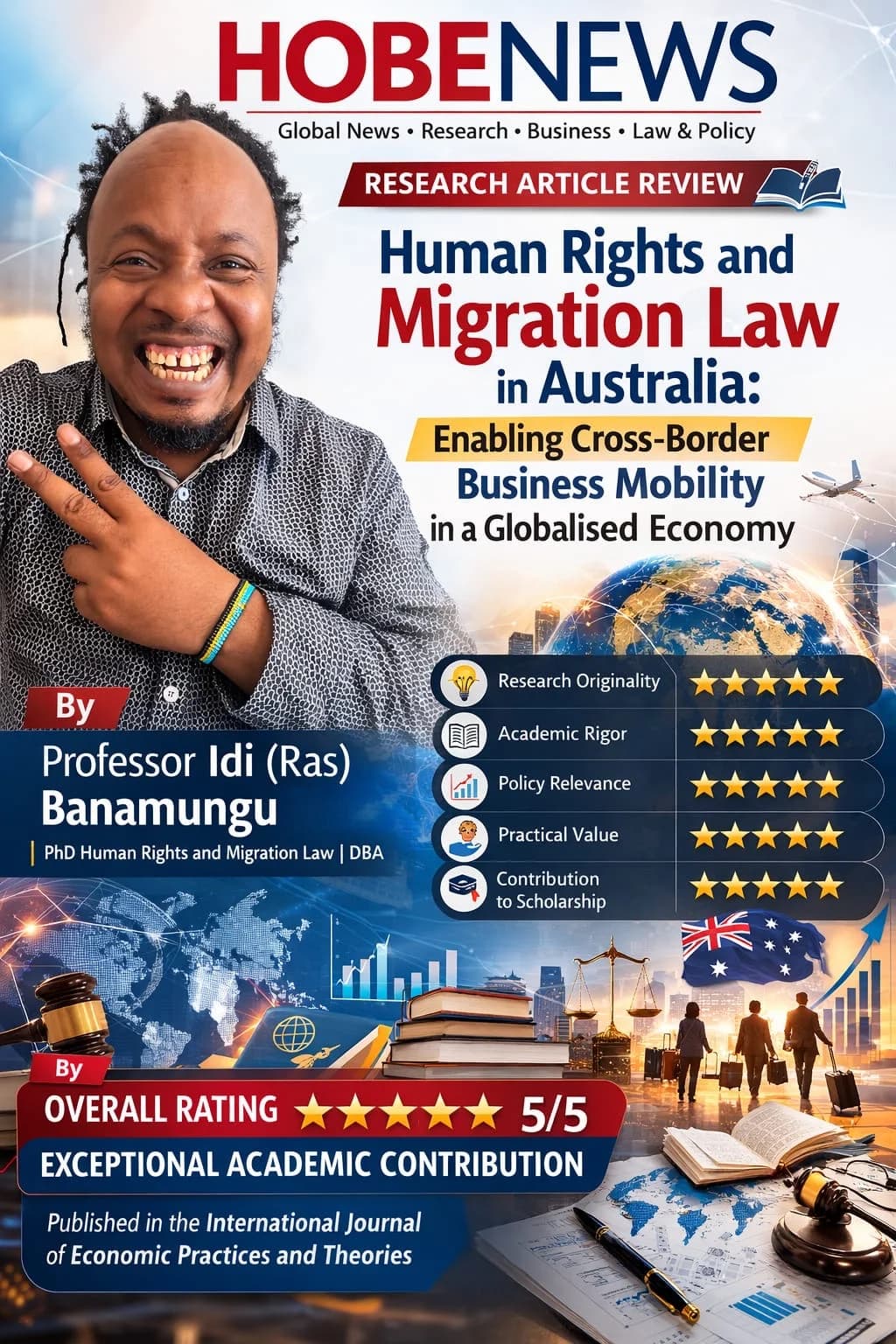
Migration law should be understood not only as a tool of border control but also as a strategic legal framework that supports international business mobility and economic cooperation, according to new research examining Australia’s migration system. The study, “Human Rights and Migration Law in Australia: Enabling Cross-Border Business Mobility in a Globalised Economy,” by Idi (Ras) Banamungu and published in the International Journal of Economic Practices and Theories, analyzes how migration policy intersects with human rights principles and cross-border economic activity. The research argues that migration governance increasingly shapes how entrepreneurs, investors, and skilled professionals move and operate across national borders. Rather than serving solely as regulatory barriers, migration systems can influence the global flow of talent, capital, and innovation. According to the study, migration policies grounded in principles such as dignity, fairness, and equality before the law can strengthen both migrant protections and economic participation. Embedding human rights standards into migration governance, the research suggests, helps build trust in international mobility systems while ensuring that professionals working across jurisdictions retain legal protections. The paper uses Australia as a case study to illustrate how migration policy can support economic activity across borders. According to the Australian government’s 2023–24 permanent migration program, about 137,000 of the 190,000 available place, roughly 72%, were allocated to the skilled migration stream, which targets professionals, entrepreneurs, and investors needed in key sectors of the economy. Programs within this stream allow companies to recruit international expertise while enabling migrants to establish businesses, invest capital, or contribute specialized skills to Australia’s labor market. The study suggests that such legal pathways demonstrate how migration frameworks can balance national interests with participation in the global knowledge economy. Another key finding highlighted in the research is the importance of clear and predictable migration policies. Transparent legal frameworks allow international professionals and entrepreneurs to plan long-term investments, partnerships, and business activities across jurisdictions. When migration systems provide legal certainty, the study notes, they can encourage cross-border collaboration and economic expansion. The research adds to broader policy discussions about how countries design migration systems in an era of global competition for skilled workers and investment. By framing migration law as part of the legal infrastructure that enables global economic mobility, the study suggests that governments may need to reconsider how migration policy can support both economic growth and the protection of human rights.



Comments
No comments yet. Be the first to share a thought.