
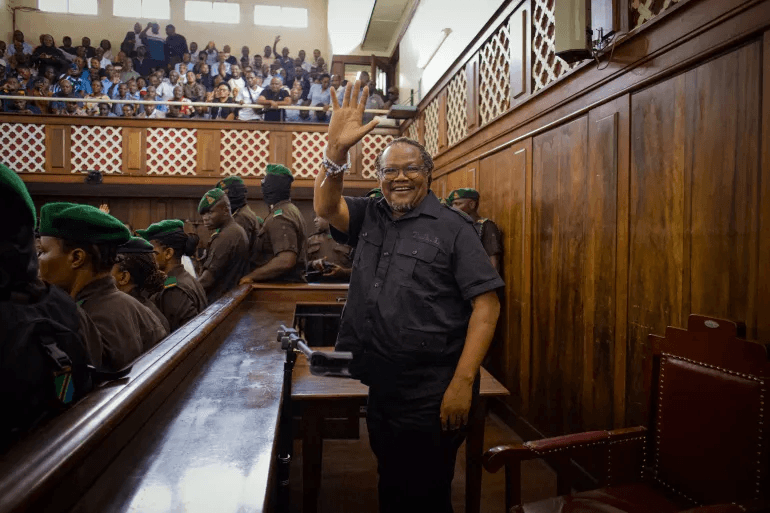
Tanzania’s main opposition leader, Tundu Lissu, has been sentenced to four years in prison on an incitement charge after a High Court in Dar es Salaam dismissed a treason case that could have exposed him to the death penalty.
The ruling was delivered on Friday, November 6, 2026, by a three-judge panel following a closely watched trial that attracted international attention and criticism from human rights advocates.
One of the judges said Lissu’s statements were intended to disrupt elections and encourage violence, before announcing the four-year prison sentence. The court also indicated that he had the right to appeal.
Lissu, who leads the opposition party CHADEMA, rejected the ruling, describing the proceedings as political persecution. He accused the judges of acting under pressure from President Samia Suluhu Hassan’s government.
He argued that he had not originally been charged with incitement and suggested that the conviction was intended to satisfy political interests.
The dismissal of the treason charge was considered a significant development because treason is a capital offence under Tanzanian law.
Tanzanian human rights lawyer Tito Magoti, speaking to Al Jazeera, described the decision as a major setback for the state, arguing that the case appeared aimed at keeping Lissu behind bars rather than establishing a genuine treason offence.
Lissu was arrested ahead of Tanzania’s October 2025 presidential election, which was followed by widespread protests and a government crackdown on opposition figures and critics.
President Hassan was declared the winner with 98% of the vote. Opposition groups and human rights organisations reported thousands of protesters killed during the unrest, while the government put the death toll at 518.
The case also attracted criticism from British and European Union lawmakers, who questioned its political implications and called for Lissu’s release.
The 58-year-old opposition leader previously survived an assassination attempt in 2017, when he was shot 16 times and underwent nearly 20 surgeries.
His conviction comes amid continuing concerns about political freedoms, opposition activities and the treatment of government critics in Tanzania.

Comments
No comments yet. Be the first to share a thought.