
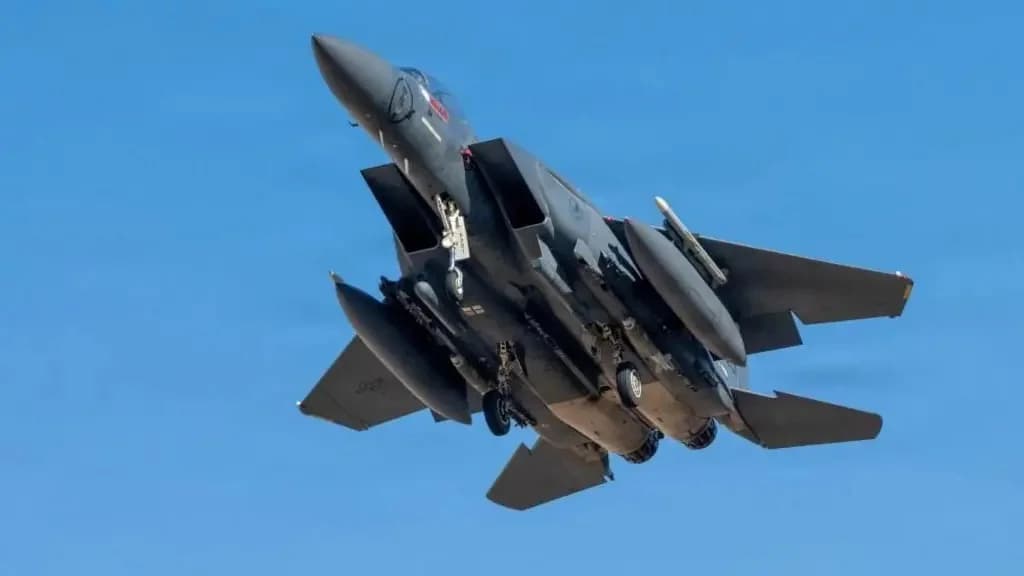
A high-stakes search operation is underway after a US fighter jet, the F-15E Strike Eagle, was shot down in southern Iran, leaving one American crew member missing and raising fears of further escalation in the ongoing conflict. According to multiple reports, the aircraft — which typically carries two personnel — was brought down during operations linked to the ongoing war involving Iran, the United States, and Israel. While the pilot was successfully rescued by US forces, a weapon systems officer remains unaccounted for. The situation has quickly evolved into a critical military and politic
A high-stakes search operation is underway after a US fighter jet, the F-15E Strike Eagle, was shot down in southern Iran, leaving one American crew member missing and raising fears of further escalation in the ongoing conflict. According to multiple reports, the aircraft — which typically carries two personnel — was brought down during operations linked to the ongoing war involving Iran, the United States, and Israel. While the pilot was successfully rescued by US forces, a weapon systems officer remains unaccounted for. The situation has quickly evolved into a critical military and political flashpoint. Iranian authorities have launched their own search efforts and are reportedly urging civilians to locate the missing airman “alive,” even offering financial rewards. This has heightened concerns that the individual could be captured and used as leverage in the conflict. A Risky Rescue Operation The US military responded immediately with a rescue mission involving helicopters and additional aircraft, including the A-10 Thunderbolt II, commonly known as the Warthog. During the operation, one of the aircraft was hit, forcing its pilot to eject over the Gulf before being rescued. Despite these efforts, the fate of the missing airman remains unknown — whether alive, injured, or captured. Military analysts warn that this moment carries significant risks. If Iran captures the airman and publicizes it, it could deliver a major propaganda victory and intensify pressure on the US administration. Strikes Near Nuclear Facility Raise Alarm At the same time, Iran has reported fresh strikes near the Bushehr Nuclear Power Plant, the country’s only operational nuclear facility. Iranian officials say one person has been killed in the latest attack, marking the fourth reported strike in the area since the conflict began. Although initial assessments suggest no critical damage to the plant, global nuclear watchdog International Atomic Energy Agency has expressed “deep concern,” warning that any serious impact could trigger a catastrophic nuclear incident. Iran’s Foreign Minister, Abbas Araghchi, strongly condemned the attacks, cautioning that radioactive fallout could threaten not only Iran but also neighboring Gulf countries. Regional Impact and Escalation The broader conflict continues to spread across the region. Gulf nations such as Bahrain and the United Arab Emirates report intercepting hundreds of drones and missiles since the war began, underscoring the scale of the confrontation. Meanwhile, strikes have also hit urban areas in Israel, including cities near Tel Aviv, causing significant damage but no confirmed fatalities so far. The war, which escalated in late February, has already resulted in hundreds of casualties and widespread destruction, with both sides trading accusations and intensifying military actions. A Defining Moment For the US, the disappearance of the airman represents more than a battlefield challenge — it is a defining moment that could shape the next phase of the conflict. Analysts warn that any outcome, especially the capture of the crew member, could dramatically shift both military strategy and public perception. As search operations continue under dangerous conditions, the world watches closely, aware that the next development could either open a path to de-escalation or push the region deeper into crisis.



Comments
No comments yet. Be the first to share a thought.