
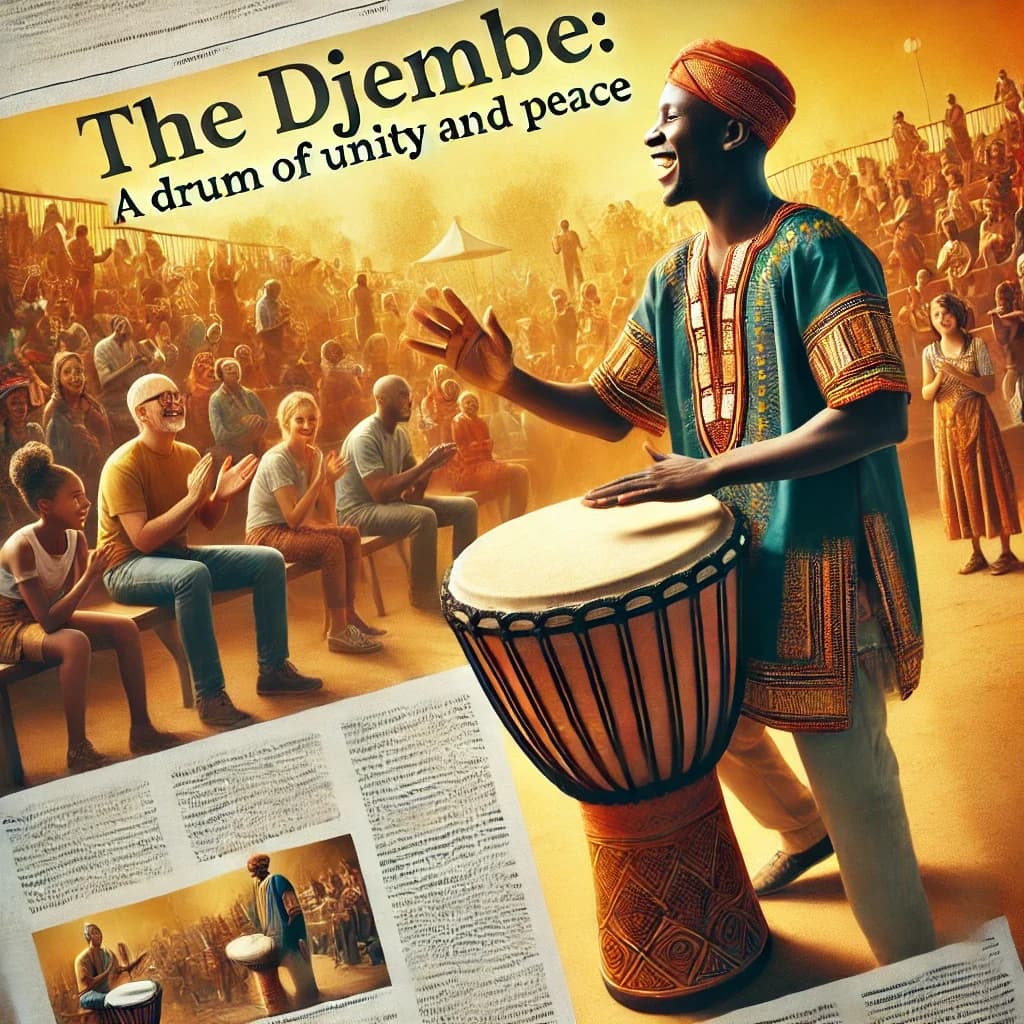
In the heart of West Africa, where music and tradition weave an intricate tapestry of culture, the djembe stands as a powerful symbol of unity and peace. This hand-carved wooden drum, with its taut goat-skin head and deep resonating tones, is more than just an instrument—it is a vessel of communication, storytelling, and healing. According to the Bambara people of Mali, the very name djembe derives from the saying "Anke djé, anke bé," which translates to "everyone gather together in peace." This phrase embodies the drum’s profound purpose: bringing people together through rhythm and community
In the heart of West Africa, where music and tradition weave an intricate tapestry of culture, the djembe stands as a powerful symbol of unity and peace. This hand-carved wooden drum, with its taut goat-skin head and deep resonating tones, is more than just an instrument—it is a vessel of communication, storytelling, and healing. According to the Bambara people of Mali, the very name djembe derives from the saying "Anke djé, anke bé," which translates to "everyone gather together in peace." This phrase embodies the drum’s profound purpose: bringing people together through rhythm and community spirit. The djembe’s history stretches back over 800 years, rooted in the Mandé culture of Mali, Guinea, Burkina Faso, and Ivory Coast. Traditionally played by griots—storytellers, historians, and musicians of West Africa—the drum has been central to village life, accompanying rituals, ceremonies, and daily activities. Crafted from a single piece of hollowed-out hardwood and covered with goat skin, the djembe’s sound is renowned for its versatility. It produces three distinct tones: the deep bass, the sharp slap, and the resonant tone. These sounds allow drummers to create complex, interwoven rhythms that can communicate emotions, tell stories, and even send messages across distances. The Bambara philosophy behind the name djembe is deeply rooted in African traditions of unity and collective harmony. In many societies, drumming is used not just for entertainment but for spiritual and communal healing. The phrase "Anke djé, anke bé" serves as a reminder that rhythm has the power to break barriers, bridge divides, and create a space for peace. Whether used in traditional healing ceremonies, rites of passage, or festive gatherings, the djembe remains a unifying force. In modern times, the djembe has transcended its West African origins and gained worldwide recognition. From drum circles in community parks to professional ensembles on global stages, the instrument has become a powerful tool for social connection. Music therapists, educators, and wellness practitioners use djembe drumming to promote mental well-being, reduce stress, and build community. As a pioneer in Laughter Percussion, I have witnessed firsthand the transformative power of drumming in therapeutic settings. The rhythmic vibrations of the djembe, combined with structured laughter exercises, have profound psychological and physiological benefits. Through my Laughter Percussion Academy, I have developed programs that integrate drumming into mental health practices, helping individuals overcome anxiety, trauma, and isolation. Scientific studies support the effectiveness of drumming in therapy, showing that it can improve mood, increase social bonding, and even boost immune function. When people drum together, their heartbeats synchronize, their stress levels decrease, and their sense of belonging grows. This aligns perfectly with the Bambara belief in the djembe’s role in fostering peace and unity. Today, the djembe continues to spread its message of togetherness across cultures. In Australia, Europe, the Americas, and beyond, drumming circles bring people from diverse backgrounds together, fostering inclusivity and connection. The drum is now a universal language—one that speaks of peace, healing, and communal joy. Musicians from different genres, including jazz, reggae, rock, and fusion, have embraced the djembe, incorporating its dynamic rhythms into their music. The instrument's adaptability and powerful resonance make it a favorite among artists seeking to add depth and cultural richness to their sound. While the djembe has gained international popularity, it is essential to honor and preserve its traditional roots. African master drummers continue to pass down their knowledge through apprenticeships, ensuring that the sacred rhythms and cultural significance remain intact. Workshops, festivals, and educational programs around the world teach the art of djembe playing, emphasizing not just technique but also the spirit of community it represents. As part of my work with The Det-n-ators International and Laughter Percussion Academy, I remain committed to spreading this tradition, using music as a force for unity and healing. The wisdom of the Bambara people echoes through time: "Anke djé, anke bé"—everyone gather together in peace. In a world often divided by differences, the djembe serves as a reminder that music can be a bridge to understanding and harmony. Whether played in an African village, a Western concert hall, or a therapy session, its rhythms invite us to listen, connect, and find common ground. As we continue to embrace the healing power of music, let us honor the spirit of the djembe by drumming not just for ourselves, but for the world—one beat at a time.
Comments
No comments yet. Be the first to share a thought.