
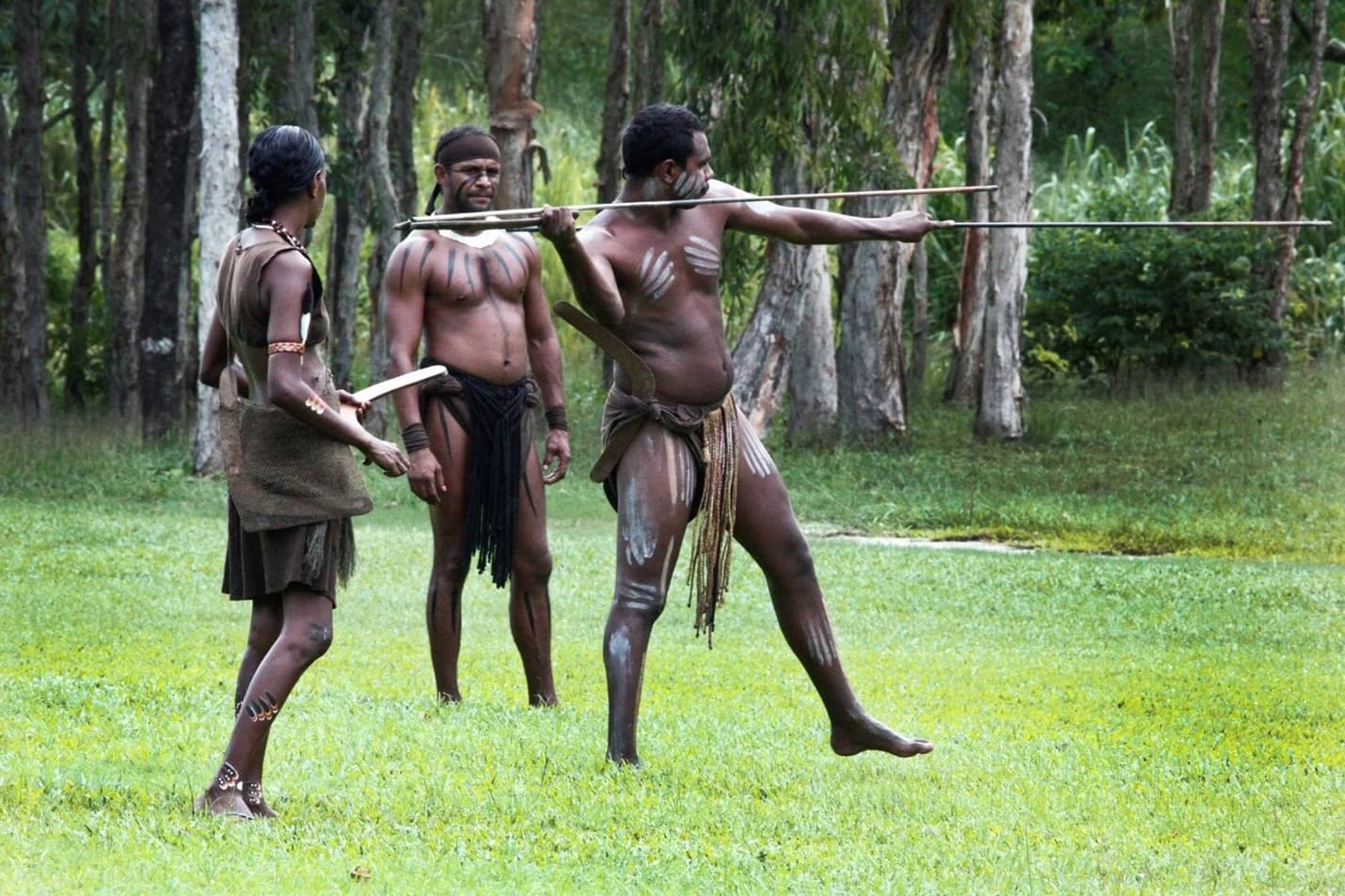
In Australia, there live a group of indigenous people known as Aboriginal Australians and Torres Strait Islanders whose history dates to tens of thousands of years ago. All Australian narratives are about this tribe, their complex societal structures and deep connection to their land and culture. They live their own primitive life; life free from modernity, where they hunt for food, and dance for fun! The untold story about this tribe is that it's origin can't be really traced back in Australia. They're immigrants from further nations. How did they establish roots in Australia's landscapes? A
In Australia, there live a group of indigenous people known as Aboriginal Australians and Torres Strait Islanders whose history dates to tens of thousands of years ago. All Australian narratives are about this tribe, their complex societal structures and deep connection to their land and culture. They live their own primitive life; life free from modernity, where they hunt for food, and dance for fun! The untold story about this tribe is that it's origin can't be really traced back in Australia. They're immigrants from further nations. How did they establish roots in Australia's landscapes? Archaeological evidence suggests that the ancestors of today's Aboriginal Australians first arrived on the continent between 50,000 to 65,000 years ago. This extensive history positions them among the world's oldest continuous cultures. These early inhabitants migrated from Southeast Asia, undertaking remarkable sea voyages during the Pleistocene epoch. Over millennia, they established diverse communities across Australia's vast landscapes, adapting to environments ranging from lush rainforests to arid deserts. At the time of European colonization in 1788, it is estimated that over 250 distinct Aboriginal languages were spoken, reflecting the rich cultural diversity among the Indigenous populations. Art and expression have always been vital to Aboriginal cultural preservation. Ancient rock paintings dating back tens of thousands of years still survive in the outback. In more recent tradition, murals were created with natural pigments such as crushed ants’ nests, charcoal, ochre, and minerals, symbolizing ancestral beings, clan totems, and landscape features. Music, song, and dance form a significant part of their traditions. Ceremonial performances echo across generations, often featuring the didgeridoo, a musical instrument crafted from hollowed tree trunks.
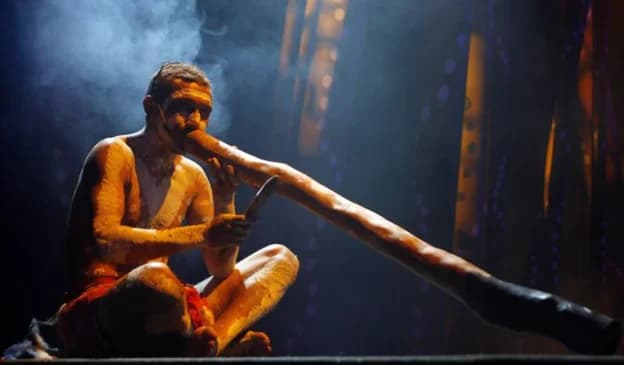
An Aboriginal man playing didgeridoo
Central to Aboriginal culture is the concept of "
The Dreaming
" or "
Dreamtime
," a complex network of narratives that explain the creation of the world and the laws governing existence. These stories, passed down through generations via oral traditions, art, dance, and song, detail how ancestral beings shaped the land and established the customs and ceremonies that continue to guide Aboriginal societies today. The arrival of British settlers in the late 18th century had profound and often devastating effects on Indigenous communities. Introduced diseases like Smallpox, displacement from traditional lands, and violent conflicts led to significant population declines and cultural disruption. Aboriginal people were dispossessed of their lands, driven from sacred places, and subjected to forced removals, what is now remembered as the
"Stolen Generations"
. Despite these challenges, Indigenous Australians have demonstrated resilience, preserving and revitalizing their cultural practices and advocating for their rights and recognition within the broader Australian society. In contemporary Australia, Indigenous peoples continue to face social and economic disparities but have also achieved notable milestones in political representation, cultural preservation, and legal recognition of land rights. Efforts such as the 1967 referendum, which amended the Constitution to include Indigenous Australians in the census and allowed the federal government to create laws for them, and the 1992 Mabo decision, which recognized native title, have been pivotal in advancing Indigenous rights. according to Australian Bureau of Statistics in 2021, the census demonstrated that there were
983,700 Aboriginal
and Torres Strait Islander people, representing
3.8%
of the total Australian population and they live in different parts of Australia. The cultural contributions of Indigenous Australians are evident in various aspects of national life, from art and music to literature and environmental stewardship.
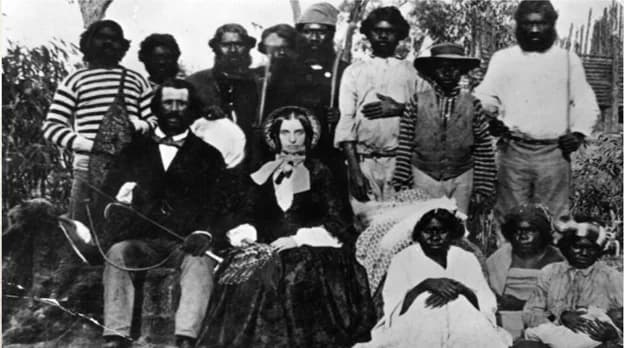
European settlers surrounded by Aboriginals; the earliest photograph believed to be taken in Australia.
Comments
No comments yet. Be the first to share a thought.