
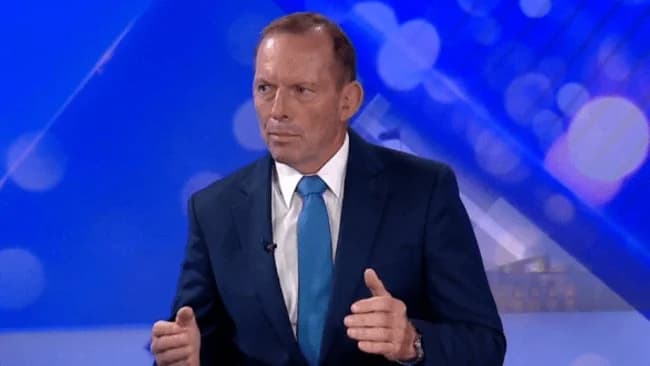
Former Prime Minister Tony Abbott has openly criticized the Australian Labor Party (ALP) for what he sees as growing divisions over support for Israel. Speaking during an interview with Sky News host Peta Credlin, Abbott expressed concern over what he called a shift within Labor away from Australia's traditional stance of unwavering solidarity with Israel, a position he described as vital to democratic values. Abbott praised members of the Labor Party who continue to advocate for strong ties with Israel but warned of increasing influence from those adopting a critical stance. He attributed th
Former Prime Minister Tony Abbott has openly criticized the Australian Labor Party (ALP) for what he sees as growing divisions over support for Israel. Speaking during an interview with Sky News host Peta Credlin, Abbott expressed concern over what he called a shift within Labor away from Australia's traditional stance of unwavering solidarity with Israel, a position he described as vital to democratic values. Abbott praised members of the Labor Party who continue to advocate for strong ties with Israel but warned of increasing influence from those adopting a critical stance. He attributed this shift to the influence of progressive narratives, which frame Israel as a settler-colonial state. According to Abbott, these perspectives are undermining a bipartisan approach that has historically defined Australia’s Middle East policy. Labor’s internal divide reflects broader changes in public opinion and global discourse. While bipartisan support for Israel has long been a cornerstone of Australian foreign policy, recent years have seen segments of the ALP advocate for a more balanced approach to the Israel-Palestine conflict. Calls for recognizing Palestinian statehood and criticism of Israeli settlement expansions have grown, driven by grassroots activism and union influence. Under Prime Minister Anthony Albanese, Labor has sought to navigate these tensions. The government has reaffirmed its commitment to Israel’s right to security while voicing concerns over policies in the occupied territories. This balancing act aims to address both traditional alliances and the demands of a progressive voter base that prioritizes human rights and international law. Abbott’s remarks highlight an ideological divide within Australian politics that mirrors global debates on the Middle East. He framed the issue as a choice between "democratic solidarity" and "cultural Marxist critiques," a characterization critics argue oversimplifies a complex geopolitical issue. Nonetheless, his comments resonate with conservatives who view unwavering support for Israel as essential to Australia’s strategic and democratic values. The debate over Israel’s role in Australian foreign policy underscores the challenges of addressing competing priorities. As Labor seeks to balance its historical alliances with evolving values, the issue reflects a broader struggle in reconciling traditional foreign policy stances with modern expectations for justice and equity.



Comments
No comments yet. Be the first to share a thought.