
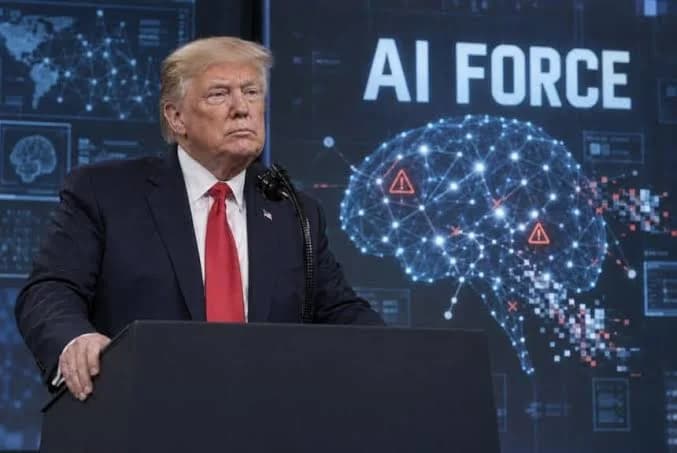
U.S. President Donald Trump has announced plans to create a new “AI Force,” signaling a push to coordinate America’s approach to artificial intelligence as debate over the technology’s risks and regulation intensifies. Trump said in a social media post that he was “forming the AI Force, much like I did Space Force,” while also announcing plans to appoint an “AI czar.” However, he did not explain what the new position would involve or how the proposed force would operate. The White House has not provided further details. The announcement comes amid growing disagreement in Washington over how
U.S. President Donald Trump has announced plans to create a new “AI Force,” signaling a push to coordinate America’s approach to artificial intelligence as debate over the technology’s risks and regulation intensifies. Trump said in a social media post that he was “forming the AI Force, much like I did Space Force,” while also announcing plans to appoint an “AI czar.” However, he did not explain what the new position would involve or how the proposed force would operate. The White House has not provided further details. The announcement comes amid growing disagreement in Washington over how the rapidly developing AI industry should be managed. Democrats have continued to call for stronger safeguards. Senate Minority Leader Chuck Schumer said concerns about the potential dangers of unchecked AI were growing, while accusing Trump of dismissing those risks. Some Republicans welcomed the announcement. Sen. Tim Sheehy said the AI Force could help establish guardrails around the technology while maintaining U.S. leadership in the sector. Digital rights advocates are urging policymakers to focus on existing problems rather than only potential future disasters. Corynne McSherry, legal director of the Electronic Frontier Foundation, pointed to cybersecurity weaknesses, algorithmic decision-making, personalized pricing and AI-powered surveillance as immediate concerns. The key question now is what Trump’s proposed AI Force will actually do—and whether it will focus on regulating present-day risks, supporting innovation, or both.

Comments
No comments yet. Be the first to share a thought.