
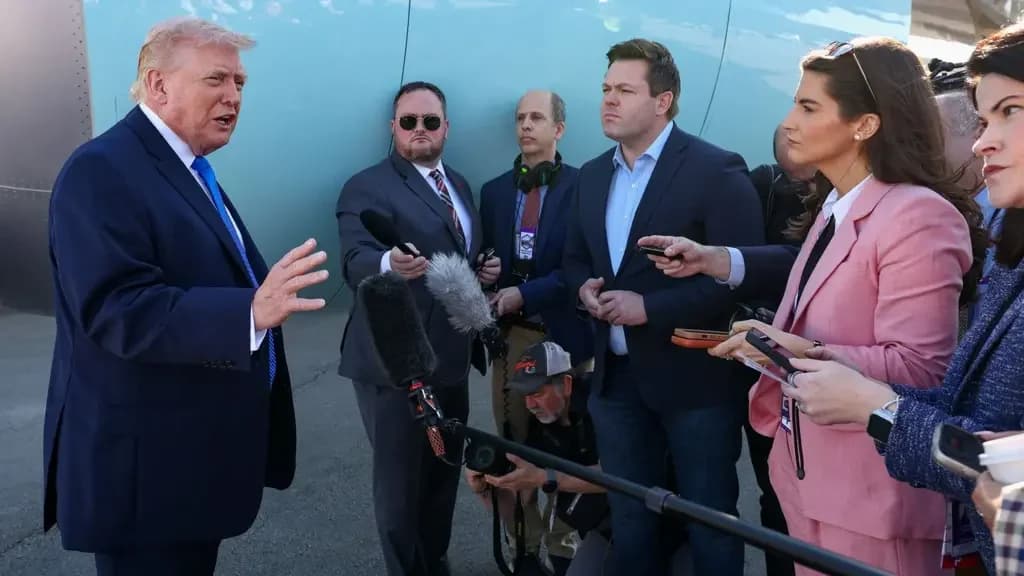
Donald Trump said he would delay planned U.S. strikes on Iranian power plants by five days, citing what he described as “productive” talks with Iran, hours before a deadline due to expire later on Monday, March 23, 2026 in Washington tied to a 48-hour ultimatum for Tehran to reopen the Strait of Hormuz or face military action. Iranian officials swiftly rejected Trump’s claims of talks, insisting that no negotiations, direct or indirect, had taken place, underscoring a sharp contradiction between the two sides. Trump said the delay was intended to allow space for diplomacy and that discussions
Donald Trump said he would delay planned U.S. strikes on Iranian power plants by five days, citing what he described as “productive” talks with Iran, hours before a deadline due to expire later on Monday, March 23, 2026 in Washington tied to a 48-hour ultimatum for Tehran to reopen the Strait of Hormuz or face military action.
Iranian officials swiftly rejected Trump’s claims of talks, insisting that no negotiations, direct or indirect, had taken place, underscoring a sharp contradiction between the two sides.
Trump said the delay was intended to allow space for diplomacy and that discussions had reached “major points of agreement.” He added that U.S. envoy Steve Witkoff and his son-in-law Jared Kushner had been involved in contacts with Iranian counterparts, with the most recent exchange taking place on Sunday night.
State broadcaster IRIB said Trump had “retreated out of fear” following Iran’s firm response to the ultimatum, framing the delay as a climb-down rather than a diplomatic opening.
The conflicting narratives leave uncertainty over whether any behind-the-scenes diplomacy is underway. Analysts and diplomats familiar with U.S.-Iran relations say indirect contacts through intermediaries are common, even when both sides publicly deny engagement.
Financial markets reacted swiftly to the announcement. Oil prices fell more than 6 percent, while U.S. stock futures pointed higher, reflecting investor relief at a potential easing of immediate conflict risks.
The standoff has heightened concerns over energy security, with the Middle East central to global oil supply. Any disruption to the Strait of Hormuz could have immediate and far-reaching consequences for global markets.
The five-day window sets a hard new deadline, with no confirmed channel of communication and both sides maintaining directly conflicting accounts of whether talks exist.



Comments
No comments yet. Be the first to share a thought.