
President Donald Trump on Wednesday threatened to reduce the United States military presence in Germany, escalating a public feud with Chancellor Friedrich Merz over Washington's handling of the ongoing U.S.-Israel war on Iran. "The United States is studying and reviewing the possible reduction of Troops in Germany, with a determination to be made over the next short period of time," Trump wrote on Truth Social. The announcement came hours after Merz suggested the Trump administration was being humiliated by Tehran's negotiating tactics and Iran's refusal to engage in direct talks before its c
President Donald Trump on Wednesday threatened to reduce the United States military presence in Germany, escalating a public feud with Chancellor Friedrich Merz over Washington's handling of the ongoing U.S.-Israel war on Iran.
"The United States is studying and reviewing the possible reduction of Troops in Germany, with a determination to be made over the next short period of time," Trump wrote on Truth Social.
The announcement came hours after Merz suggested the Trump administration was being humiliated by Tehran's negotiating tactics and Iran's refusal to engage in direct talks before its conditions, namely lifting the naval blockade on Iranian ports, were met. Merz also compared the conflict to U.S. interventions in Afghanistan and Iraq, describing it as lacking a clear exit strategy.
Trump rejected the assessment, saying Merz "doesn't know what he's talking about." On Thursday, he broadened his attack, telling the German chancellor to focus on ending the Russia-Ukraine war and fixing domestic issues rather than "interfering" with the Iran campaign.
Berlin responded with measured defiance. German Foreign Minister Johann Wadephul, speaking during a visit to Morocco, said Germany was "prepared" for a possible troop reduction and was discussing the situation within NATO. He said any decisions would "be discussed with us and with others, as is proper among allies."
Wadephul drew a firm line on major installations, however, saying large American bases were "not up for discussion at all" and that Ramstein Air Base held "an irreplaceable function for the United States and for us alike."
A senior U.S. official told CBS News that Trump has not yet been given any options for a reduction, adding that Germany's continued quiet support to U.S. forces in the Middle East remains a consideration.
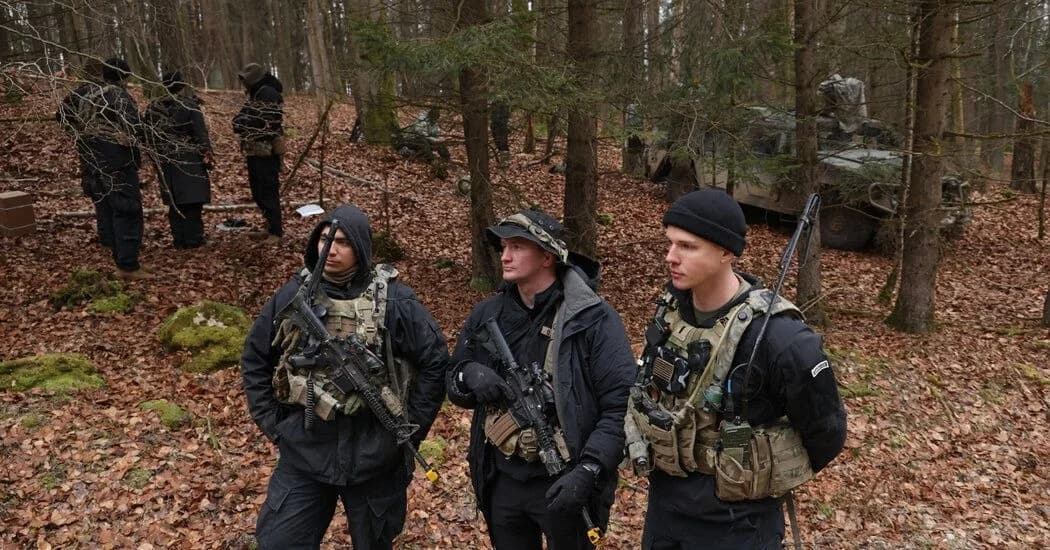
As of December 2025, more than 36,000 active-duty U.S. troops were stationed in Germany, the largest presence in any foreign country outside Japan, along with nearly 1,500 reservists and 11,500 civilians, according to Defense Department figures. Germany also hosts the headquarters of U.S. European Command and Africa Command.
Trump made a similar threat in 2020, announcing plans to pull around 12,000 troops over Berlin's defense spending. That plan drew bipartisan pushback and was reversed by President Biden.
The dispute reflects broader NATO tensions over the Iran war. When asked whether he would consider pulling troops from Spain or Italy as well, Trump did not rule it out: "Why shouldn't I?"
Meanwhile, a fragile ceasefire between the U.S. and Iran remains in place with no durable resolution in sight.



Comments
No comments yet. Be the first to share a thought.