
Donald Trump suggested the United States could withdraw from NATO during a recent discussion on Middle East policy, according to Reuters and Politico, both citing officials briefed on the discussion. The remarks surfaced as Trump argued that European allies must increase their regional security contributions if the U.S. is to maintain its heavy military footprint across both the North Atlantic and the Middle East. Trump criticized NATO allies over defense spending and questioned the alliance’s effectiveness, raising the possibility of a U.S. withdrawal amid longstanding disputes over burden-sh
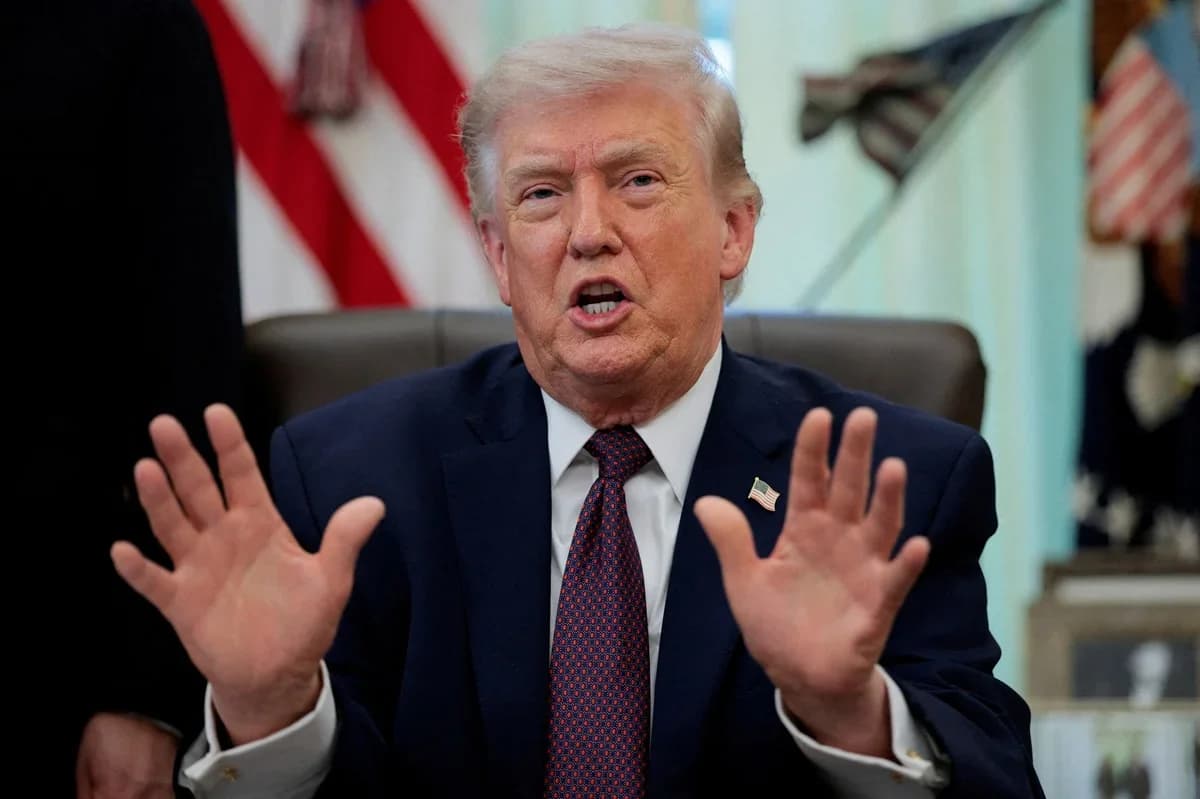
Donald Trump suggested the United States could withdraw from NATO during a recent discussion on Middle East policy, according to Reuters and Politico, both citing officials briefed on the discussion. The remarks surfaced as Trump argued that European allies must increase their regional security contributions if the U.S. is to maintain its heavy military footprint across both the North Atlantic and the Middle East.
Trump criticized NATO allies over defense spending and questioned the alliance’s effectiveness, raising the possibility of a U.S. withdrawal amid longstanding disputes over burden-sharing between Washington and European member states. The United States remains the alliance’s largest military contributor, and successive administrations have called on partners to meet agreed defense spending targets.
The remarks, as reported, reflect a continuation of Trump’s long-running position that NATO allies should take on a greater share of collective defense costs. During his presidency, he repeatedly warned that the United States could reassess its commitments if allies failed to meet the benchmark of spending 2 percent of GDP on defense.
NATO Secretary General Mark Rutte has consistently defended the alliance’s role in maintaining transatlantic security, pointing to increased defense expenditures by European members and expanded coordination in response to evolving global threats.
According to the Secretary General’s Annual Report 2025, defense investment has seen a historic shift: while only seven allies met the 2 percent spending target in 2018, that number rose to 23 of the 32 member states by the start of 2026, representing a significant transformation in European defense contributions.
Security analysts say any renewed U.S. consideration of withdrawal would carry significant implications for global stability, potentially weakening NATO’s deterrence posture and reshaping strategic calculations among both allies and adversaries.
Trump previously raised similar concerns at the 2018 NATO summit in Brussels, where he warned that the United States could reconsider its role if allies did not increase defense contributions. Despite the rhetoric, the United States did not initiate any formal withdrawal process, and NATO’s core commitments remained intact.



Comments
No comments yet. Be the first to share a thought.