
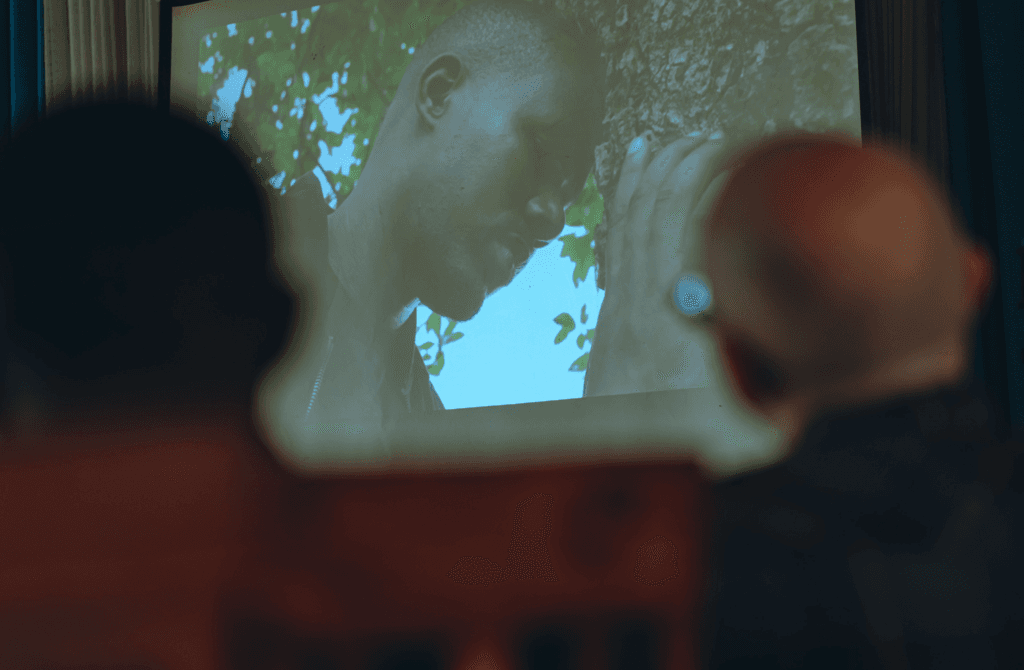
Two documentary films exploring the experiences, resilience and recovery of survivors of the 1994 Genocide against the Tutsi were premiered in Rwanda, using visual storytelling to strengthen genocide education and preserve survivors’ testimonies for future generations.
The films, Why We Dance, directed by Marc Ellison, and A Compassionate Heart, were screened at the Kigali Genocide Memorial on April 17, 2026, as part of the Kwibuka commemoration programme.
The productions were developed through the Rwanda Research Cluster of the Survivor-Centred Visual Narratives (SCVN) project, a research initiative funded by the Social Sciences and Humanities Research Council of Canada.
Why We Dance tells the story of Jerome Irankunda, who was six years old during the genocide. After escaping an attack on the church where his family had sought refuge, Jerome fled to the Democratic Republic of Congo with his uncle but never saw his parents again.
Despite the trauma of losing his family, he rebuilt his life, established his own family and pursued a successful university career. The documentary follows his collaboration with graphic novelist Michel Kichka in transforming his testimony into a visual narrative centred on resilience, peace and hope for future generations.
The second film, A Compassionate Heart, documents the experience of Madeleine Mukarwego, a genocide survivor who became a prominent community leader through her involvement in the Gacaca Courts.
Madeleine survived a massacre by pretending to be dead before escaping to Idjwi Island in the Democratic Republic of Congo. She later returned to Rwanda, where she rebuilt her life and home despite the lasting effects of violence.
Her story was developed in collaboration with graphic novelist Elyon’s and her son, Sylvere Mwizerwa.
Speaking about why she chose to participate in the project, Madeleine emphasised the importance of preserving survivors’ experiences.
“To make sure these things never happen again, we must write them, we must talk about them,” she said.
The premiere brought together representatives from the Kigali Genocide Memorial, the Ministry of National Unity and Civic Engagement (MINUBUMWE), IBUKA, educators, students and other stakeholders.
Before the official screening, filmmaker Marc Ellison, survivors Jerome Irankunda and Madeleine Mukarwego, and Nina Uwera conducted a workshop for film production students at the East African University of Rwanda, providing an opportunity to explore how survivors’ testimonies can be transformed into meaningful visual stories.
Jerome described the project as an opportunity he had long awaited, saying it gave him a safe platform to share his experiences.
“From the moment I was introduced to this project by Erin, Fransiska, Marc, and Michel, I felt a deep sense of excitement and readiness to finally share my story,” he said.
He added that the international recognition received by Why We Dance demonstrated the importance of making survivors’ experiences known beyond Rwanda.
As of October 2026, the film had received the Audience Award for Best Short Film at the Toronto/Los Angeles Documentary Feature and Short Film Festival, an Award of Excellence in the Documentary Short category at the IndieFEST Film Awards, and Best Documentary Short at the World Indie Film Awards.
Professor Erin Jessee and Dr. Fransiska Louwagie, co-leads of the Rwanda Research Cluster, said the films document the collaborative process between survivors and artists while supporting efforts to engage young people in understanding the genocide and its consequences.
Meanwhile, Ismael Bakina, IBUKA's Director of Youth Education and Culture, commended the initiative for preserving survivors’ voices through visual storytelling.
He described the screening as a journey through memory, resilience and humanity, emphasising that survivors’ testimonies should be transmitted to present and future generations.
The two documentaries complement graphic novels developed through the SCVN project. These works are expected to form part of a book titled When Genocide Called, scheduled for publication by the University of Toronto Press in 2027.
Through survivor-led storytelling, the initiative seeks to strengthen genocide education in Rwanda and internationally, ensuring that personal experiences of loss, survival and rebuilding remain part of the collective commitment to remembrance and prevention.
As Bakina emphasised during the premiere, initiatives of this nature are essential to ensuring that “Never Again” becomes more than a phrase, but a lived commitment.


Comments
No comments yet. Be the first to share a thought.